

11.3.2 Environmental and Ecological Models
If the toolkit serves mainly as a library or repository for approved models,
several questions must be successfully addressed:
• What kinds of ecological and environmental models should be included
in the toolkit?
• What are the criteria that should be used to qualify or disqualify models
for inclusion?
• Will separate toolkits be developed to support different management
objectives and organizations (e.g., fisheries, forestry, and toxic
chemicals)?
• Should ecological models already used routinely in resource management (e.g., habitat suitability index models) be forced into a toolkit?
• Will each toolkit become a highly regulated and controlled software
product whose distribution and use will be closely guarded and monitored by each resource agency?
Literally hundreds of ecological models have been developed and published in the peer-reviewed technical literature (Pastorok et al. 2001). Apart
from narrowly defined reviews and summaries [e.g., Campbell and Bartell
(1998); Jorgensen et al. (1996); Suter and Bartell (1993); Barnthouse (1992);
Emlen (1989); Barnthouse et al. (1986)], the identification and collation of
potentially useful models for resource management requires comprehensive and costly literature searches.
214
Steven M. Bartell
Observable system properties
Available
data
Model
results
Effective
domain
Research
Data collection
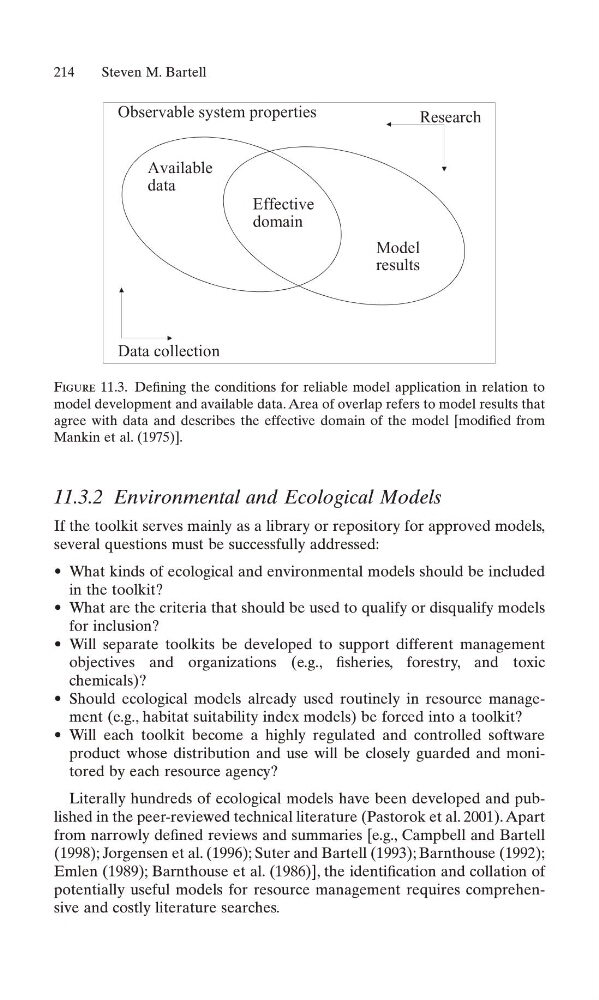
Figure 11.3. Defining the conditions for reliable model application in relation to
model development and available data. Area of overlap refers to model results that
agree with data and describes the effective domain of the model [modified from
Mankin et al. (1975)].
If the toolkit serves mainly as a library or repository for approved models,
several questions must be successfully addressed:
• What kinds of ecological and environmental models should be included
in the toolkit?
• What are the criteria that should be used to qualify or disqualify models
for inclusion?
• Will separate toolkits be developed to support different management
objectives and organizations (e.g., fisheries, forestry, and toxic
chemicals)?
• Should ecological models already used routinely in resource management (e.g., habitat suitability index models) be forced into a toolkit?
• Will each toolkit become a highly regulated and controlled software
product whose distribution and use will be closely guarded and monitored by each resource agency?
Literally hundreds of ecological models have been developed and published in the peer-reviewed technical literature (Pastorok et al. 2001). Apart
from narrowly defined reviews and summaries [e.g., Campbell and Bartell
(1998); Jorgensen et al. (1996); Suter and Bartell (1993); Barnthouse (1992);
Emlen (1989); Barnthouse et al. (1986)], the identification and collation of
potentially useful models for resource management requires comprehensive and costly literature searches.
214
Steven M. Bartell
Observable system properties
Available
data
Model
results
Effective
domain
Research
Data collection
Figure 11.3. Defining the conditions for reliable model application in relation to
model development and available data. Area of overlap refers to model results that
agree with data and describes the effective domain of the model [modified from
Mankin et al. (1975)].