

be first and foremost in the modeler’s mind (Quigley and Cole 1997). Often,
data, perhaps from a monitoring program, drive the question. The question
to be answered will determine the level of detail necessary in the model.
Some high-level questions may require multiple models to answer. For
each of these models, it is imperative that an answerable question be
defined.
10.1.2 The Conceptual Model
Once the question is defined, every ecological model should begin with a
solid conceptual framework (Guisan and Zimmerman 2000). Without an
adequate conceptual framework, no amount of data will provide the understanding necessary to guide management decisions (Johnson et al. 1999). To
identify ecological-monitoring indicators that reflect underlying ecological
structure and function requires well-developed conceptual models of the
resources of concern (Barber 1994; National Research Council 1990, 1995).
The conceptual model outlines the interconnections among ecosystem
resources (key system components), the strength and direction of those
links, and the attributes that characterize the state of the resources. The
10. Effective Ecological Modeling: Data Issues
181
Question Driven Model
Data
Data
Gathering
From Existing
Sources
Field Data
Collection
Data
Simulation
Data Quality,
Storage, and
Access
Concerns
Data Use and
Appropriateness
Concerns
Data Collection
Concerns
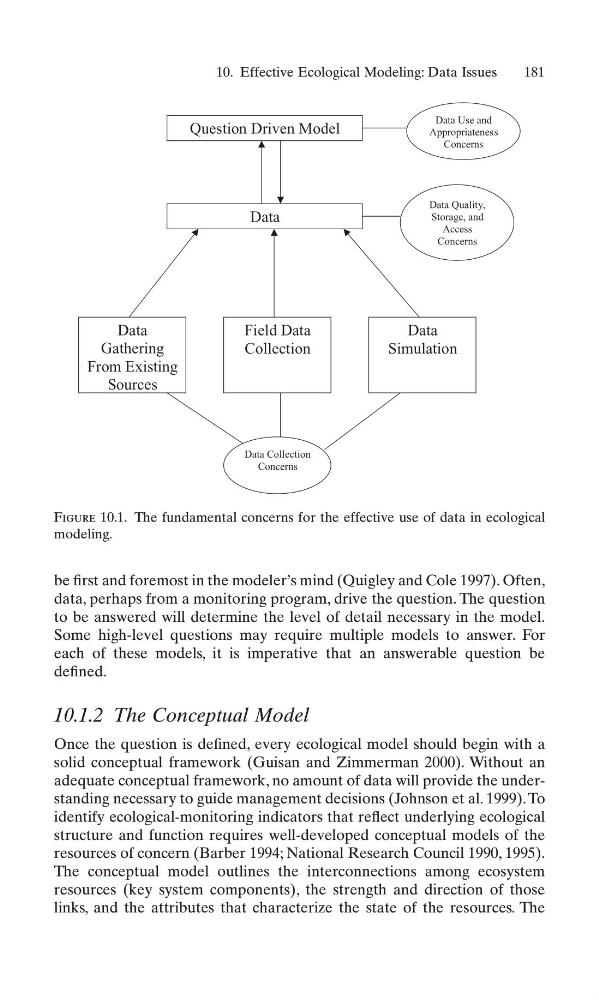
Figure 10.1. The fundamental concerns for the effective use of data in ecological
modeling.
data, perhaps from a monitoring program, drive the question. The question
to be answered will determine the level of detail necessary in the model.
Some high-level questions may require multiple models to answer. For
each of these models, it is imperative that an answerable question be
defined.
10.1.2 The Conceptual Model
Once the question is defined, every ecological model should begin with a
solid conceptual framework (Guisan and Zimmerman 2000). Without an
adequate conceptual framework, no amount of data will provide the understanding necessary to guide management decisions (Johnson et al. 1999). To
identify ecological-monitoring indicators that reflect underlying ecological
structure and function requires well-developed conceptual models of the
resources of concern (Barber 1994; National Research Council 1990, 1995).
The conceptual model outlines the interconnections among ecosystem
resources (key system components), the strength and direction of those
links, and the attributes that characterize the state of the resources. The
10. Effective Ecological Modeling: Data Issues
181
Question Driven Model
Data
Data
Gathering
From Existing
Sources
Field Data
Collection
Data
Simulation
Data Quality,
Storage, and
Access
Concerns
Data Use and
Appropriateness
Concerns
Data Collection
Concerns
Figure 10.1. The fundamental concerns for the effective use of data in ecological
modeling.