

9.4 Existing Data and Misuse
Data can be misused or misinterpreted in a number of ways. Ecosystems
are complex with many interactions at various levels that vary spatially and
temporally. The complexity of interactions in ecosystems goes far beyond
that of genetic coding, but the interaction of the four base types in deoxyribonucleic acid (DNA) provides an example of complex relationships than
can be developed from only four separate entities (see Sidebar 9.1). Usually,
field data or experimentally acquired data do not go beyond first-order
interactions. This simplicity can make it very difficult to interpret the multiinteraction processes that occur in the real world. Often, the sampling
regime is designed to linearize any other interactive effects in order to study
one process at a time in an isolated manner. Optimization of this type for
statistical analysis can reduce the information content and eliminate interesting nonlinear effects that might occur. It is important to understand
that data acquired in this manner will often affect the development and
parameterization of the models being used. Models based on these data
may not have all of the appropriate interaction in the model structure. The
9. Data and Information Issues: Communication Is the Key
171
Questions
That
You
Want
Answered
Data
Needed
For
Your
Questions
Data
That
You
Have
Questions
That
Your
Data
Can
Answer
Models
Tools
Experience
Reframe the Question
Reframe the Data
Get better data
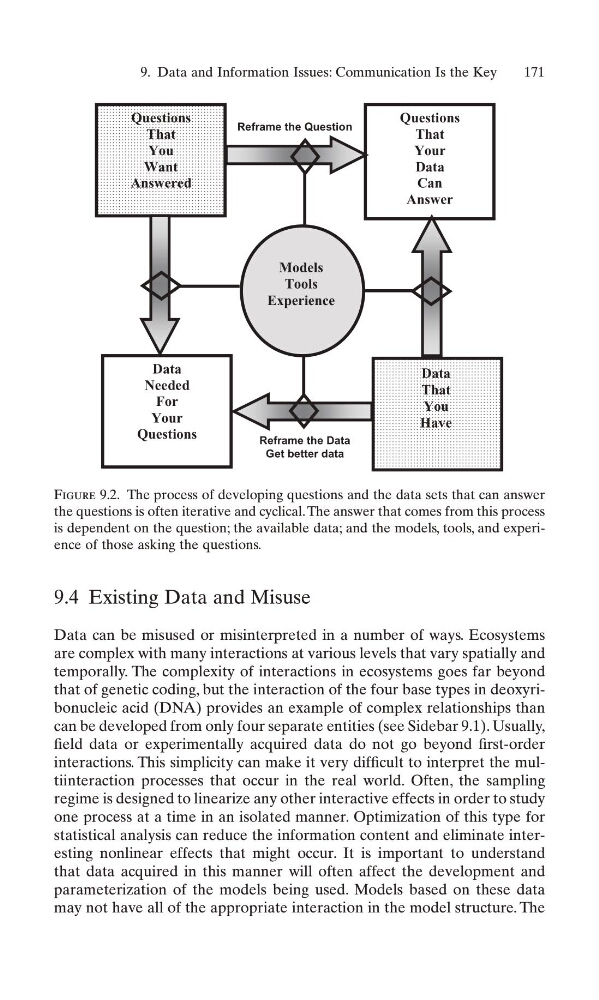
Figure 9.2. The process of developing questions and the data sets that can answer
the questions is often iterative and cyclical. The answer that comes from this process
is dependent on the question; the available data; and the models, tools, and experience of those asking the questions.
Data can be misused or misinterpreted in a number of ways. Ecosystems
are complex with many interactions at various levels that vary spatially and
temporally. The complexity of interactions in ecosystems goes far beyond
that of genetic coding, but the interaction of the four base types in deoxyribonucleic acid (DNA) provides an example of complex relationships than
can be developed from only four separate entities (see Sidebar 9.1). Usually,
field data or experimentally acquired data do not go beyond first-order
interactions. This simplicity can make it very difficult to interpret the multiinteraction processes that occur in the real world. Often, the sampling
regime is designed to linearize any other interactive effects in order to study
one process at a time in an isolated manner. Optimization of this type for
statistical analysis can reduce the information content and eliminate interesting nonlinear effects that might occur. It is important to understand
that data acquired in this manner will often affect the development and
parameterization of the models being used. Models based on these data
may not have all of the appropriate interaction in the model structure. The
9. Data and Information Issues: Communication Is the Key
171
Questions
That
You
Want
Answered
Data
Needed
For
Your
Questions
Data
That
You
Have
Questions
That
Your
Data
Can
Answer
Models
Tools
Experience
Reframe the Question
Reframe the Data
Get better data
Figure 9.2. The process of developing questions and the data sets that can answer
the questions is often iterative and cyclical. The answer that comes from this process
is dependent on the question; the available data; and the models, tools, and experience of those asking the questions.