

• Evolving approaches and technologies that will enhance the role of
ecological modeling in decision making
• Data issues
• The toolkit concept
• Science and management investments needed to enhance the use of
ecological modeling and decision making
Together, these chapters present the current status of the use of ecological
models for resource management and suggest ways to enhance their roles.
6.2 Types of Barriers
6.2.1 Communication Barriers
The first and probably most discussed hindrance to the use of models in
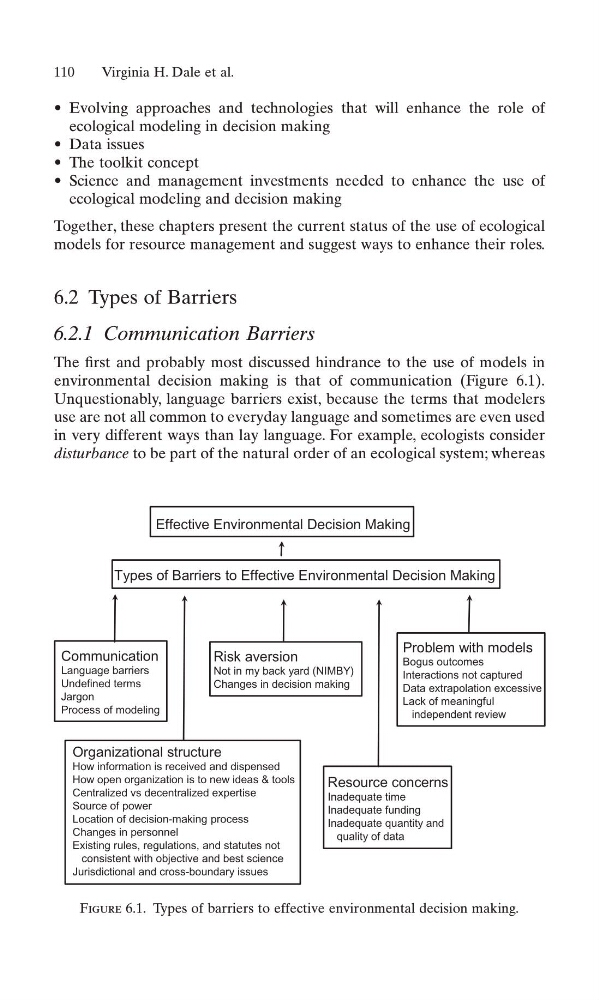
environmental decision making is that of communication (Figure 6.1).
Unquestionably, language barriers exist, because the terms that modelers
use are not all common to everyday language and sometimes are even used
in very different ways than lay language. For example, ecologists consider
disturbance to be part of the natural order of an ecological system; whereas
110
Virginia H. Dale et al.
Types of Barriers to Effective Environmental Decision Making
Effective Environmental Decision Making
Communication
Language barriers
Undefined terms
Jargon
Process of modeling
Organizational structure
How information is received and dispensed
How open organization is to new ideas & tools
Centralized vs decentralized expertise
Source of power
Location of decision-making process
Changes in personnel
Existing rules, regulations, and statutes not
consistent with objective and best science
Jurisdictional and cross-boundary issues
Resource concerns
Inadequate time
Inadequate funding
Inadequate quantity and
quality of data
Problem with models
Bogus outcomes
Interactions not captured
Data extrapolation excessive
Lack of meaningful
independent review
Risk aversion
Not in my back yard (NIMBY)
Changes in decision making
Figure 6.1. Types of barriers to effective environmental decision making.
ecological modeling in decision making
• Data issues
• The toolkit concept
• Science and management investments needed to enhance the use of
ecological modeling and decision making
Together, these chapters present the current status of the use of ecological
models for resource management and suggest ways to enhance their roles.
6.2 Types of Barriers
6.2.1 Communication Barriers
The first and probably most discussed hindrance to the use of models in
environmental decision making is that of communication (Figure 6.1).
Unquestionably, language barriers exist, because the terms that modelers
use are not all common to everyday language and sometimes are even used
in very different ways than lay language. For example, ecologists consider
disturbance to be part of the natural order of an ecological system; whereas
110
Virginia H. Dale et al.
Types of Barriers to Effective Environmental Decision Making
Effective Environmental Decision Making
Communication
Language barriers
Undefined terms
Jargon
Process of modeling
Organizational structure
How information is received and dispensed
How open organization is to new ideas & tools
Centralized vs decentralized expertise
Source of power
Location of decision-making process
Changes in personnel
Existing rules, regulations, and statutes not
consistent with objective and best science
Jurisdictional and cross-boundary issues
Resource concerns
Inadequate time
Inadequate funding
Inadequate quantity and
quality of data
Problem with models
Bogus outcomes
Interactions not captured
Data extrapolation excessive
Lack of meaningful
independent review
Risk aversion
Not in my back yard (NIMBY)
Changes in decision making
Figure 6.1. Types of barriers to effective environmental decision making.