

8.6 Conclusion
The study of ecological diversity in its diverse aspects is one of the most exciting
challenges of today’s quantitative ecology, especially now that we understand that
any method of data analysis that decomposes the total variance of a site-by-species
data table is an analysis of beta diversity. The statistical methods studied in Chaps. 5,
6, and 7 of this book decompose that variance into simple or canonical ordination
axes, among experimental factors, among matrices of explanatory variables, or
among spatial scales.
Numerous questions remain to be resolved about the many approaches to the
measurement of diversity (Chap. 8). But the most fruitful outcomes will likely come
when we will be able to fully put in relationship the multiscale complexity of genetic,
specific, ecological and landscape diversity.
The multifaceted nature of ecological problems can nowadays be addressed in a
much deeper way than before, and the authors of the methods are themselves
constantly surprised at the range of applications ecologists make of their statistical
offspring. Many more developments will certainly be made in the forthcoming years,
and we wish to conclude by inviting readers to participate in this effort, both by
asking new and challenging ecological questions and by devoting themselves to the
exciting task of methodological development.
0
50
100
150
20 40 60 80
100
Taxonomic diversity
x coordinate (km)
y coordinate (km)
0
5 0
1 0 0
1 5 0
20 40 60 80
100
Phylogenetic diversity
x coordinate (km)
y coordinate (km)
0
50
100
150
20 40
60 80 100
Functional diversity
x coordinate (km)
y coordinate (km)
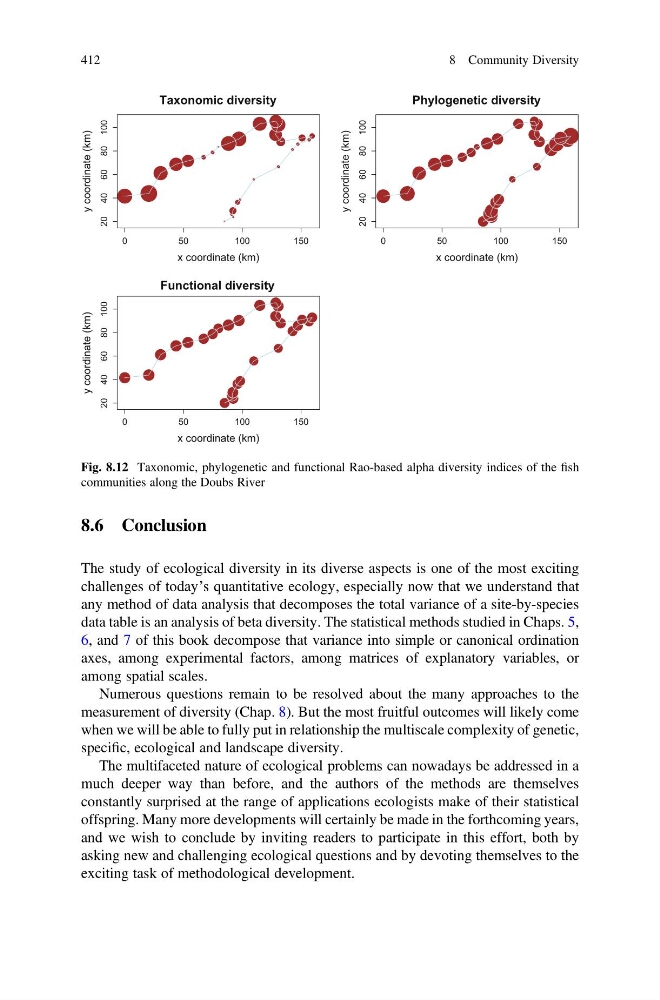
Fig. 8.12 Taxonomic, phylogenetic and functional Rao-based alpha diversity indices of the fish
communities along the Doubs River
412
8 Community Diversity
The study of ecological diversity in its diverse aspects is one of the most exciting
challenges of today’s quantitative ecology, especially now that we understand that
any method of data analysis that decomposes the total variance of a site-by-species
data table is an analysis of beta diversity. The statistical methods studied in Chaps. 5,
6, and 7 of this book decompose that variance into simple or canonical ordination
axes, among experimental factors, among matrices of explanatory variables, or
among spatial scales.
Numerous questions remain to be resolved about the many approaches to the
measurement of diversity (Chap. 8). But the most fruitful outcomes will likely come
when we will be able to fully put in relationship the multiscale complexity of genetic,
specific, ecological and landscape diversity.
The multifaceted nature of ecological problems can nowadays be addressed in a
much deeper way than before, and the authors of the methods are themselves
constantly surprised at the range of applications ecologists make of their statistical
offspring. Many more developments will certainly be made in the forthcoming years,
and we wish to conclude by inviting readers to participate in this effort, both by
asking new and challenging ecological questions and by devoting themselves to the
exciting task of methodological development.
0
50
100
150
20 40 60 80
100
Taxonomic diversity
x coordinate (km)
y coordinate (km)
0
5 0
1 0 0
1 5 0
20 40 60 80
100
Phylogenetic diversity
x coordinate (km)
y coordinate (km)
0
50
100
150
20 40
60 80 100
Functional diversity
x coordinate (km)
y coordinate (km)
Fig. 8.12 Taxonomic, phylogenetic and functional Rao-based alpha diversity indices of the fish
communities along the Doubs River
412
8 Community Diversity