

34
N
• 10 KM
CARIBBEAN SEA
DE
SANTA MARTA
I
~CATACA
~
/
~ RIVER
§
NOACION RIVER
CARIBBEAN
SEA
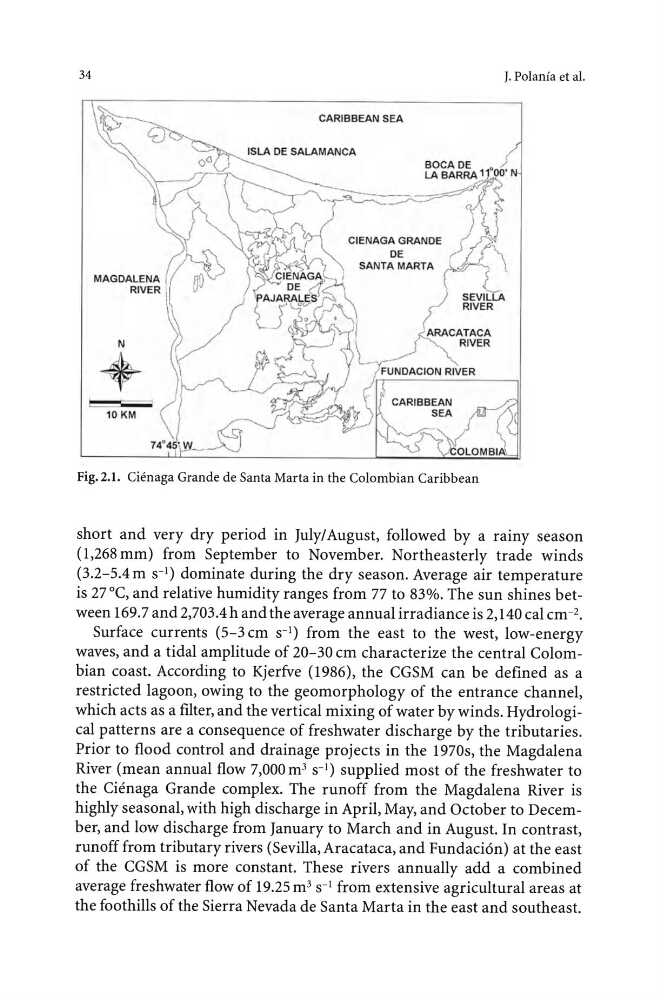
Fig.2.1. Cienaga Grande de Santa Marta in the Colombian Caribbean
J. Polania et al.
short and very dry period in July/ August, followed by a rainy season
(1,268 mm) from September to November. Northeasterly trade winds
(3.2-5.4 m s- 1 ) dominate during the dry season. Average air temperature
is 27°C, and relative humidity ranges from 77 to 83%. The sun shines between 169.7 and 2,703.4 hand the average annual irradiance is 2,140 cal cm- 2 •
Surface currents (5-3 em s- 1 ) from the east to the west, low-energy
waves, and a tidal amplitude of 20-30 em characterize the central Colombian coast. According to Kjerfve (1986), the CGSM can be defined as a
restricted lagoon, owing to the geomorphology of the entrance channel,
which acts as a filter, and the vertical mixing of water by winds. Hydrological patterns are a consequence of freshwater discharge by the tributaries.
Prior to flood control and drainage projects in the 1970s, the Magdalena
River (mean annual flow 7,000 m 3 s- 1 ) supplied most of the freshwater to
the Cienaga Grande complex. The runoff from the Magdalena River is
highly seasonal, with high discharge in April, May, and October to December, and low discharge from January to March and in August. In contrast,
runoff from tributary rivers (Sevilla, Aracataca, and Fundaci6n) at the east
of the CGSM is more constant. These rivers annually add a combined
average freshwater flow of 19.25 m 3 s- 1 from extensive agricultural areas at
the foothills of the Sierra Nevada de Santa Marta in the east and southeast.
N
• 10 KM
CARIBBEAN SEA
DE
SANTA MARTA
I
~CATACA
~
/
~ RIVER
§
NOACION RIVER
CARIBBEAN
SEA
Fig.2.1. Cienaga Grande de Santa Marta in the Colombian Caribbean
J. Polania et al.
short and very dry period in July/ August, followed by a rainy season
(1,268 mm) from September to November. Northeasterly trade winds
(3.2-5.4 m s- 1 ) dominate during the dry season. Average air temperature
is 27°C, and relative humidity ranges from 77 to 83%. The sun shines between 169.7 and 2,703.4 hand the average annual irradiance is 2,140 cal cm- 2 •
Surface currents (5-3 em s- 1 ) from the east to the west, low-energy
waves, and a tidal amplitude of 20-30 em characterize the central Colombian coast. According to Kjerfve (1986), the CGSM can be defined as a
restricted lagoon, owing to the geomorphology of the entrance channel,
which acts as a filter, and the vertical mixing of water by winds. Hydrological patterns are a consequence of freshwater discharge by the tributaries.
Prior to flood control and drainage projects in the 1970s, the Magdalena
River (mean annual flow 7,000 m 3 s- 1 ) supplied most of the freshwater to
the Cienaga Grande complex. The runoff from the Magdalena River is
highly seasonal, with high discharge in April, May, and October to December, and low discharge from January to March and in August. In contrast,
runoff from tributary rivers (Sevilla, Aracataca, and Fundaci6n) at the east
of the CGSM is more constant. These rivers annually add a combined
average freshwater flow of 19.25 m 3 s- 1 from extensive agricultural areas at
the foothills of the Sierra Nevada de Santa Marta in the east and southeast.