

276
J.R. Cantera and J.F. Blanco
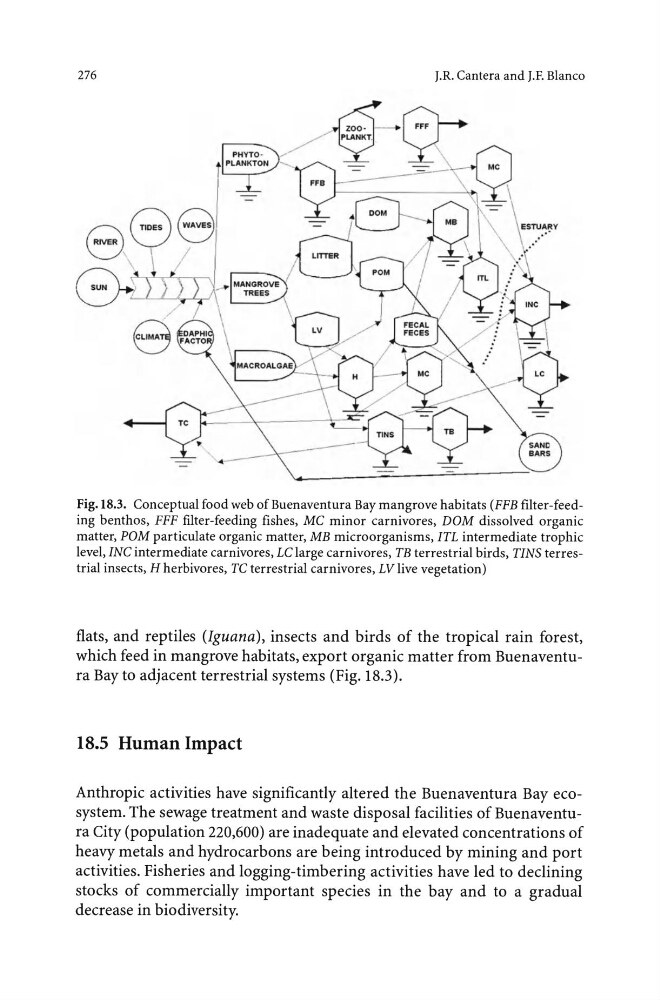
Fig.l8.3. Conceptual food web ofBuenaventura Bay mangrove habitats (FFB filter-feeding benthos, FFF filter-feeding fishes, MC minor carnivores, DOM dissolved organic
matter, POM particulate organic matter, MB microorganisms, ITL intermediate trophic
level, INC intermediate carnivores, LC large carnivores, TB terrestrial birds, TINS terrestrial insects, H herbivores, TC terrestrial carnivores, LV live vegetation)
flats, and reptiles (Iguana), insects and birds of the tropical rain forest,
which feed in mangrove habitats, export organic matter from Buenaventura Bay to adjacent terrestrial systems (Fig. 18.3).
18.5 Human Impact
Anthropic activities have significantly altered the Buenaventura Bay ecosystem. The sewage treatment and waste disposal facilities of Buenaventura City (population 220,600) are inadequate and elevated concentrations of
heavy metals and hydrocarbons are being introduced by mining and port
activities. Fisheries and logging-timbering activities have led to declining
stocks of commercially important species in the bay and to a gradual
decrease in biodiversity.
J.R. Cantera and J.F. Blanco
Fig.l8.3. Conceptual food web ofBuenaventura Bay mangrove habitats (FFB filter-feeding benthos, FFF filter-feeding fishes, MC minor carnivores, DOM dissolved organic
matter, POM particulate organic matter, MB microorganisms, ITL intermediate trophic
level, INC intermediate carnivores, LC large carnivores, TB terrestrial birds, TINS terrestrial insects, H herbivores, TC terrestrial carnivores, LV live vegetation)
flats, and reptiles (Iguana), insects and birds of the tropical rain forest,
which feed in mangrove habitats, export organic matter from Buenaventura Bay to adjacent terrestrial systems (Fig. 18.3).
18.5 Human Impact
Anthropic activities have significantly altered the Buenaventura Bay ecosystem. The sewage treatment and waste disposal facilities of Buenaventura City (population 220,600) are inadequate and elevated concentrations of
heavy metals and hydrocarbons are being introduced by mining and port
activities. Fisheries and logging-timbering activities have led to declining
stocks of commercially important species in the bay and to a gradual
decrease in biodiversity.