

The Abrolhos Reefs of Brazil
Timbebas
~ Modern reef
Coroa Vermelha
SL
m
B
~1 0 5
10
'
:~
Land Coastal arc
0
10
20
Reef substrate
(Pleistocene limestone)
Sediment
tJ Volcanic rock
Cretaceous rock
FRINGING REEFS
30
Abrolhos Is.
OUTER REEFS
Islands
40
60
Km
m
0
5
10
15
20
25
30
70
91
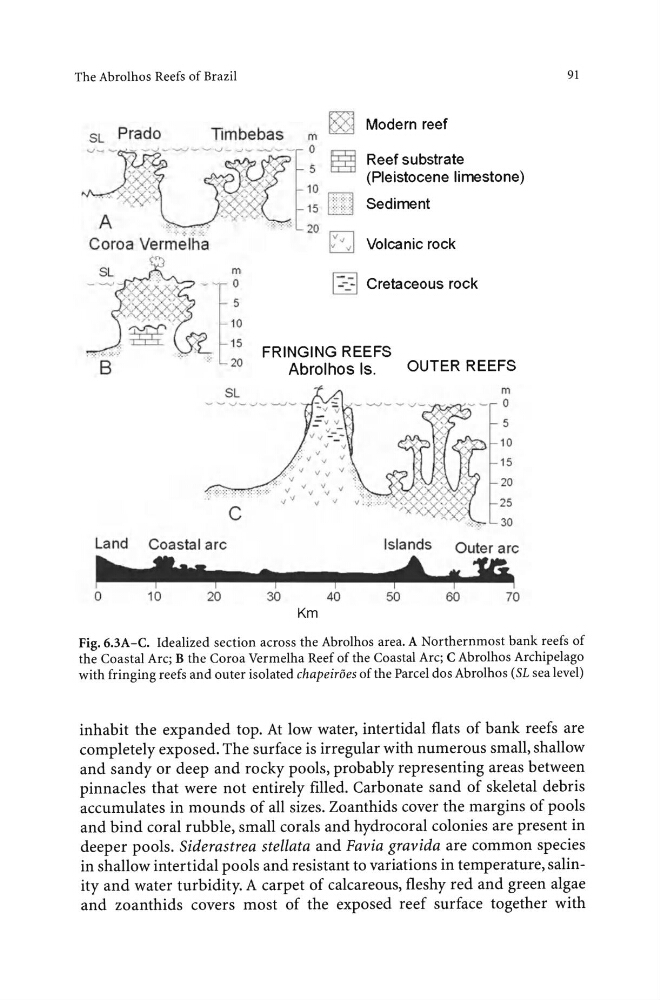
Fig. 6.3A-C. Idealized section across the Abrolhos area. A Northernmost bank reefs of
the Coastal Arc; B the Coroa Vermelha Reef of the Coastal Arc; C Abrolhos Archipelago
with fringing reefs and outer isolated chapeiroes of the Parcel dos Abrolhos ( SL sea level)
inhabit the expanded top. At low water, intertidal flats of bank reefs are
completely exposed. The surface is irregular with numerous small, shallow
and sandy or deep and rocky pools, probably representing areas between
pinnacles that were not entirely filled. Carbonate sand of skeletal debris
accumulates in mounds of all sizes. Zoanthids cover the margins of pools
and bind coral rubble, small corals and hydrocoral colonies are present in
deeper pools. Siderastrea stellata and Favia gravida are common species
in shallow intertidal pools and resistant to variations in temperature, salinity and water turbidity. A carpet of calcareous, fleshy red and green algae
and zoanthids covers most of the exposed reef surface together with
Timbebas
~ Modern reef
Coroa Vermelha
SL
m
B
~1 0 5
10
'
:~
Land Coastal arc
0
10
20
Reef substrate
(Pleistocene limestone)
Sediment
tJ Volcanic rock
Cretaceous rock
FRINGING REEFS
30
Abrolhos Is.
OUTER REEFS
Islands
40
60
Km
m
0
5
10
15
20
25
30
70
91
Fig. 6.3A-C. Idealized section across the Abrolhos area. A Northernmost bank reefs of
the Coastal Arc; B the Coroa Vermelha Reef of the Coastal Arc; C Abrolhos Archipelago
with fringing reefs and outer isolated chapeiroes of the Parcel dos Abrolhos ( SL sea level)
inhabit the expanded top. At low water, intertidal flats of bank reefs are
completely exposed. The surface is irregular with numerous small, shallow
and sandy or deep and rocky pools, probably representing areas between
pinnacles that were not entirely filled. Carbonate sand of skeletal debris
accumulates in mounds of all sizes. Zoanthids cover the margins of pools
and bind coral rubble, small corals and hydrocoral colonies are present in
deeper pools. Siderastrea stellata and Favia gravida are common species
in shallow intertidal pools and resistant to variations in temperature, salinity and water turbidity. A carpet of calcareous, fleshy red and green algae
and zoanthids covers most of the exposed reef surface together with