

68
4. Protocol for Aquatic Hazard Assessment
Hazard from
reproductive
impairment
High
Moderate
Low
Minimal
None ~~----~----~----~----~
<3
3-5
5-12
12-20
>20
Selenium in aquatic bird eggs (Jlglg dry wt.)
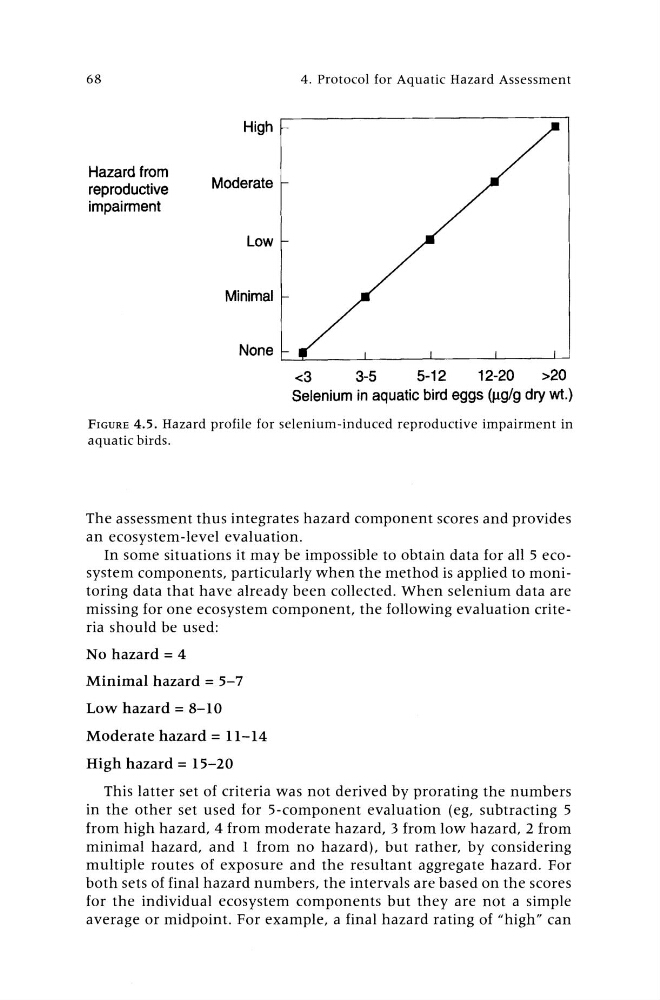
FIGURE 4.5. Hazard profile for selenium-induced reproductive impairment in
aquatic birds.
The assessment thus integrates hazard component scores and provides
an ecosystem-level evaluation.
In some situations it may be impossible to obtain data for all 5 ecosystem components, particularly when the method is applied to monitoring data that have already been collected. When selenium data are
missing for one ecosystem component, the following evaluation criteria should be used:
No hazard =4
Minimal hazard =5-7
Low hazard =8-10
Moderate hazard =11-14
High hazard =15-20
This latter set of criteria was not derived by prorating the numbers
in the other set used for 5-component evaluation (eg, subtracting 5
from high hazard, 4 from moderate hazard, 3 from low hazard, 2 from
minimal hazard, and 1 from no hazard), but rather, by considering
multiple routes of exposure and the resultant aggregate hazard. For
both sets of final hazard numbers, the intervals are based on the scores
for the individual ecosystem components but they are not a simple
average or midpoint. For example, a final hazard rating of "high" can
4. Protocol for Aquatic Hazard Assessment
Hazard from
reproductive
impairment
High
Moderate
Low
Minimal
None ~~----~----~----~----~
<3
3-5
5-12
12-20
>20
Selenium in aquatic bird eggs (Jlglg dry wt.)
FIGURE 4.5. Hazard profile for selenium-induced reproductive impairment in
aquatic birds.
The assessment thus integrates hazard component scores and provides
an ecosystem-level evaluation.
In some situations it may be impossible to obtain data for all 5 ecosystem components, particularly when the method is applied to monitoring data that have already been collected. When selenium data are
missing for one ecosystem component, the following evaluation criteria should be used:
No hazard =4
Minimal hazard =5-7
Low hazard =8-10
Moderate hazard =11-14
High hazard =15-20
This latter set of criteria was not derived by prorating the numbers
in the other set used for 5-component evaluation (eg, subtracting 5
from high hazard, 4 from moderate hazard, 3 from low hazard, 2 from
minimal hazard, and 1 from no hazard), but rather, by considering
multiple routes of exposure and the resultant aggregate hazard. For
both sets of final hazard numbers, the intervals are based on the scores
for the individual ecosystem components but they are not a simple
average or midpoint. For example, a final hazard rating of "high" can