

Ecological Implications
51
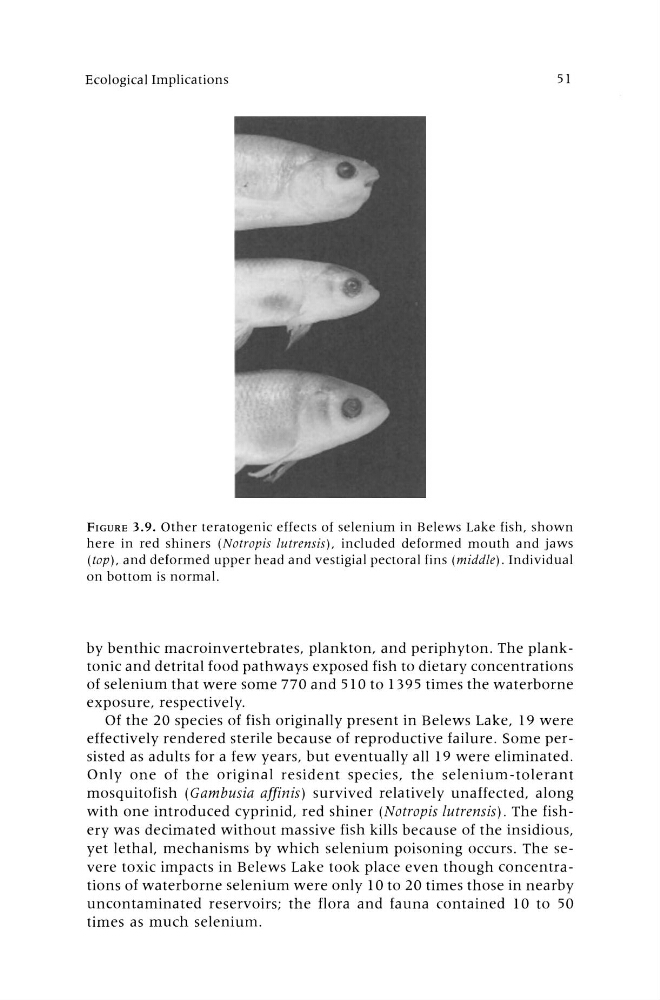
FIGURE 3.9. Other teratogenic effects of selenium in Belews Lake fish , shown
here in red shiners (Notropis lutrensis), included deformed mouth and jaws
(top) , and deformed upper head and vestigial pectoral fins (middle). Individual
on bottom is normal.
by benthic macroinvertebrates, plankton, and periphyton. The planktonic and detrital food pathways exposed fish to dietary concentrations
of selenium that were some 770 and 510 to 1395 times the waterborne
exposure, respectively.
Of the 20 species of fish originally present in Belews Lake, 19 were
effectively rendered sterile because of reproductive failure. Some persisted as adults for a few years, but eventually all 19 were eliminated.
Only one of the original resident species, the selenium-tolerant
mosquitofish (Gambusia affinis) survived relatively unaffected, along
with one introduced cyprinid, red shiner (Notropis lutrensis). The fishery was decimated without massive fish kills because of the insidious,
yet lethaL mechanisms by which selenium poisoning occurs. The severe toxic impacts in Belews Lake took place even though concentrations of waterborne selenium were only 10 to 20 times those in nearby
uncontaminated reservoirs; the flora and fauna contained 10 to 50
times as much selenium.
51
FIGURE 3.9. Other teratogenic effects of selenium in Belews Lake fish , shown
here in red shiners (Notropis lutrensis), included deformed mouth and jaws
(top) , and deformed upper head and vestigial pectoral fins (middle). Individual
on bottom is normal.
by benthic macroinvertebrates, plankton, and periphyton. The planktonic and detrital food pathways exposed fish to dietary concentrations
of selenium that were some 770 and 510 to 1395 times the waterborne
exposure, respectively.
Of the 20 species of fish originally present in Belews Lake, 19 were
effectively rendered sterile because of reproductive failure. Some persisted as adults for a few years, but eventually all 19 were eliminated.
Only one of the original resident species, the selenium-tolerant
mosquitofish (Gambusia affinis) survived relatively unaffected, along
with one introduced cyprinid, red shiner (Notropis lutrensis). The fishery was decimated without massive fish kills because of the insidious,
yet lethaL mechanisms by which selenium poisoning occurs. The severe toxic impacts in Belews Lake took place even though concentrations of waterborne selenium were only 10 to 20 times those in nearby
uncontaminated reservoirs; the flora and fauna contained 10 to 50
times as much selenium.