

Sources and Impacts of Selenium Contamination
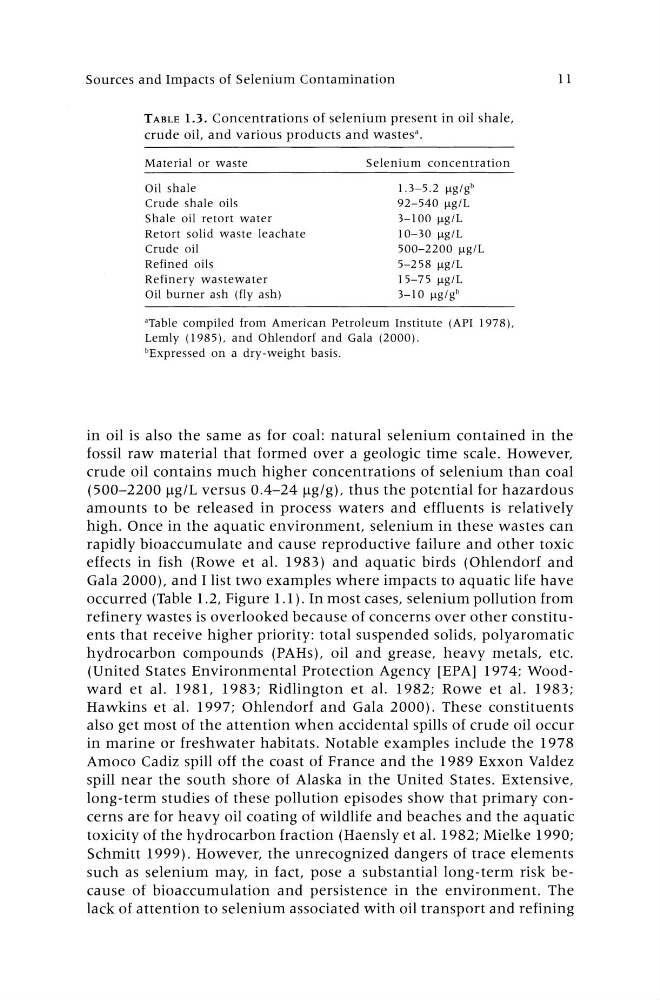
TABLE 1.3. Concentrations of selenium present in oil shale,
11
Material or waste
Oil shale
Crude shale oils
Shale oil retort water
Retort solid waste leachate
Crude oil
Refined oils
Refinery wastewater
Oil burner ash (fly ash)
Selenium concentration
1.3-5.2 Ilg/gb
92-540 Ilg/L
3-100 Ilg/L
10-30 Ilg/L
500-2200 Ilg/L
5-258 Ilg/L
15-75 Ilg/L
3-10 Ilg/gb
"Table compiled from American Petroleum Institute (API 1978),
Lemly (1985), and Ohlendorf and Gala (2000).
bExpressed on a dry-weight basis.
in oil is also the same as for coal: natural selenium contained in the
fossil raw material that formed over a geologic time scale. However,
crude oil contains much higher concentrations of selenium than coal
(500-2200 Ilg/L versus 0.4-24 Ilg/g), thus the potential for hazardous
amounts to be released in process waters and effluents is relatively
high. Once in the aquatic environment, selenium in these wastes can
rapidly bioaccumulate and cause reproductive failure and other toxic
effects in fish (Rowe et al. 1983) and aquatic birds (Ohlendorf and
Gala 2000), and I list two examples where impacts to aquatic life have
occurred (Table 1.2, Figure 1.1). In most cases, selenium pollution from
refinery wastes is overlooked because of concerns over other constituents that receive higher priority: total suspended solids, polyaromatic
hydrocarbon compounds (PAHs), oil and grease, heavy metals, etc.
(United States Environmental Protection Agency [EPA] 1974; Woodward et al. 1981, 1983; Ridlington et al. 1982; Rowe et al. 1983;
Hawkins et al. 1997; Ohlendorf and Gala 2000). These constituents
also get most of the attention when accidental spills of crude oil occur
in marine or freshwater habitats. Notable examples include the 1978
Amoco Cadiz spill off the coast of France and the 1989 Exxon Valdez
spill near the south shore of Alaska in the United States. Extensive,
long-term studies of these pollution episodes show that primary concerns are for heavy oil coating of wildlife and beaches and the aquatic
toxicity of the hydrocarbon fraction (Haensly et al. 1982; Mielke 1990;
Schmitt 1999). However, the unrecognized dangers of trace elements
such as selenium may, in fact, pose a substantial long-term risk because of bioaccumulation and persistence in the environment. The
lack of attention to selenium associated with oil transport and refining
TABLE 1.3. Concentrations of selenium present in oil shale,
11
Material or waste
Oil shale
Crude shale oils
Shale oil retort water
Retort solid waste leachate
Crude oil
Refined oils
Refinery wastewater
Oil burner ash (fly ash)
Selenium concentration
1.3-5.2 Ilg/gb
92-540 Ilg/L
3-100 Ilg/L
10-30 Ilg/L
500-2200 Ilg/L
5-258 Ilg/L
15-75 Ilg/L
3-10 Ilg/gb
"Table compiled from American Petroleum Institute (API 1978),
Lemly (1985), and Ohlendorf and Gala (2000).
bExpressed on a dry-weight basis.
in oil is also the same as for coal: natural selenium contained in the
fossil raw material that formed over a geologic time scale. However,
crude oil contains much higher concentrations of selenium than coal
(500-2200 Ilg/L versus 0.4-24 Ilg/g), thus the potential for hazardous
amounts to be released in process waters and effluents is relatively
high. Once in the aquatic environment, selenium in these wastes can
rapidly bioaccumulate and cause reproductive failure and other toxic
effects in fish (Rowe et al. 1983) and aquatic birds (Ohlendorf and
Gala 2000), and I list two examples where impacts to aquatic life have
occurred (Table 1.2, Figure 1.1). In most cases, selenium pollution from
refinery wastes is overlooked because of concerns over other constituents that receive higher priority: total suspended solids, polyaromatic
hydrocarbon compounds (PAHs), oil and grease, heavy metals, etc.
(United States Environmental Protection Agency [EPA] 1974; Woodward et al. 1981, 1983; Ridlington et al. 1982; Rowe et al. 1983;
Hawkins et al. 1997; Ohlendorf and Gala 2000). These constituents
also get most of the attention when accidental spills of crude oil occur
in marine or freshwater habitats. Notable examples include the 1978
Amoco Cadiz spill off the coast of France and the 1989 Exxon Valdez
spill near the south shore of Alaska in the United States. Extensive,
long-term studies of these pollution episodes show that primary concerns are for heavy oil coating of wildlife and beaches and the aquatic
toxicity of the hydrocarbon fraction (Haensly et al. 1982; Mielke 1990;
Schmitt 1999). However, the unrecognized dangers of trace elements
such as selenium may, in fact, pose a substantial long-term risk because of bioaccumulation and persistence in the environment. The
lack of attention to selenium associated with oil transport and refining