

6
I . Selenium Pollution Around the World
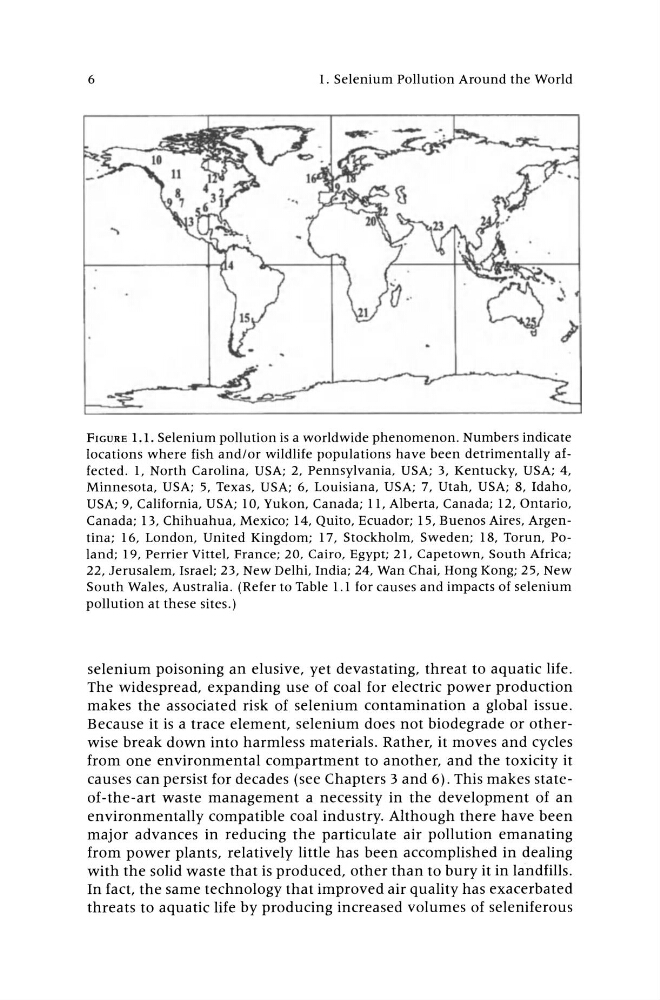
FIGURE 1.1. Selenium pollution is a worldwide phenomenon. Numbers indicate
locations where fish and/or wildlife populations have been detrimentally affected . I , North Carolina, USA; 2, Pennsylvania, USA; 3, Kentucky, USA; 4,
Minnesota, USA; 5, Texas, USA; 6, Louisiana, USA; 7, Utah, USA; 8, Idaho,
USA; 9, California, USA; 10, Yukon, Canada; I L Alberta, Canada; 12, Ontario,
Canada; 13, Chihuahua, Mexico; 14, Quito, Ecuador; IS, Buenos Aires, Argentina; 16, London, United Kingdom; 17, Stockholm, Sweden; 18, Torun, Poland; 19, Perrier Vitte\' France; 20, Cairo, Egypt; 21 , Capetown, South Africa;
22, Jerusalem, Israel; 23, New Delhi, India; 24, Wan Chai, Hong Kong; 25, New
South Wales, Au stralia. (Refer to Table 1. 1 for causes and impacts of selenium
pollution at these sites. )
selenium poisoning an elusive, yet devastating, threat to aquatic life .
The widespread, expanding use of coal for electric power production
makes the associated risk of selenium contamination a global issue.
Because it is a trace element, selenium does not biodegrade or otherwise break down into harmless materials. Rather, it moves and cycles
from one environmental compartment to another, and the toxicity it
causes can persist for decades (see Chapters 3 and 6). This makes stateof-the-art waste management a necessity in the development of an
environmentally compatible coal industry. Although there have been
major advances in reducing the particulate air pollution emanating
from power plants, relatively little has been accomplished in dealing
with the solid waste that is produced, other than to bury it in landfills.
In fact, the same technology that improved air quality has exacerbated
threats to aquatic life by producing increased volumes of seleniferous
I . Selenium Pollution Around the World
FIGURE 1.1. Selenium pollution is a worldwide phenomenon. Numbers indicate
locations where fish and/or wildlife populations have been detrimentally affected . I , North Carolina, USA; 2, Pennsylvania, USA; 3, Kentucky, USA; 4,
Minnesota, USA; 5, Texas, USA; 6, Louisiana, USA; 7, Utah, USA; 8, Idaho,
USA; 9, California, USA; 10, Yukon, Canada; I L Alberta, Canada; 12, Ontario,
Canada; 13, Chihuahua, Mexico; 14, Quito, Ecuador; IS, Buenos Aires, Argentina; 16, London, United Kingdom; 17, Stockholm, Sweden; 18, Torun, Poland; 19, Perrier Vitte\' France; 20, Cairo, Egypt; 21 , Capetown, South Africa;
22, Jerusalem, Israel; 23, New Delhi, India; 24, Wan Chai, Hong Kong; 25, New
South Wales, Au stralia. (Refer to Table 1. 1 for causes and impacts of selenium
pollution at these sites. )
selenium poisoning an elusive, yet devastating, threat to aquatic life .
The widespread, expanding use of coal for electric power production
makes the associated risk of selenium contamination a global issue.
Because it is a trace element, selenium does not biodegrade or otherwise break down into harmless materials. Rather, it moves and cycles
from one environmental compartment to another, and the toxicity it
causes can persist for decades (see Chapters 3 and 6). This makes stateof-the-art waste management a necessity in the development of an
environmentally compatible coal industry. Although there have been
major advances in reducing the particulate air pollution emanating
from power plants, relatively little has been accomplished in dealing
with the solid waste that is produced, other than to bury it in landfills.
In fact, the same technology that improved air quality has exacerbated
threats to aquatic life by producing increased volumes of seleniferous