

146
9. Emerging Selenium Contamination Issues
100
80
Reproductive 60
failure in
sensitive fish
(%)
40
20
0
0
2
4
6
8
10
Waterborne selenium (JlWL)
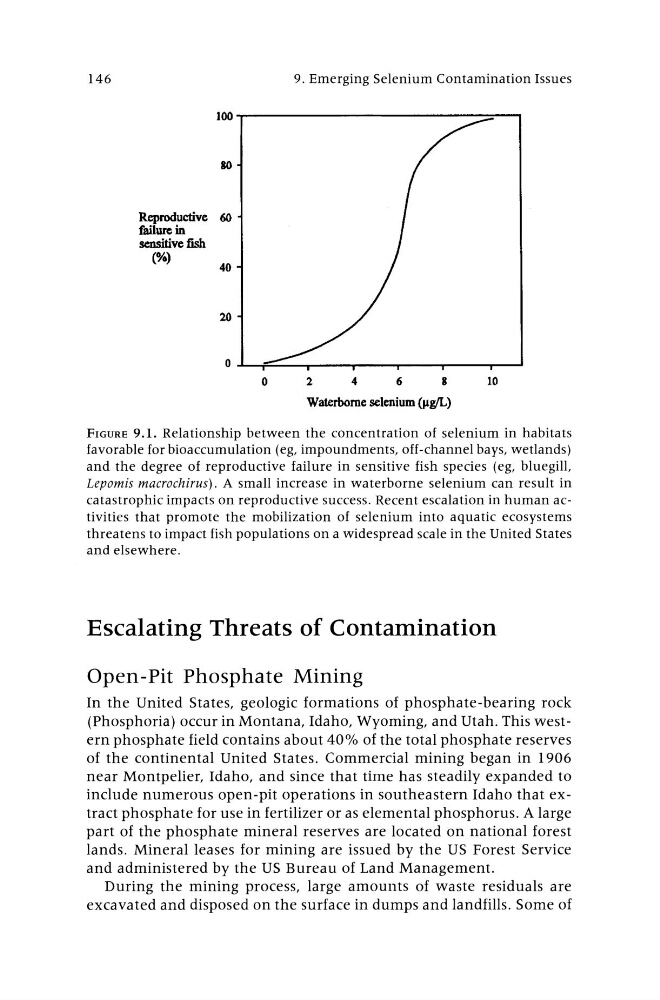
FIGURE 9.1. Relationship between the concentration of selenium in habitats
favorable for bioaccumulation (eg, impoundments, off-channel bays, wetlands)
and the degree of reproductive failure in sensitive fish species (eg, bluegill,
Lepomis macrochirus). A small increase in waterborne selenium can result in
catastrophic impacts on reproductive success. Recent escalation in human activities that promote the mobilization of selenium into aquatic ecosystems
threatens to impact fish populations on a widespread scale in the United States
and elsewhere.
Escalating Threats of Contamination
Open-Pit Phosphate Mining
In the United States, geologic formations of phosphate-bearing rock
(Phosphoria) occur in Montana, Idaho, Wyoming, and Utah. This western phosphate field contains about 40% of the total phosphate reserves
of the continental United States. Commercial mining began in 1906
near Montpelier, Idaho, and since that time has steadily expanded to
include numerous open-pit operations in southeastern Idaho that extract phosphate for use in fertilizer or as elemental phosphorus. A large
part of the phosphate mineral reserves are located on national forest
lands. Mineral leases for mining are issued by the US Forest Service
and administered by the US Bureau of Land Management.
During the mining process, large amounts of waste residuals are
excavated and disposed on the surface in dumps and landfills. Some of
9. Emerging Selenium Contamination Issues
100
80
Reproductive 60
failure in
sensitive fish
(%)
40
20
0
0
2
4
6
8
10
Waterborne selenium (JlWL)
FIGURE 9.1. Relationship between the concentration of selenium in habitats
favorable for bioaccumulation (eg, impoundments, off-channel bays, wetlands)
and the degree of reproductive failure in sensitive fish species (eg, bluegill,
Lepomis macrochirus). A small increase in waterborne selenium can result in
catastrophic impacts on reproductive success. Recent escalation in human activities that promote the mobilization of selenium into aquatic ecosystems
threatens to impact fish populations on a widespread scale in the United States
and elsewhere.
Escalating Threats of Contamination
Open-Pit Phosphate Mining
In the United States, geologic formations of phosphate-bearing rock
(Phosphoria) occur in Montana, Idaho, Wyoming, and Utah. This western phosphate field contains about 40% of the total phosphate reserves
of the continental United States. Commercial mining began in 1906
near Montpelier, Idaho, and since that time has steadily expanded to
include numerous open-pit operations in southeastern Idaho that extract phosphate for use in fertilizer or as elemental phosphorus. A large
part of the phosphate mineral reserves are located on national forest
lands. Mineral leases for mining are issued by the US Forest Service
and administered by the US Bureau of Land Management.
During the mining process, large amounts of waste residuals are
excavated and disposed on the surface in dumps and landfills. Some of