

140
8. Setting Ecosystem Loading Limits
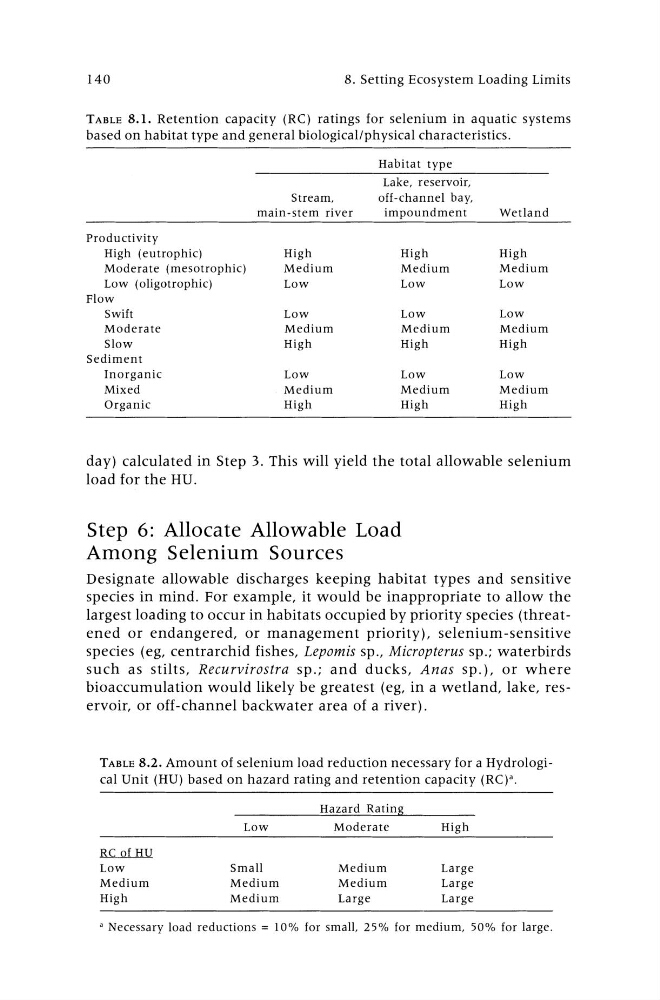
TABLE 8.1. Retention capacity (RC) ratings for selenium in aquatic systems
based on habitat type and general biological/physical characteristics.
Habitat type
Lake, reservoir,
Stream,
main-stem river
off-channel bay,
impoundment
Wetland
Pro d u ctivity
High (eutrophic)
Moderate (mesotrophic)
High
Medium
High
Medium
High
Medium
Low (oligotrophic)
Flow
Low
Low
Low
Swift
Moderate
Slow
Sediment
Inorganic
Mixed
Organic
Low
Medium
High
Low
Medium
High
Low
Medium
High
Low
Medium
High
Low
Medium
High
Low
Medium
High
day) calculated in Step 3. This will yield the total allowable selenium
load for the RD.
Step 6: Allocate Allowable Load
Among Selenium Sources
Designate allowable discharges keeping habitat types and sensitive
species in mind. For example, it would be inappropriate to allow the
largest loading to occur in habitats occupied by priority species (threatened or endangered, or management priority), selenium-sensitive
species (eg, centrarchid fishes, Lepomis sp., Micropterus sp.; waterbirds
such as stilts, Recurvirostra sp.; and ducks, Anas sp.), or where
bioaccumulation would likely be greatest (eg, in a wetland, lake, reservoir, or off-channel backwater area of a river).
TABLE 8.2. Amount of selenium load reduction necessary for a Hydrological Unit (HU) based on hazard rating and retention capacity (Rc)a.
Hazard Rating
Low
Moderate
High
RC of HU
Low
Medium
High
Small
Medium
Medium
Medium
Medium
Large
Large
Large
Large
a Necessary load reductions = 10% for small, 25% for medium, 50% for large.
8. Setting Ecosystem Loading Limits
TABLE 8.1. Retention capacity (RC) ratings for selenium in aquatic systems
based on habitat type and general biological/physical characteristics.
Habitat type
Lake, reservoir,
Stream,
main-stem river
off-channel bay,
impoundment
Wetland
Pro d u ctivity
High (eutrophic)
Moderate (mesotrophic)
High
Medium
High
Medium
High
Medium
Low (oligotrophic)
Flow
Low
Low
Low
Swift
Moderate
Slow
Sediment
Inorganic
Mixed
Organic
Low
Medium
High
Low
Medium
High
Low
Medium
High
Low
Medium
High
Low
Medium
High
Low
Medium
High
day) calculated in Step 3. This will yield the total allowable selenium
load for the RD.
Step 6: Allocate Allowable Load
Among Selenium Sources
Designate allowable discharges keeping habitat types and sensitive
species in mind. For example, it would be inappropriate to allow the
largest loading to occur in habitats occupied by priority species (threatened or endangered, or management priority), selenium-sensitive
species (eg, centrarchid fishes, Lepomis sp., Micropterus sp.; waterbirds
such as stilts, Recurvirostra sp.; and ducks, Anas sp.), or where
bioaccumulation would likely be greatest (eg, in a wetland, lake, reservoir, or off-channel backwater area of a river).
TABLE 8.2. Amount of selenium load reduction necessary for a Hydrological Unit (HU) based on hazard rating and retention capacity (Rc)a.
Hazard Rating
Low
Moderate
High
RC of HU
Low
Medium
High
Small
Medium
Medium
Medium
Medium
Large
Large
Large
Large
a Necessary load reductions = 10% for small, 25% for medium, 50% for large.