

Importance of Bioaccumulation
109
Off-Channel
Backwater
or Wetland
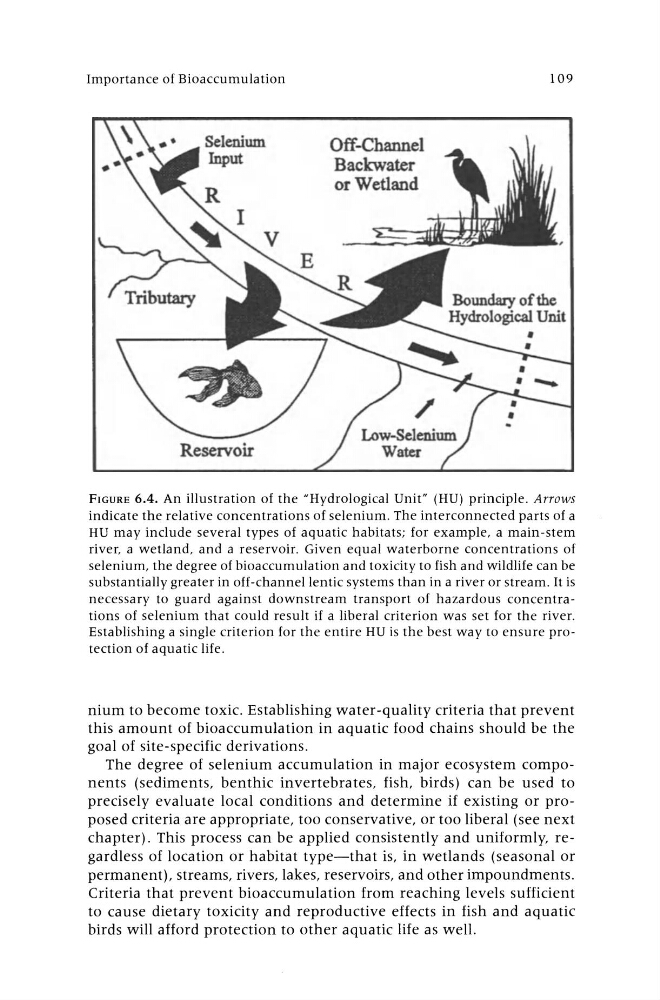
FIGURE 6.4. An illustration of the "Hydrological Unit" (HU) principle. Arrows
indicate the relative concentrations of selenium. The interconnected parts of a
HU may include several types of aquatic habitats; for example, a main-stem
river, a wetland, and a reservoir. Given equal waterborne concentrations of
selenium, the degree of bioaccumulation and toxicity to fish and wildlife can be
substantially greater in off-channellentic systems than in a river or stream. It is
necessary to guard against downstream transport of hazardous concentrations of selenium that could result if a liberal criterion was set for the river.
Establishing a single criterion for the entire HU is the best way to ensure protection of aquatic life.
nium to become toxic. Establishing water-quality criteria that prevent
this amount of bioaccumulation in aquatic food chains should be the
goal of site-specific derivations.
The degree of selenium accumulation in major ecosystem components (sediments, benthic invertebrates, fish, birds) can be used to
precisely evaluate local conditions and determine if existing or proposed criteria are appropriate, too conservative, or too liberal (see next
chapter) . This process can be applied consistently and uniformly, regardless of location or habitat type-that is, in wetlands (seasonal or
permanent), streams, rivers, lakes, reservoirs, and other impoundments.
Criteria that prevent bioaccumulation from reaching levels sufficient
to cause dietary toxicity and reproductive effects in fish and aquatic
birds will afford protection to other aquatic life as well.
109
Off-Channel
Backwater
or Wetland
FIGURE 6.4. An illustration of the "Hydrological Unit" (HU) principle. Arrows
indicate the relative concentrations of selenium. The interconnected parts of a
HU may include several types of aquatic habitats; for example, a main-stem
river, a wetland, and a reservoir. Given equal waterborne concentrations of
selenium, the degree of bioaccumulation and toxicity to fish and wildlife can be
substantially greater in off-channellentic systems than in a river or stream. It is
necessary to guard against downstream transport of hazardous concentrations of selenium that could result if a liberal criterion was set for the river.
Establishing a single criterion for the entire HU is the best way to ensure protection of aquatic life.
nium to become toxic. Establishing water-quality criteria that prevent
this amount of bioaccumulation in aquatic food chains should be the
goal of site-specific derivations.
The degree of selenium accumulation in major ecosystem components (sediments, benthic invertebrates, fish, birds) can be used to
precisely evaluate local conditions and determine if existing or proposed criteria are appropriate, too conservative, or too liberal (see next
chapter) . This process can be applied consistently and uniformly, regardless of location or habitat type-that is, in wetlands (seasonal or
permanent), streams, rivers, lakes, reservoirs, and other impoundments.
Criteria that prevent bioaccumulation from reaching levels sufficient
to cause dietary toxicity and reproductive effects in fish and aquatic
birds will afford protection to other aquatic life as well.