

16. A Comparison of the Ecology and Conservation Management
321
FORESTS OF TASMANIA
Kilometres
~
Rainforest
Wet Eucalypt Forest
Dry Sclerophyll Forest
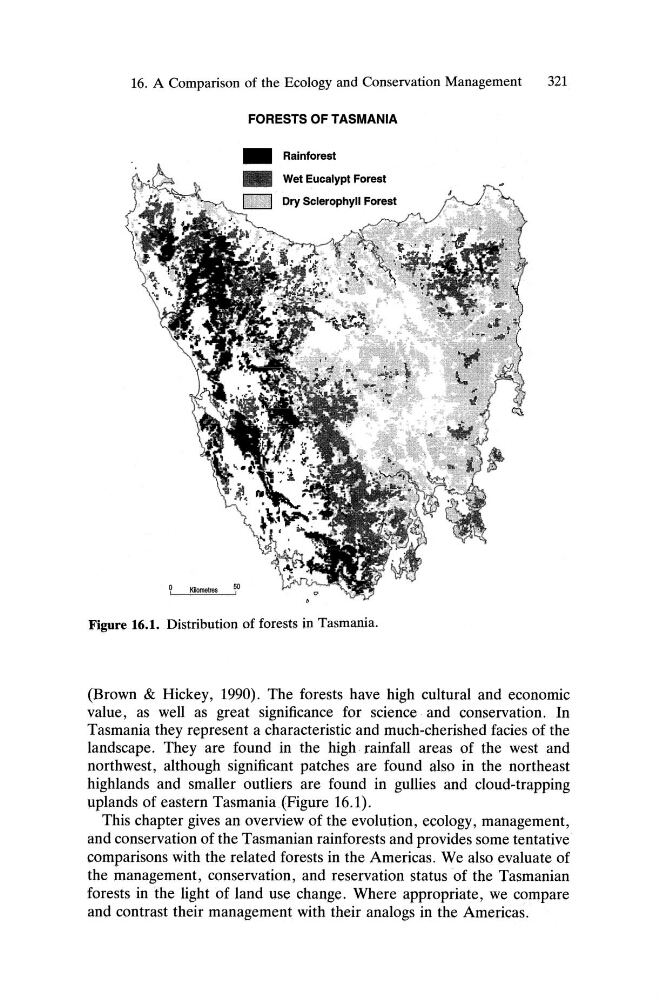
Figure 16.1. Distribution of forests in Tasmania.
(Brown & Hickey, 1990). The forests have high cultural and economic
value, as well as great significance for science and conservation. In
Tasmania they represent a characteristic and much-cherished facies of the
landscape. They are found in the high . rainfall areas of the west and
northwest, although significant patches are found also in the northeast
highlands and smaller outliers are found in gullies and cloud-trapping
uplands of eastern Tasmania (Figure 16.1).
This chapter gives an overview of the evolution, ecology, management,
and conservation of the Tasmanian rainforests and provides some tentative
comparisons with the related forests in the Americas. We also evaluate of
the management, conservation, and reservation status of the Tasmanian
forests in the light of land use change. Where appropriate, we compare
and contrast their management with their analogs in the Americas.
321
FORESTS OF TASMANIA
Kilometres
~
Rainforest
Wet Eucalypt Forest
Dry Sclerophyll Forest
Figure 16.1. Distribution of forests in Tasmania.
(Brown & Hickey, 1990). The forests have high cultural and economic
value, as well as great significance for science and conservation. In
Tasmania they represent a characteristic and much-cherished facies of the
landscape. They are found in the high . rainfall areas of the west and
northwest, although significant patches are found also in the northeast
highlands and smaller outliers are found in gullies and cloud-trapping
uplands of eastern Tasmania (Figure 16.1).
This chapter gives an overview of the evolution, ecology, management,
and conservation of the Tasmanian rainforests and provides some tentative
comparisons with the related forests in the Americas. We also evaluate of
the management, conservation, and reservation status of the Tasmanian
forests in the light of land use change. Where appropriate, we compare
and contrast their management with their analogs in the Americas.