

PERCICHTHYS
TRICHOMYCTERUS
272
D. Soto and J .G. Stockner
CHILE
ONCORHYNCHUS & SALMO
.>:
GMA\jtCHnm
~
zooprON~ZOOBros
PHYTOPLANKTON
LITIORAL ALGAE
(nano and microplankton)
BRITISH
COLUMBIA
ONCORHYNCHUS
GASTEROSTEUS
I~'"
ZOOPLANKTON~
ZOOBENTHOS
I
MICROZOOPLANKTON
I
. /
PROTOZOANS
PHYTOPLANKTON
LITIORAL ALGAE
(plcoand nano plankton)
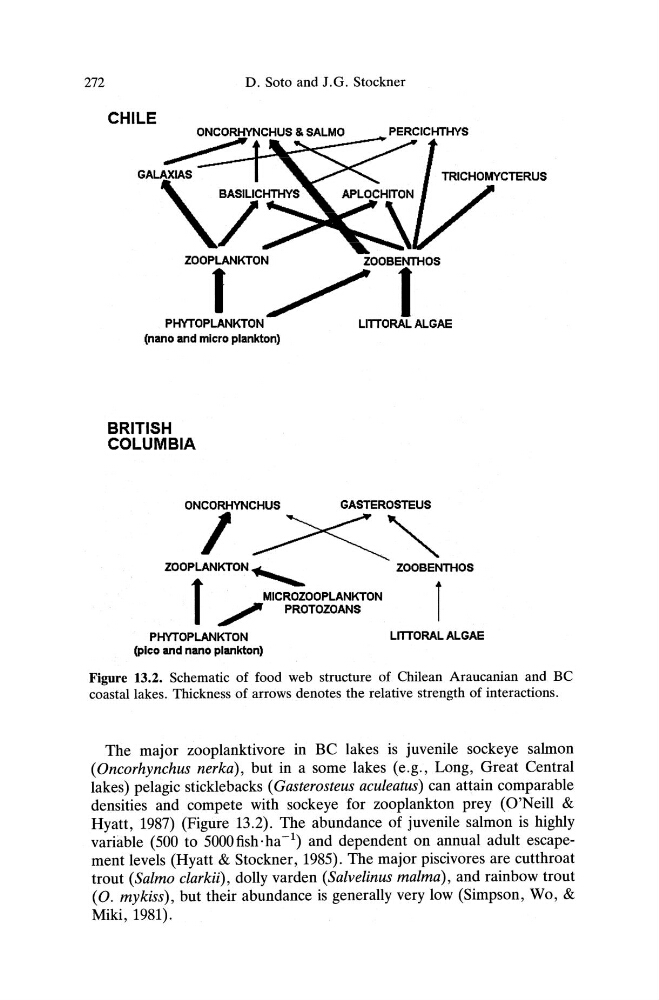
Figure 13.2. Schema tic of food web structure of Chilean Araucanian and BC
coastal lakes. Thickness of arrows denotes the relative streng th of interactions.
The major zooplanktivore in BC lakes is juvenile sockeye salmon
(Oncorhynchus nerka), but in a some lakes (e.g., Long, Great Central
lakes) pelagic sticklebacks (Gasterosteus aculeatus) can attain compara ble
densities and compete with sockeye for zooplankton prey (O'Neill &
Hyatt , 1987) (Figure 13.2). The abundance of juvenile salmon is highly
variable (500 to 5000fish ' ha1 ) and depen dent on annual adult escapement levels (Hyatt & Stockner , 1985). The major piscivores are cutthroat
trout (Salrno clarkii), dolly varden (Salvelinus rnalrna), and rainbow trout
(0 . rnykiss), but their abundance is generally very low (Simpson, Wo, &
Miki, 1981).
TRICHOMYCTERUS
272
D. Soto and J .G. Stockner
CHILE
ONCORHYNCHUS & SALMO
.>:
GMA\jtCHnm
~
zooprON~ZOOBros
PHYTOPLANKTON
LITIORAL ALGAE
(nano and microplankton)
BRITISH
COLUMBIA
ONCORHYNCHUS
GASTEROSTEUS
I~'"
ZOOPLANKTON~
ZOOBENTHOS
I
MICROZOOPLANKTON
I
. /
PROTOZOANS
PHYTOPLANKTON
LITIORAL ALGAE
(plcoand nano plankton)
Figure 13.2. Schema tic of food web structure of Chilean Araucanian and BC
coastal lakes. Thickness of arrows denotes the relative streng th of interactions.
The major zooplanktivore in BC lakes is juvenile sockeye salmon
(Oncorhynchus nerka), but in a some lakes (e.g., Long, Great Central
lakes) pelagic sticklebacks (Gasterosteus aculeatus) can attain compara ble
densities and compete with sockeye for zooplankton prey (O'Neill &
Hyatt , 1987) (Figure 13.2). The abundance of juvenile salmon is highly
variable (500 to 5000fish ' ha1 ) and depen dent on annual adult escapement levels (Hyatt & Stockner , 1985). The major piscivores are cutthroat
trout (Salrno clarkii), dolly varden (Salvelinus rnalrna), and rainbow trout
(0 . rnykiss), but their abundance is generally very low (Simpson, Wo, &
Miki, 1981).