

12. The Importance of Plant-Bird Mutualisms
253
A l l ot her bi rd s
( 31.6 %)
Turd us fa/ck/andii
(3.8 %
Elaen ia a /bicep s
( 5 2.5%)
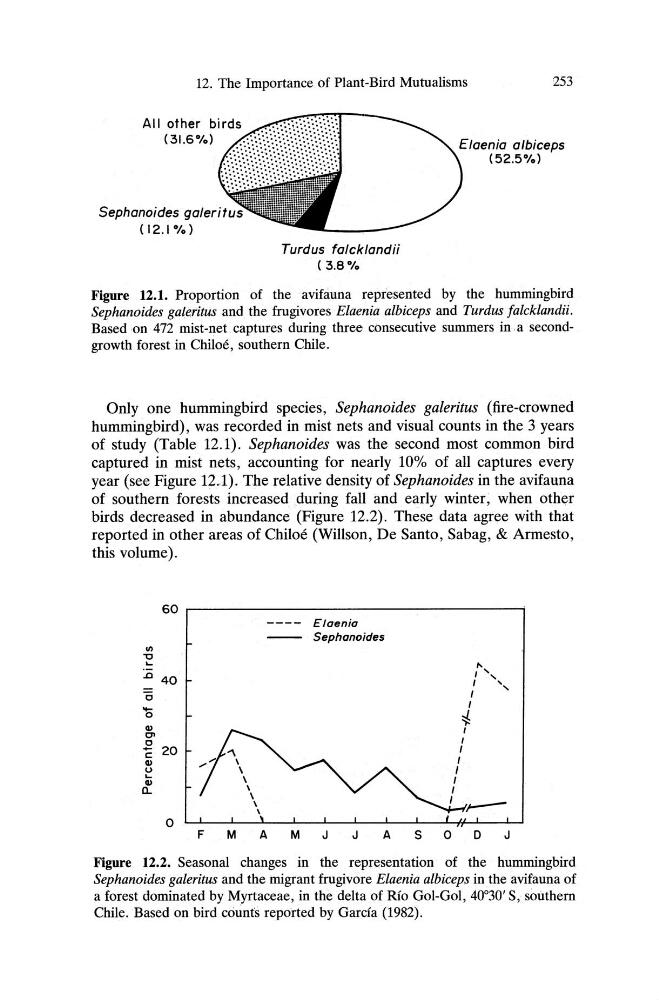
Figure 12.1. Proportion of the avifauna represented by the hummingbird
Sephanoides galeritus and the frugivores Elaenia albiceps and Turdus falcklandii.
Based on 472 mist-net captures during three consecutive summers in .a secondgrowth forest in Chiloe, southern Chile.
Only one hummingbird species , Sephanoides galeritus (fire-crowned
hummingbird), was recorded in mist nets and visual counts in the 3 years
of study (Table 12.1). Sephanoides was the second most common bird
captured in mist nets, accounting for nearly 10% of all captures every
year (see Figure 12..1). The relative density of Sephanoides in the avifauna
of southern forests increased during fall and early winter, when other
birds decreased in abundance (Figure 12.2). These data agree with that
reported in other areas of Chiloe (Willson, De Santo , Sabag , & Armesto,
this volume).
60
E l oenio
Sep hon oi des
III
"0
...
".a 40
' ,
I
"
0
I
'
"0
I
:!:
eu
0'
,
.E
I
c: 20
I
eu
I
0
I
...
I
eu
a.
I
I
0
F
M
A
M
J
J
A
S
0
0
J
Figure 12.2. Seasonal changes in the representation of the hummingbird
Sephanoides galeritus and the migrant frugivore Elaenia albiceps in the avifauna of
a forest dominated by Myrtaceae, in the delta of Rio Gal-Gal, 40°30' S, southern
Chile. Based on bird counts reported by Garcia (1982).
253
A l l ot her bi rd s
( 31.6 %)
Turd us fa/ck/andii
(3.8 %
Elaen ia a /bicep s
( 5 2.5%)
Figure 12.1. Proportion of the avifauna represented by the hummingbird
Sephanoides galeritus and the frugivores Elaenia albiceps and Turdus falcklandii.
Based on 472 mist-net captures during three consecutive summers in .a secondgrowth forest in Chiloe, southern Chile.
Only one hummingbird species , Sephanoides galeritus (fire-crowned
hummingbird), was recorded in mist nets and visual counts in the 3 years
of study (Table 12.1). Sephanoides was the second most common bird
captured in mist nets, accounting for nearly 10% of all captures every
year (see Figure 12..1). The relative density of Sephanoides in the avifauna
of southern forests increased during fall and early winter, when other
birds decreased in abundance (Figure 12.2). These data agree with that
reported in other areas of Chiloe (Willson, De Santo , Sabag , & Armesto,
this volume).
60
E l oenio
Sep hon oi des
III
"0
...
".a 40
' ,
I
"
0
I
'
"0
I
:!:
eu
0'
,
.E
I
c: 20
I
eu
I
0
I
...
I
eu
a.
I
I
0
F
M
A
M
J
J
A
S
0
0
J
Figure 12.2. Seasonal changes in the representation of the hummingbird
Sephanoides galeritus and the migrant frugivore Elaenia albiceps in the avifauna of
a forest dominated by Myrtaceae, in the delta of Rio Gal-Gal, 40°30' S, southern
Chile. Based on bird counts reported by Garcia (1982).