

-10 0 10 20 30
Degrees of Latitude
1. North-South Variations in West Coast Hydrometeorological Parameters
5
5 0 0 0 - r - - - - - - - - - - - - , - - - - - - - - - - - - - - ,
4500
4000
3500
g 3000
c
o 2500
~
6i 2000
m 1500
1000
500
o
-60 -50
1 -,- Coast - - 50 km inland 100 km inland I
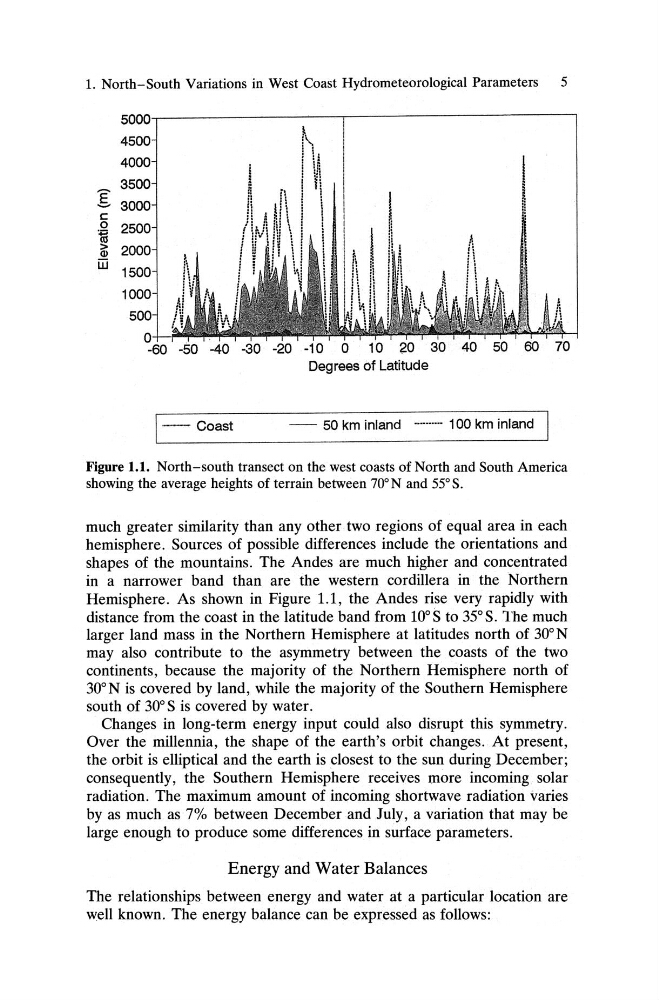
Figure 1.1. North-south transect on the west coasts of North and South America
showing the average heights of terrain between 70°Nand 55°S.
much greater similarity than any other .two regions of equal area in each
hemisphere. Sources of possible differences include the orientations and
shapes of the mountains. The Andes are much higher and concentrated
in a narrower band than are the western cordillera in the Northern
Hemisphere. As shown in Figure 1.1, the Andes rise very rapidly with
distance from the coast in the latitude band from 10°S to 35°S. The much
larger land mass in the Northern Hemisphere at latitudes north of 30
0N
may also contribute to the asymmetry between the coasts of the two
continents, because the majority of the Northern Hemisphere north of
30
0N
is covered by land, while the majority of the Southern Hemisphere
south of 30° S is covered by water.
Changes in long-term energy input could also disrupt this symmetry.
Over the millennia, the shape of the earth's orbit changes. At present,
the orbit is elliptical and the earth is dosest to the sun during December;
consequently, the Southern Hemisphere receives more incoming . : solar
radiation. The maximum amount of incoming shortwave radiation varies
by as much as 7% between December and July, a variation that may be
large enough to produce some differences in surface parameters.
Energy and Water Balances
The relationships between energy and water at a particular location are
well known. The energy balance can be expressed as follows:
Degrees of Latitude
1. North-South Variations in West Coast Hydrometeorological Parameters
5
5 0 0 0 - r - - - - - - - - - - - - , - - - - - - - - - - - - - - ,
4500
4000
3500
g 3000
c
o 2500
~
6i 2000
m 1500
1000
500
o
-60 -50
1 -,- Coast - - 50 km inland 100 km inland I
Figure 1.1. North-south transect on the west coasts of North and South America
showing the average heights of terrain between 70°Nand 55°S.
much greater similarity than any other .two regions of equal area in each
hemisphere. Sources of possible differences include the orientations and
shapes of the mountains. The Andes are much higher and concentrated
in a narrower band than are the western cordillera in the Northern
Hemisphere. As shown in Figure 1.1, the Andes rise very rapidly with
distance from the coast in the latitude band from 10°S to 35°S. The much
larger land mass in the Northern Hemisphere at latitudes north of 30
0N
may also contribute to the asymmetry between the coasts of the two
continents, because the majority of the Northern Hemisphere north of
30
0N
is covered by land, while the majority of the Southern Hemisphere
south of 30° S is covered by water.
Changes in long-term energy input could also disrupt this symmetry.
Over the millennia, the shape of the earth's orbit changes. At present,
the orbit is elliptical and the earth is dosest to the sun during December;
consequently, the Southern Hemisphere receives more incoming . : solar
radiation. The maximum amount of incoming shortwave radiation varies
by as much as 7% between December and July, a variation that may be
large enough to produce some differences in surface parameters.
Energy and Water Balances
The relationships between energy and water at a particular location are
well known. The energy balance can be expressed as follows: