

98
R.H. Waring and W.E. Winner
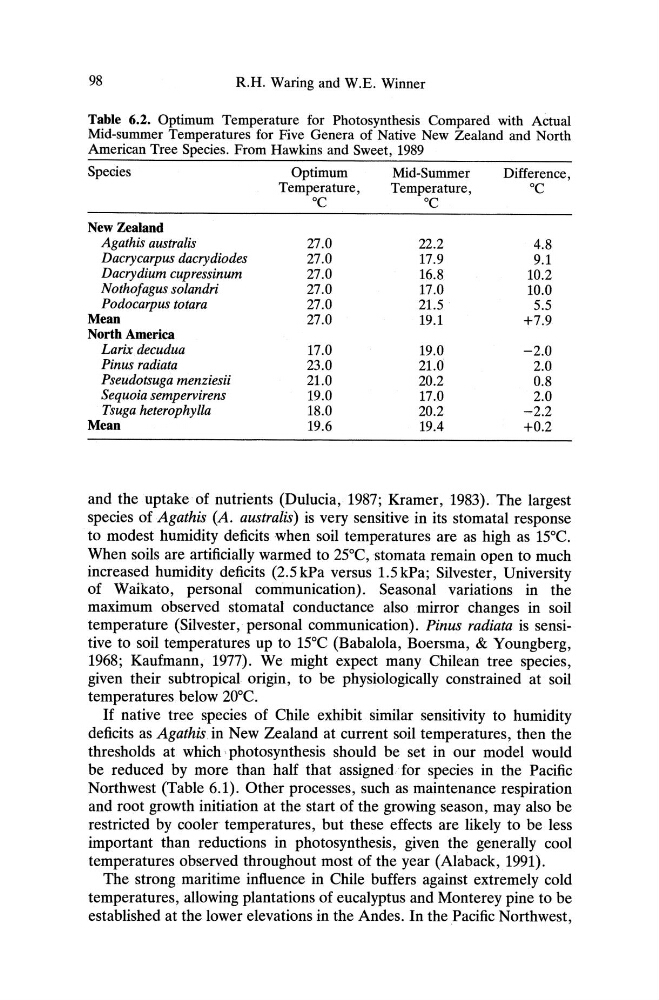
Table 6.2. Optimum Temperature for Photosynthesis Compared with Actual
Mid-summer Temperatures for Five Genera of Native New Zealand and North
American Tree Species. From Hawkins and Sweet, 1989
Species
Optimum
Mid-Summer
Difference,
Temperature,
Temperature,
D C
D C
D C
New Zealand
Agathis australis
27.0
22.2
4.8
Dacrycarpus dacrydiodes
27.0
17.9
9.1
Dacrydium cupressinum
27.0
16.8
10.2
Nothofagus solandri
27.0
17.0
10.0
Podocarpus totara
27.0
21.5
5.5
Mean
27.0
19.1
+7.9
North America
Larix decudua
17.0
19.0
-2.0
Pinus radiata
23.0
21.0
2.0
Pseudotsuga menziesii
21.0
20.2
0.8
Sequoia sempervirens
19.0
17.0
2.0
Tsuga heterophylla
18.0
20.2
-2.2
Mean
19.6
19.4
+0 .2
and the uptake of nutrients (Dulucia, 1987; Kramer , 1983). The largest
species of Agathis (A. australis) is very sensitive in its stomatal response
to modest humidity deficits when soil temperatures are as high as 15
DC.
When soils are artificially warmed to 25°C, stomata remain open to much
increased humidity deficits (2.5 kPa versus 1.5 kPa; Silvester, University
of Waikato , personal communication). Seasonal variations in the
maximum observed stomatal conductance also .mirror changes in soil
temperature (Silvester, personal communication). Pinus radiata is sensitive to soil temperatures up to 15°C (Babalola, Boersma , & Youngberg ,
1968; Kaufmann, 1977). We might expect many Chilean tree species,
given their subtropical origin, to be physiologically constrained at soil
temperatures below 20°e.
If native tree species of Chile exhibit similar sensitivity to humidity
deficits as Agathis in New Zealand at current soil temperatures, then the
thresholds at which photosynthesis should be set in our model would
be reduced by more than half that assigned for species in the Pacific
Northwest (Table 6.1). Other processes, such as maintenance respiration
and root growth initiation at the start of the growing season , may also be
restricted by cooler temperatures, but these effects are likely to be less
important than reductions in photosynthesis , given the generally cool
temperatures observed throughout most of the year (Alaback , 1991).
The strong maritime influence in Chile buffers against extremely cold
temperatures, allowing plantations of eucalyptus and Monterey pine to be
established at the lower elevations in the Andes. In the Pacific Northwest ,
R.H. Waring and W.E. Winner
Table 6.2. Optimum Temperature for Photosynthesis Compared with Actual
Mid-summer Temperatures for Five Genera of Native New Zealand and North
American Tree Species. From Hawkins and Sweet, 1989
Species
Optimum
Mid-Summer
Difference,
Temperature,
Temperature,
D C
D C
D C
New Zealand
Agathis australis
27.0
22.2
4.8
Dacrycarpus dacrydiodes
27.0
17.9
9.1
Dacrydium cupressinum
27.0
16.8
10.2
Nothofagus solandri
27.0
17.0
10.0
Podocarpus totara
27.0
21.5
5.5
Mean
27.0
19.1
+7.9
North America
Larix decudua
17.0
19.0
-2.0
Pinus radiata
23.0
21.0
2.0
Pseudotsuga menziesii
21.0
20.2
0.8
Sequoia sempervirens
19.0
17.0
2.0
Tsuga heterophylla
18.0
20.2
-2.2
Mean
19.6
19.4
+0 .2
and the uptake of nutrients (Dulucia, 1987; Kramer , 1983). The largest
species of Agathis (A. australis) is very sensitive in its stomatal response
to modest humidity deficits when soil temperatures are as high as 15
DC.
When soils are artificially warmed to 25°C, stomata remain open to much
increased humidity deficits (2.5 kPa versus 1.5 kPa; Silvester, University
of Waikato , personal communication). Seasonal variations in the
maximum observed stomatal conductance also .mirror changes in soil
temperature (Silvester, personal communication). Pinus radiata is sensitive to soil temperatures up to 15°C (Babalola, Boersma , & Youngberg ,
1968; Kaufmann, 1977). We might expect many Chilean tree species,
given their subtropical origin, to be physiologically constrained at soil
temperatures below 20°e.
If native tree species of Chile exhibit similar sensitivity to humidity
deficits as Agathis in New Zealand at current soil temperatures, then the
thresholds at which photosynthesis should be set in our model would
be reduced by more than half that assigned for species in the Pacific
Northwest (Table 6.1). Other processes, such as maintenance respiration
and root growth initiation at the start of the growing season , may also be
restricted by cooler temperatures, but these effects are likely to be less
important than reductions in photosynthesis , given the generally cool
temperatures observed throughout most of the year (Alaback , 1991).
The strong maritime influence in Chile buffers against extremely cold
temperatures, allowing plantations of eucalyptus and Monterey pine to be
established at the lower elevations in the Andes. In the Pacific Northwest ,