

54
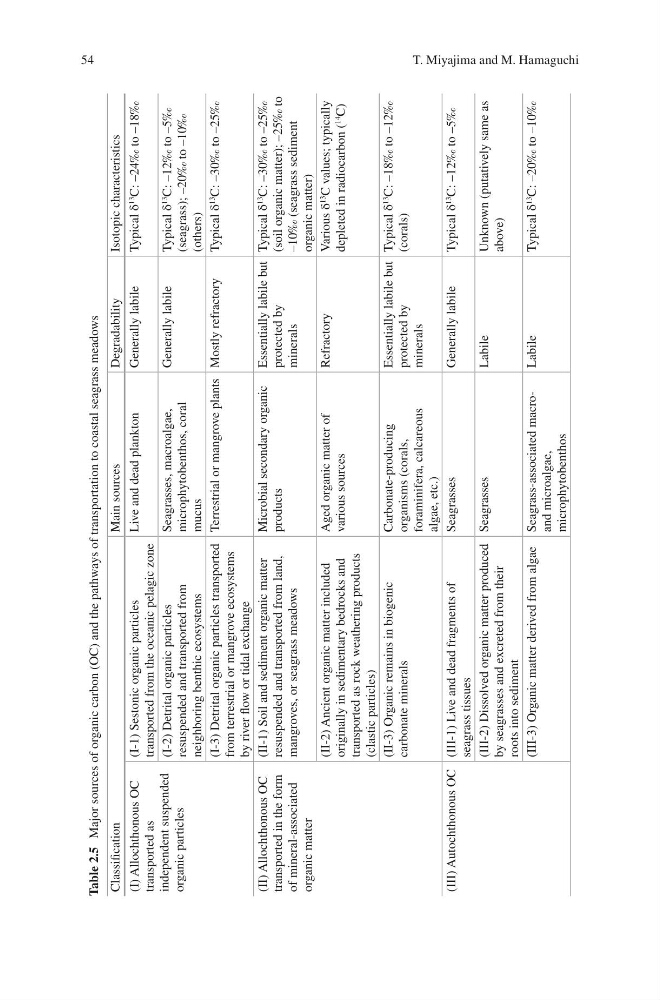
Table 2.5 Major sources of organic carbon (OC) and the pathways of transportation to coastal seagrass meadows
Classification
Main sources
Degradability
Isotopic characteristics
(I) Allochthonous OC
transported as
independent suspended
organic particles
(I-1) Sestonic organic particles
transported from the oceanic pelagic zone
Live and dead plankton
Generally labile
Typical
δ
13
C: –24‰ to –18‰
(I-2) Detrital organic particles
resuspended and transported from
neighboring benthic ecosystems
Seagrasses, macroalgae,
microphytobenthos, coral
mucus
Generally labile
Typical
δ
13
C: –12‰ to –5‰
(seagrass); –20‰ to –10‰
(others)
(I-3) Detrital organic particles transported
from terrestrial or mangrove ecosystems
by river flow or tidal exchange
Terrestrial or mangrove plants Mostly refractory
Typical
δ
13
C: –30‰ to –25‰
(II) Allochthonous OC
transported in the form
of mineral- associated
organic matter
(II-1) Soil and sediment organic matter
resuspended and transported from land,
mangroves, or seagrass meadows
Microbial secondary organic
products
Essentially labile but
protected by
minerals
Typical
δ
13
C: –30‰ to –25‰
(soil organic matter); –25‰ to
–10‰ (seagrass sediment
organic matter)
(II-2) Ancient organic matter included
originally in sedimentary bedrocks and
transported as rock weathering products
(clastic particles)
Aged organic matter of
various sources
Refractory
Various
δ
13
C values; typically
depleted in radiocarbon (
14
C)
(II-3) Organic remains in biogenic
carbonate minerals
Carbonate-producing
organisms (corals,
foraminifera, calcareous
algae, etc.)
Essentially labile but
protected by
minerals
Typical
δ
13
C: –18‰ to –12‰
(corals)
(III) Autochthonous OC (III-1) Live and dead fragments of
seagrass tissues
Seagrasses
Generally labile
Typical
δ
13
C: –12‰ to –5‰
(III-2) Dissolved organic matter produced
by seagrasses and excreted from their
roots into sediment
Seagrasses
Labile
Unknown (putatively same as
above)
(III-3) Organic matter derived from algae Seagrass-associated macroand microalgae,
microphytobenthos
Labile
Typical
δ
13
C: –20‰ to –10‰
T. Miyajima and M. Hamaguchi
Table 2.5 Major sources of organic carbon (OC) and the pathways of transportation to coastal seagrass meadows
Classification
Main sources
Degradability
Isotopic characteristics
(I) Allochthonous OC
transported as
independent suspended
organic particles
(I-1) Sestonic organic particles
transported from the oceanic pelagic zone
Live and dead plankton
Generally labile
Typical
δ
13
C: –24‰ to –18‰
(I-2) Detrital organic particles
resuspended and transported from
neighboring benthic ecosystems
Seagrasses, macroalgae,
microphytobenthos, coral
mucus
Generally labile
Typical
δ
13
C: –12‰ to –5‰
(seagrass); –20‰ to –10‰
(others)
(I-3) Detrital organic particles transported
from terrestrial or mangrove ecosystems
by river flow or tidal exchange
Terrestrial or mangrove plants Mostly refractory
Typical
δ
13
C: –30‰ to –25‰
(II) Allochthonous OC
transported in the form
of mineral- associated
organic matter
(II-1) Soil and sediment organic matter
resuspended and transported from land,
mangroves, or seagrass meadows
Microbial secondary organic
products
Essentially labile but
protected by
minerals
Typical
δ
13
C: –30‰ to –25‰
(soil organic matter); –25‰ to
–10‰ (seagrass sediment
organic matter)
(II-2) Ancient organic matter included
originally in sedimentary bedrocks and
transported as rock weathering products
(clastic particles)
Aged organic matter of
various sources
Refractory
Various
δ
13
C values; typically
depleted in radiocarbon (
14
C)
(II-3) Organic remains in biogenic
carbonate minerals
Carbonate-producing
organisms (corals,
foraminifera, calcareous
algae, etc.)
Essentially labile but
protected by
minerals
Typical
δ
13
C: –18‰ to –12‰
(corals)
(III) Autochthonous OC (III-1) Live and dead fragments of
seagrass tissues
Seagrasses
Generally labile
Typical
δ
13
C: –12‰ to –5‰
(III-2) Dissolved organic matter produced
by seagrasses and excreted from their
roots into sediment
Seagrasses
Labile
Unknown (putatively same as
above)
(III-3) Organic matter derived from algae Seagrass-associated macroand microalgae,
microphytobenthos
Labile
Typical
δ
13
C: –20‰ to –10‰
T. Miyajima and M. Hamaguchi