

42
treatment of the burial efficiency in individual sediment cores (Fourqurean et al.
2012; Miyajima et al. 2015; Röhr et al. 2016).
Even when not easily defined and assessed, the concept of burial efficiency and
the mechanisms that constrain it are still essential for evaluating and comparing the
carbon sequestration potential of various environments. The burial efficiency of
organic matter is principally controlled by two factors: the degradability of organic
matter in terms of enzymatic degradation, and the availability of metabolic electron
acceptors, particularly molecular oxygen (O 2 ), in the reactive layer of sediment. The
former depends on both the inherent structural recalcitrance of organic molecules
and physical protection of organic matter against degradation by the sediment
mineral matrix, as explained below.
2.4.2 Organic–Mineral Interactions
Organic matter supplied to marine sediment is composed of a broad range of compounds in terms of degradability. Most natural organic matter, such as carbohydrates, proteins, and lipids, are generally decomposable by bacteria. However, some
compounds, such as lignin derived from vascular plants and plastics discarded by
humans, are highly resistant to microbial decomposition and thus persist for a long
time, especially in anoxic sediments. Marine vascular plants such as mangroves and
seagrasses also produce lignin. Degradable organic matter such as carbohydrates,
proteins, lipids, and nucleic acids usually dominates the OC flux to sediment and is
presumed to be mostly decomposed during diagenetic processes. During the course
Depth in sediment
Dissolved O 2
Organic C
Metabolites (e.g. CO 2 , NH 4
+
)
Concentration (arbitrary unit)
a
b
c
C 0
C 0
C 0
C
C b
C
C
C b
C b
Reactive
layer
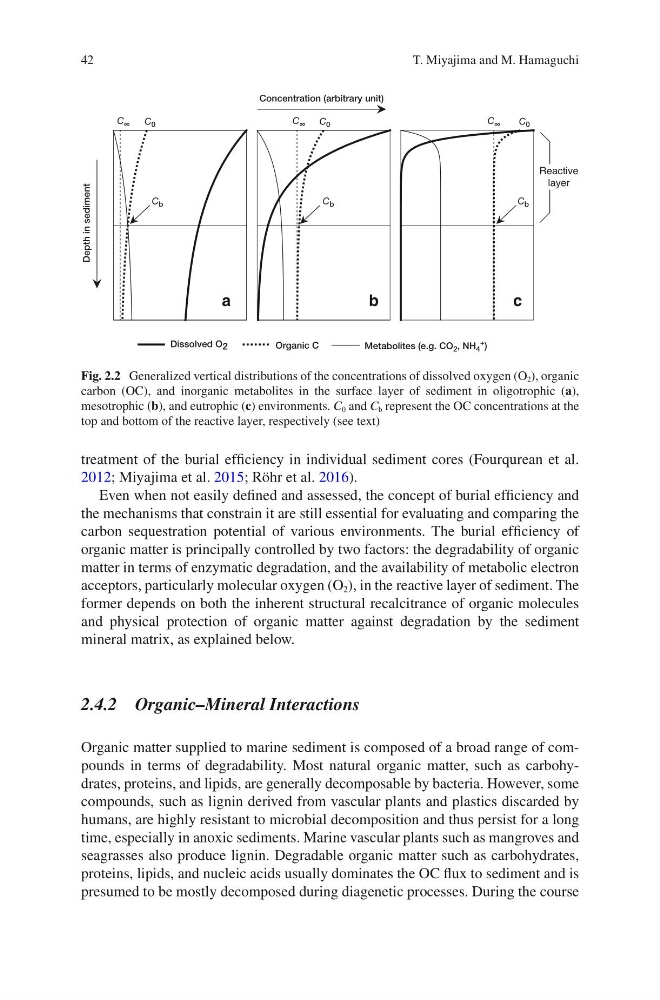
Fig. 2.2 Generalized vertical distributions of the concentrations of dissolved oxygen (O 2 ), organic
carbon (OC), and inorganic metabolites in the surface layer of sediment in oligotrophic (a),
mesotrophic (b), and eutrophic (c) environments. C 0 and C b represent the OC concentrations at the
top and bottom of the reactive layer, respectively (see text)
T. Miyajima and M. Hamaguchi
treatment of the burial efficiency in individual sediment cores (Fourqurean et al.
2012; Miyajima et al. 2015; Röhr et al. 2016).
Even when not easily defined and assessed, the concept of burial efficiency and
the mechanisms that constrain it are still essential for evaluating and comparing the
carbon sequestration potential of various environments. The burial efficiency of
organic matter is principally controlled by two factors: the degradability of organic
matter in terms of enzymatic degradation, and the availability of metabolic electron
acceptors, particularly molecular oxygen (O 2 ), in the reactive layer of sediment. The
former depends on both the inherent structural recalcitrance of organic molecules
and physical protection of organic matter against degradation by the sediment
mineral matrix, as explained below.
2.4.2 Organic–Mineral Interactions
Organic matter supplied to marine sediment is composed of a broad range of compounds in terms of degradability. Most natural organic matter, such as carbohydrates, proteins, and lipids, are generally decomposable by bacteria. However, some
compounds, such as lignin derived from vascular plants and plastics discarded by
humans, are highly resistant to microbial decomposition and thus persist for a long
time, especially in anoxic sediments. Marine vascular plants such as mangroves and
seagrasses also produce lignin. Degradable organic matter such as carbohydrates,
proteins, lipids, and nucleic acids usually dominates the OC flux to sediment and is
presumed to be mostly decomposed during diagenetic processes. During the course
Depth in sediment
Dissolved O 2
Organic C
Metabolites (e.g. CO 2 , NH 4
+
)
Concentration (arbitrary unit)
a
b
c
C 0
C 0
C 0
C
C b
C
C
C b
C b
Reactive
layer
Fig. 2.2 Generalized vertical distributions of the concentrations of dissolved oxygen (O 2 ), organic
carbon (OC), and inorganic metabolites in the surface layer of sediment in oligotrophic (a),
mesotrophic (b), and eutrophic (c) environments. C 0 and C b represent the OC concentrations at the
top and bottom of the reactive layer, respectively (see text)
T. Miyajima and M. Hamaguchi