

39
et al. 1982; Romankevich et al. 2009). The global pattern of sediment delivery to the
ocean floor is even more heterogeneous and is concentrated mainly in continental
shelf zones, especially in areas near large river mouths called depocenters (Gibbs
1981; Berner 1982). The geographic pattern of the OC accumulation rate in sediment can be evaluated as the sediment delivered multiplied by the OC concentration. According to the estimation of Berner (1982) modified by Hedges and Keil
(1995), approximately 90% of global OC burial on the ocean floor occurs in large
river deltas, continental shelves, and their marginal areas. The detailed site-specific
characteristics of the roles of representative continental margin systems in sediment
OC burial were discussed in a recent comprehensive review by Bianchi et al. (2018).
However, this estimate of global OC burial does not explicitly account for OC burial
in coastal vegetated ecosystems. Duarte et al. (2005) estimated the OC burial rates
in mangroves, salt marshes, and seagrass meadows based on compilation of the
available data on sediment accumulation in these habitats. According to that study,
OC burial in these habitats as a whole is roughly comparable with that in the remainder of the world’s ocean (Table 2.3). As discussed below, these estimates may not be
evaluated using the same time scale, and therefore, direct comparison of estimates
is difficult. Further investigation of OC burial rates with more rigorous and consistent treatment of time scales is definitely required for quantitative analysis of global
OC sequestration. Nevertheless, the estimates of Duarte et al. (2005) underscore the
disproportionately high contribution of coastal vegetated ecosystems to OC sequestration, considering the small areal coverage of these ecosystems (<0.5%) among
the world’s oceans.
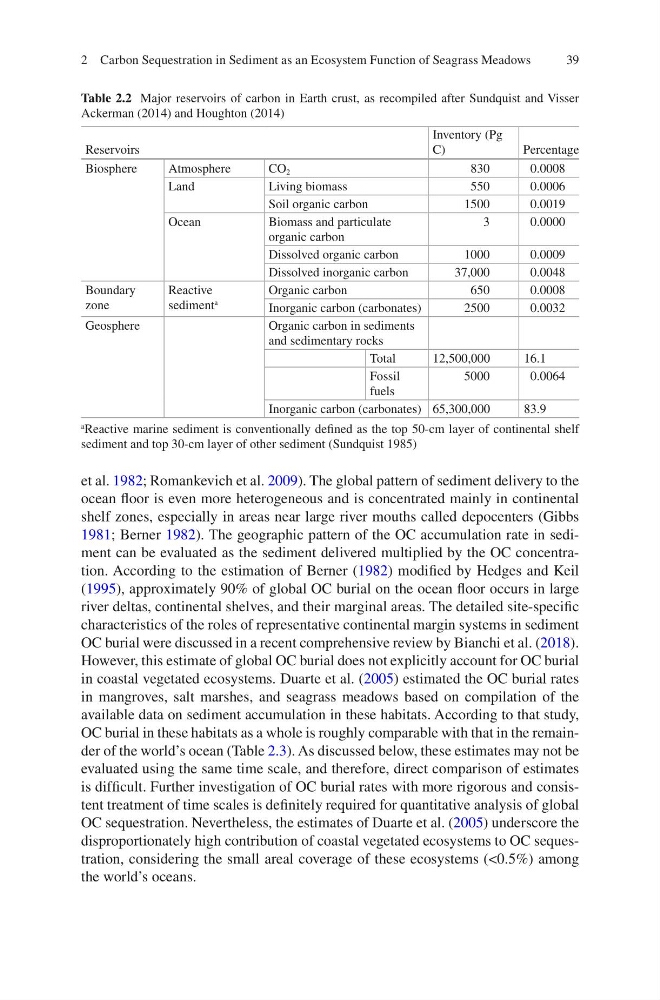
Table 2.2 Major reservoirs of carbon in Earth crust, as recompiled after Sundquist and Visser
Ackerman (2014) and Houghton (2014)
Reservoirs
Inventory (Pg
C)
Percentage
Biosphere
Atmosphere
CO 2
830
0.0008
Land
Living biomass
550
0.0006
Soil organic carbon
1500
0.0019
Ocean
Biomass and particulate
organic carbon
3
0.0000
Dissolved organic carbon
1000
0.0009
Dissolved inorganic carbon
37,000
0.0048
Boundary
zone
Reactive
sediment
a
Organic carbon
650
0.0008
Inorganic carbon (carbonates)
2500
0.0032
Geosphere
Organic carbon in sediments
and sedimentary rocks
Total
12,500,000
16.1
Fossil
fuels
5000
0.0064
Inorganic carbon (carbonates) 65,300,000
83.9
a
Reactive marine sediment is conventionally defined as the top 50-cm layer of continental shelf
sediment and top 30-cm layer of other sediment (Sundquist 1985)
2 Carbon Sequestration in Sediment as an Ecosystem Function of Seagrass Meadows
et al. 1982; Romankevich et al. 2009). The global pattern of sediment delivery to the
ocean floor is even more heterogeneous and is concentrated mainly in continental
shelf zones, especially in areas near large river mouths called depocenters (Gibbs
1981; Berner 1982). The geographic pattern of the OC accumulation rate in sediment can be evaluated as the sediment delivered multiplied by the OC concentration. According to the estimation of Berner (1982) modified by Hedges and Keil
(1995), approximately 90% of global OC burial on the ocean floor occurs in large
river deltas, continental shelves, and their marginal areas. The detailed site-specific
characteristics of the roles of representative continental margin systems in sediment
OC burial were discussed in a recent comprehensive review by Bianchi et al. (2018).
However, this estimate of global OC burial does not explicitly account for OC burial
in coastal vegetated ecosystems. Duarte et al. (2005) estimated the OC burial rates
in mangroves, salt marshes, and seagrass meadows based on compilation of the
available data on sediment accumulation in these habitats. According to that study,
OC burial in these habitats as a whole is roughly comparable with that in the remainder of the world’s ocean (Table 2.3). As discussed below, these estimates may not be
evaluated using the same time scale, and therefore, direct comparison of estimates
is difficult. Further investigation of OC burial rates with more rigorous and consistent treatment of time scales is definitely required for quantitative analysis of global
OC sequestration. Nevertheless, the estimates of Duarte et al. (2005) underscore the
disproportionately high contribution of coastal vegetated ecosystems to OC sequestration, considering the small areal coverage of these ecosystems (<0.5%) among
the world’s oceans.
Table 2.2 Major reservoirs of carbon in Earth crust, as recompiled after Sundquist and Visser
Ackerman (2014) and Houghton (2014)
Reservoirs
Inventory (Pg
C)
Percentage
Biosphere
Atmosphere
CO 2
830
0.0008
Land
Living biomass
550
0.0006
Soil organic carbon
1500
0.0019
Ocean
Biomass and particulate
organic carbon
3
0.0000
Dissolved organic carbon
1000
0.0009
Dissolved inorganic carbon
37,000
0.0048
Boundary
zone
Reactive
sediment
a
Organic carbon
650
0.0008
Inorganic carbon (carbonates)
2500
0.0032
Geosphere
Organic carbon in sediments
and sedimentary rocks
Total
12,500,000
16.1
Fossil
fuels
5000
0.0064
Inorganic carbon (carbonates) 65,300,000
83.9
a
Reactive marine sediment is conventionally defined as the top 50-cm layer of continental shelf
sediment and top 30-cm layer of other sediment (Sundquist 1985)
2 Carbon Sequestration in Sediment as an Ecosystem Function of Seagrass Meadows