

20
sediments, and new shoots can emerge above the sediment from that network. By
increasing the number of their shoots in this way, it is possible for seagrasses to
increase the coverage density of beds quickly. This method of propagation is called
vegetative propagation. At the same time, it is also possible for seagrasses to multiply by producing seeds and allowing currents to disperse them. New shoots grow
from the seeds if the seeds settle in a favorable location. This method of propagation
is called seed propagation, or sexual propagation. The combination of these two
reproductive modes makes it possible for a single seagrass species to cover an
extensive area.
The rates of primary production in seagrass beds are the highest of any plant
community on Earth (Duarte et al. 2010). Seagrass leaves have sheaths that extend
from the sediment into the water column; the leaves grow rapidly and have the ability to sequester blue carbon as rapidly as any other marine plant. The threedimensional structure slows the flow of seawater and promotes the accumulation of
organic matter suspended in the water. Seagrasses thereby facilitate the storage of
blue carbon. In addition, seagrass rhizomes extend into the sediment like a mesh
that stabilizes bottom sediment. The stabilized sediment resists resuspension of
deposited organic matter and enhances the storage of blue carbon by promoting
sedimentation (Hendriks et al. 2008). In addition, the anoxic environment of the
sediment suppresses decomposition of organic matter and thereby minimizes emission of blue carbon (Kristensen and Holmer 2001). The rhizomes also play a role as
an organ for storing carbohydrates.
However, the ecological characteristics of roots, rhizomes, sheaths, and leaves
differ among seagrass species. In general, leaves and sheaths exposed to seawater
above the sediment are referred to as the aboveground parts of the seagrasses; the
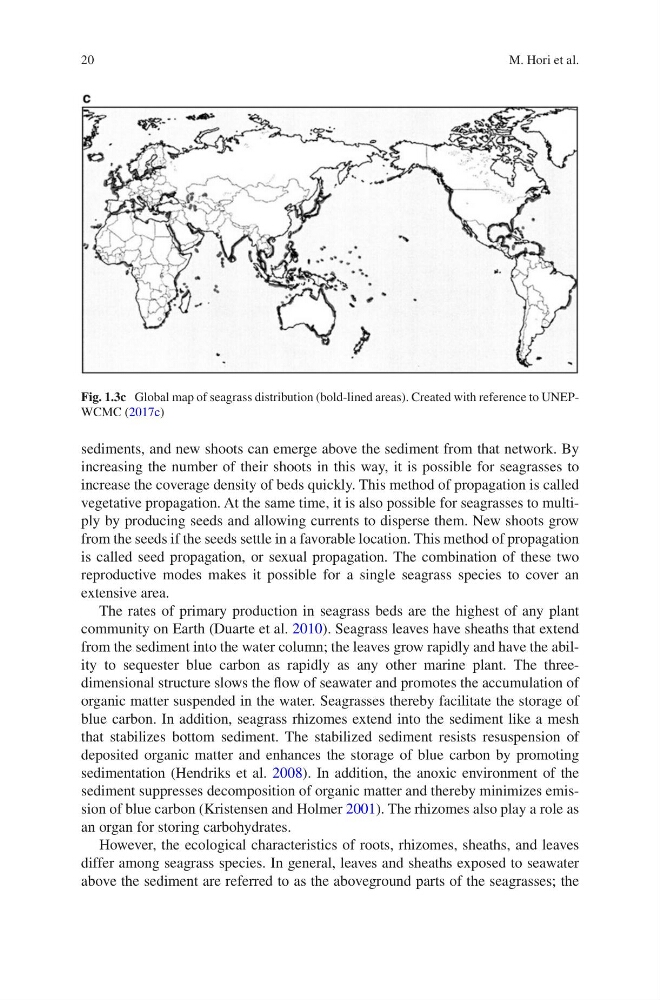
Fig. 1.3c Global map of seagrass distribution (bold-lined areas). Created with reference to UNEPWCMC (2017c)
M. Hori et al.
sediments, and new shoots can emerge above the sediment from that network. By
increasing the number of their shoots in this way, it is possible for seagrasses to
increase the coverage density of beds quickly. This method of propagation is called
vegetative propagation. At the same time, it is also possible for seagrasses to multiply by producing seeds and allowing currents to disperse them. New shoots grow
from the seeds if the seeds settle in a favorable location. This method of propagation
is called seed propagation, or sexual propagation. The combination of these two
reproductive modes makes it possible for a single seagrass species to cover an
extensive area.
The rates of primary production in seagrass beds are the highest of any plant
community on Earth (Duarte et al. 2010). Seagrass leaves have sheaths that extend
from the sediment into the water column; the leaves grow rapidly and have the ability to sequester blue carbon as rapidly as any other marine plant. The threedimensional structure slows the flow of seawater and promotes the accumulation of
organic matter suspended in the water. Seagrasses thereby facilitate the storage of
blue carbon. In addition, seagrass rhizomes extend into the sediment like a mesh
that stabilizes bottom sediment. The stabilized sediment resists resuspension of
deposited organic matter and enhances the storage of blue carbon by promoting
sedimentation (Hendriks et al. 2008). In addition, the anoxic environment of the
sediment suppresses decomposition of organic matter and thereby minimizes emission of blue carbon (Kristensen and Holmer 2001). The rhizomes also play a role as
an organ for storing carbohydrates.
However, the ecological characteristics of roots, rhizomes, sheaths, and leaves
differ among seagrass species. In general, leaves and sheaths exposed to seawater
above the sediment are referred to as the aboveground parts of the seagrasses; the
Fig. 1.3c Global map of seagrass distribution (bold-lined areas). Created with reference to UNEPWCMC (2017c)
M. Hori et al.