

18
exclude salt because their roots function as ultra-filtration systems to exclude
sodium salts (Chap. 3; Inoue 2018). In addition, red mangroves have prop roots that
extend into the water from higher up on the stem of the plant and can absorb air
through pores in their bark. Black mangroves produce many pneumatophores that
protrude from the soil like snorkels and allow them to breathe even in anoxic sediments rich in organic carbon.
The dense roots of mangroves form complex structures in the water that slow the
flow of water and enhance sediment deposition as efficiently as other blue carbon
ecosystems. The vegetative structures also protect coastal areas from erosion, storm
surge, and tsunamis (Mazda et al. 2005, Danielsen et al. 2005), a service recognized
as one form of Ecosystem-based Disaster Risk Reduction (Eco-DRR). The foundation species in coastal blue carbon ecosystems therefore provide a variety of ecosystem services shown as Chap. 13 (Kuwae and Hori 2018). The implication is that
conservation and enhancement of blue carbon sequestration and storage will produce co-benefits for human beings.
1.3.3 Submerged Marine Plants and Differences
in the Characteristics of Seagrasses and Other Species
There are two major groups of marine plants associated with blue carbon. One
group is the phytoplankton, which are more-or-less neutrally buoyant in the water
column. The other is a group of benthic plants. The latter is further broadly classified into two types: seaweeds and seagrasses. Both groups of marine plants are very
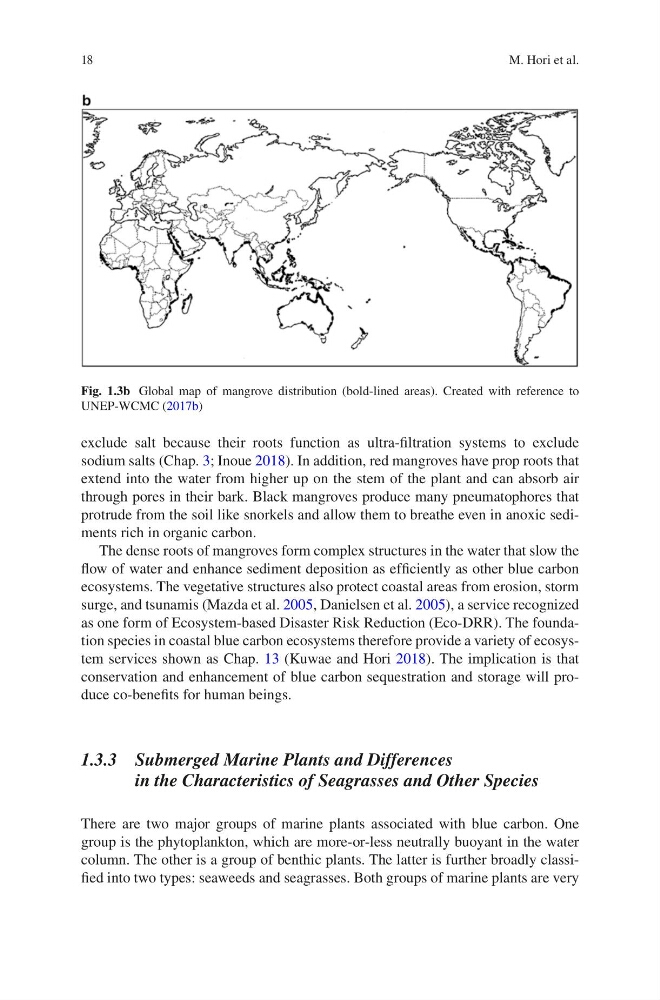
Fig. 1.3b Global map of mangrove distribution (bold-lined areas). Created with reference to
UNEP-WCMC (2017b)
M. Hori et al.
exclude salt because their roots function as ultra-filtration systems to exclude
sodium salts (Chap. 3; Inoue 2018). In addition, red mangroves have prop roots that
extend into the water from higher up on the stem of the plant and can absorb air
through pores in their bark. Black mangroves produce many pneumatophores that
protrude from the soil like snorkels and allow them to breathe even in anoxic sediments rich in organic carbon.
The dense roots of mangroves form complex structures in the water that slow the
flow of water and enhance sediment deposition as efficiently as other blue carbon
ecosystems. The vegetative structures also protect coastal areas from erosion, storm
surge, and tsunamis (Mazda et al. 2005, Danielsen et al. 2005), a service recognized
as one form of Ecosystem-based Disaster Risk Reduction (Eco-DRR). The foundation species in coastal blue carbon ecosystems therefore provide a variety of ecosystem services shown as Chap. 13 (Kuwae and Hori 2018). The implication is that
conservation and enhancement of blue carbon sequestration and storage will produce co-benefits for human beings.
1.3.3 Submerged Marine Plants and Differences
in the Characteristics of Seagrasses and Other Species
There are two major groups of marine plants associated with blue carbon. One
group is the phytoplankton, which are more-or-less neutrally buoyant in the water
column. The other is a group of benthic plants. The latter is further broadly classified into two types: seaweeds and seagrasses. Both groups of marine plants are very
Fig. 1.3b Global map of mangrove distribution (bold-lined areas). Created with reference to
UNEP-WCMC (2017b)
M. Hori et al.