

138
The ratio of CO 2 released to CaCO 3 precipitated was estimated as 76 g C m
−2
year
−1
by Frankignoulle et al. (1994).
Although respiration was not measured in this study, by considering the biomass
it is possible to estimate secondary production of C. japonica. Bivalves are CO 2
generators (Chauvaud et al. 2003; Mistri and Munari 2013). Organic matter of the
bivalve body and CO 2 absorbed by photosynthesis of consumed vegetation is
stocked as organic carbon, and most of it decomposes in a short time and is released
as CO 2 after death. In turn, inorganic carbon of the shell after death is buried in sediment in tidal flats (Fodrie et al. 2017). That is, bivalves play a role in immobilizing
carbon, although inorganic carbon production by bivalves is small compared to that
produced by vegetation.
To date, organic carbon in sediment and algae has been the focus of carbon storage research in aquatic systems, but it is necessary to consider the storage of inorganic carbon as well. The relationship between organic and inorganic carbon affects
the carbonate cycle, such as the rates of calcification and dissolution in water, and it
also affects CO 2 gas flux between the atmosphere and seawater.
5.5 Carbon Storage of Phytoplankton
In the sea, carbon is circulating continuously via complex biological processes such
as photosynthesis, respiration, and decomposition of organic matter, chemical processes such as chemical equilibration of the carbonate system, and physical processes such as advection along with water exchange. In this section, we describe the
carbon absorption of phytoplankton in the carbon budget of the tidal flat at Osaka
Nanko bird sanctuary.
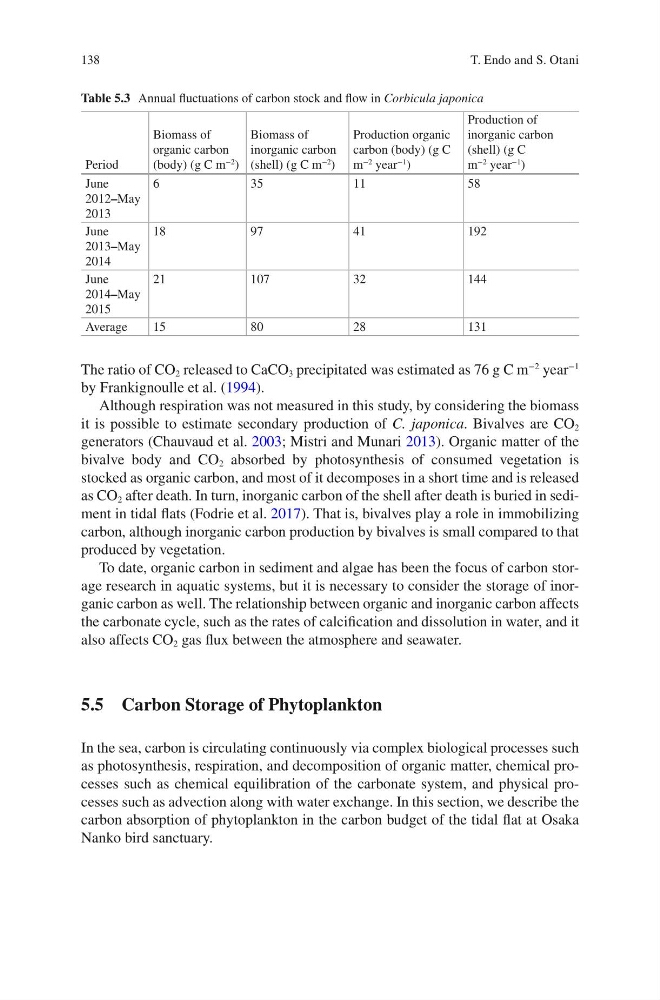
Table 5.3 Annual fluctuations of carbon stock and flow in Corbicula japonica
Period
Biomass of
organic carbon
(body) (g C m
−2 )
Biomass of
inorganic carbon
(shell) (g C m
−2
)
Production organic
carbon (body) (g C
m
−2
year
−1
)
Production of
inorganic carbon
(shell) (g C
m
−2
year
−1
)
June
2012–May
2013
6
35
11
58
June
2013–May
2014
18
97
41
192
June
2014–May
2015
21
107
32
144
Average
15
80
28
131
T. Endo and S. Otani
The ratio of CO 2 released to CaCO 3 precipitated was estimated as 76 g C m
−2
year
−1
by Frankignoulle et al. (1994).
Although respiration was not measured in this study, by considering the biomass
it is possible to estimate secondary production of C. japonica. Bivalves are CO 2
generators (Chauvaud et al. 2003; Mistri and Munari 2013). Organic matter of the
bivalve body and CO 2 absorbed by photosynthesis of consumed vegetation is
stocked as organic carbon, and most of it decomposes in a short time and is released
as CO 2 after death. In turn, inorganic carbon of the shell after death is buried in sediment in tidal flats (Fodrie et al. 2017). That is, bivalves play a role in immobilizing
carbon, although inorganic carbon production by bivalves is small compared to that
produced by vegetation.
To date, organic carbon in sediment and algae has been the focus of carbon storage research in aquatic systems, but it is necessary to consider the storage of inorganic carbon as well. The relationship between organic and inorganic carbon affects
the carbonate cycle, such as the rates of calcification and dissolution in water, and it
also affects CO 2 gas flux between the atmosphere and seawater.
5.5 Carbon Storage of Phytoplankton
In the sea, carbon is circulating continuously via complex biological processes such
as photosynthesis, respiration, and decomposition of organic matter, chemical processes such as chemical equilibration of the carbonate system, and physical processes such as advection along with water exchange. In this section, we describe the
carbon absorption of phytoplankton in the carbon budget of the tidal flat at Osaka
Nanko bird sanctuary.
Table 5.3 Annual fluctuations of carbon stock and flow in Corbicula japonica
Period
Biomass of
organic carbon
(body) (g C m
−2 )
Biomass of
inorganic carbon
(shell) (g C m
−2
)
Production organic
carbon (body) (g C
m
−2
year
−1
)
Production of
inorganic carbon
(shell) (g C
m
−2
year
−1
)
June
2012–May
2013
6
35
11
58
June
2013–May
2014
18
97
41
192
June
2014–May
2015
21
107
32
144
Average
15
80
28
131
T. Endo and S. Otani