

21
differences between the strategies employed by species to cope with different stressful
conditions. Further research will facilitate a better understanding of seaweed abundance and distribution in intertidal communities, both locally and regionally.
2.2 Molecular Mechanisms of Desiccation Tolerance
in Seaweeds
When faced with detrimental biotic and/or abiotic factors, sessile organisms are
more severely affected than mobile counterparts due to highly limited or fixed positions within the environment (Shelford 1914; Huey et al. 2002; Hohmann 2004).
The fixed environmental position of sessile organisms such as plants and seaweeds
necessitates the development of adaptations to cope with the fluctuations produced
by desiccation stress. Some of these strategies include changes in form, structure, or
relative limb position, as well as in subcellular mechanisms (Shelford 1914; Bewley
1979; Ingram and Bartels 1996; Ramanjulu and Bartels 2002). Due to the availability of different -omics techniques and several physiological analyses, desiccation
tolerance mechanisms have been found to occur in several species rather than being
species specific (Oliver and Bewley 1997; Oliver et al. 1998; Contreras-Porcia et al.
2011, 2013; López-Cristoffanini et al. 2015; Moore and Farrant 2015; Fierro et al.
2017). Desiccation tolerance mechanisms can be grouped according to the following four action criteria:
1. Limiting damage to a reparable level
2. Maintaining physiological integrity under desiccation
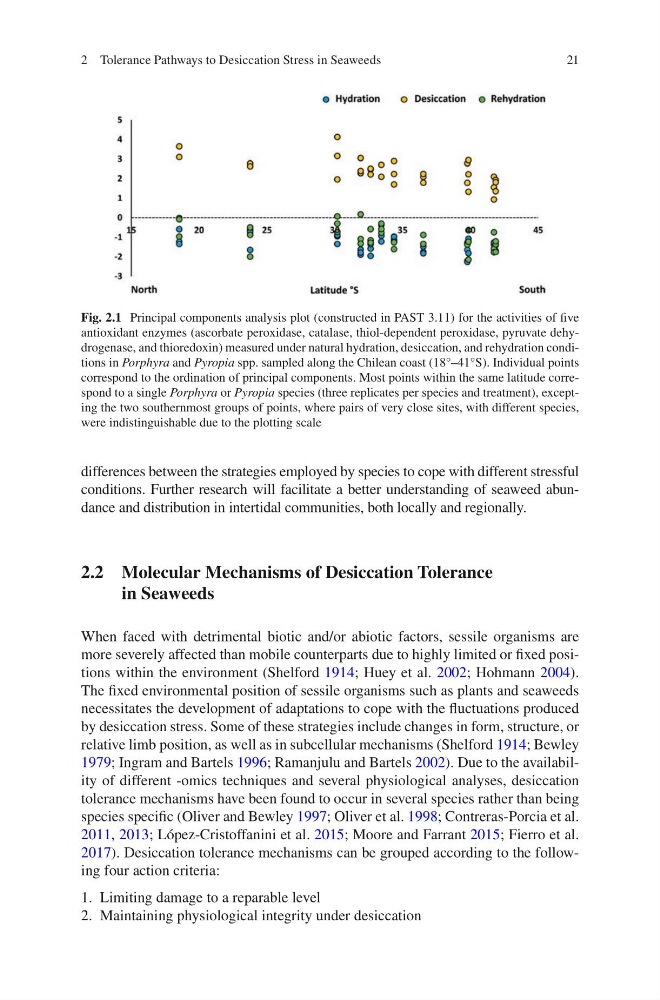
Fig. 2.1 Principal components analysis plot (constructed in PAST 3.11) for the activities of five
antioxidant enzymes (ascorbate peroxidase, catalase, thiol-dependent peroxidase, pyruvate dehydrogenase, and thioredoxin) measured under natural hydration, desiccation, and rehydration conditions in Porphyra and Pyropia spp. sampled along the Chilean coast (18°–41°S). Individual points
correspond to the ordination of principal components. Most points within the same latitude correspond to a single Porphyra or Pyropia species (three replicates per species and treatment), excepting the two southernmost groups of points, where pairs of very close sites, with different species,
were indistinguishable due to the plotting scale
2 Tolerance Pathways to Desiccation Stress in Seaweeds
differences between the strategies employed by species to cope with different stressful
conditions. Further research will facilitate a better understanding of seaweed abundance and distribution in intertidal communities, both locally and regionally.
2.2 Molecular Mechanisms of Desiccation Tolerance
in Seaweeds
When faced with detrimental biotic and/or abiotic factors, sessile organisms are
more severely affected than mobile counterparts due to highly limited or fixed positions within the environment (Shelford 1914; Huey et al. 2002; Hohmann 2004).
The fixed environmental position of sessile organisms such as plants and seaweeds
necessitates the development of adaptations to cope with the fluctuations produced
by desiccation stress. Some of these strategies include changes in form, structure, or
relative limb position, as well as in subcellular mechanisms (Shelford 1914; Bewley
1979; Ingram and Bartels 1996; Ramanjulu and Bartels 2002). Due to the availability of different -omics techniques and several physiological analyses, desiccation
tolerance mechanisms have been found to occur in several species rather than being
species specific (Oliver and Bewley 1997; Oliver et al. 1998; Contreras-Porcia et al.
2011, 2013; López-Cristoffanini et al. 2015; Moore and Farrant 2015; Fierro et al.
2017). Desiccation tolerance mechanisms can be grouped according to the following four action criteria:
1. Limiting damage to a reparable level
2. Maintaining physiological integrity under desiccation
Fig. 2.1 Principal components analysis plot (constructed in PAST 3.11) for the activities of five
antioxidant enzymes (ascorbate peroxidase, catalase, thiol-dependent peroxidase, pyruvate dehydrogenase, and thioredoxin) measured under natural hydration, desiccation, and rehydration conditions in Porphyra and Pyropia spp. sampled along the Chilean coast (18°–41°S). Individual points
correspond to the ordination of principal components. Most points within the same latitude correspond to a single Porphyra or Pyropia species (three replicates per species and treatment), excepting the two southernmost groups of points, where pairs of very close sites, with different species,
were indistinguishable due to the plotting scale
2 Tolerance Pathways to Desiccation Stress in Seaweeds