

328
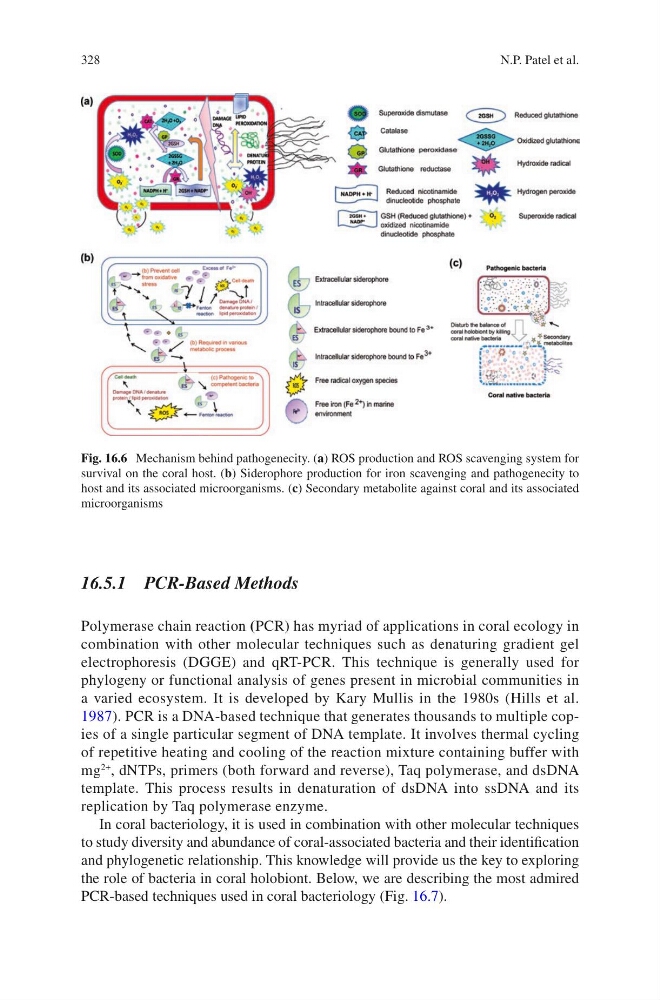
Fig. 16.6 Mechanism behind pathogenecity. (a) ROS production and ROS scavenging system for
survival on the coral host. (b) Siderophore production for iron scavenging and pathogenecity to
host and its associated microorganisms. (c) Secondary metabolite against coral and its associated
microorganisms
16.5.1 PCR-Based Methods
Polymerase chain reaction (PCR) has myriad of applications in coral ecology in
combination with other molecular techniques such as denaturing gradient gel
electrophoresis (DGGE) and qRT-PCR. This technique is generally used for
phylogeny or functional analysis of genes present in microbial communities in
a varied ecosystem. It is developed by Kary Mullis in the 1980s (Hills et al.
1987). PCR is a DNA- based technique that generates thousands to multiple copies of a single particular segment of DNA template. It involves thermal cycling
of repetitive heating and cooling of the reaction mixture containing buffer with
mg
2+
, dNTPs, primers (both forward and reverse), Taq polymerase, and dsDNA
template. This process results in denaturation of dsDNA into ssDNA and its
replication by Taq polymerase enzyme.
In coral bacteriology, it is used in combination with other molecular techniques
to study diversity and abundance of coral-associated bacteria and their identification
and phylogenetic relationship. This knowledge will provide us the key to exploring
the role of bacteria in coral holobiont. Below, we are describing the most admired
PCR-based techniques used in coral bacteriology (Fig. 16.7).
N.P. Patel et al.
Fig. 16.6 Mechanism behind pathogenecity. (a) ROS production and ROS scavenging system for
survival on the coral host. (b) Siderophore production for iron scavenging and pathogenecity to
host and its associated microorganisms. (c) Secondary metabolite against coral and its associated
microorganisms
16.5.1 PCR-Based Methods
Polymerase chain reaction (PCR) has myriad of applications in coral ecology in
combination with other molecular techniques such as denaturing gradient gel
electrophoresis (DGGE) and qRT-PCR. This technique is generally used for
phylogeny or functional analysis of genes present in microbial communities in
a varied ecosystem. It is developed by Kary Mullis in the 1980s (Hills et al.
1987). PCR is a DNA- based technique that generates thousands to multiple copies of a single particular segment of DNA template. It involves thermal cycling
of repetitive heating and cooling of the reaction mixture containing buffer with
mg
2+
, dNTPs, primers (both forward and reverse), Taq polymerase, and dsDNA
template. This process results in denaturation of dsDNA into ssDNA and its
replication by Taq polymerase enzyme.
In coral bacteriology, it is used in combination with other molecular techniques
to study diversity and abundance of coral-associated bacteria and their identification
and phylogenetic relationship. This knowledge will provide us the key to exploring
the role of bacteria in coral holobiont. Below, we are describing the most admired
PCR-based techniques used in coral bacteriology (Fig. 16.7).
N.P. Patel et al.