

283
molecules released by phytoplankton such as sugars, amino acids and algal metabolites which are beneficial to their growth (Miller et al. 2004; Seymour et al. 2010;
Mandal et al. 2011). There are many cases whereby both the algae and the bacteria
benefit from an exchange of nutrients to which they might otherwise have limited
access (Goecke et al. 2010). For example, some bacteria forming close associations
with algae can modify the type and abundance of siderophores—organic molecules
that bind to iron and increase its solubility—they produce, such that their algal partner can easily use them to scavenge iron (Amin et al. 2009a). One specific form of
siderophore, vibrioferrin, was isolated from several species of Marinobacter, a
common symbiont of dinoflagellates such as Gymnodinium catenatum. While vibrioferrin is a relatively weak scavenger of iron, it is particularly sensitive to light and
undergoes an irreversible photolytic reaction producing iron (Fe(III)) that is more
readily taken up by both the bacteria and the surrounding dinoflagellates. The bacteria therefore produce a weaker siderophore to promote sharing scavenged iron
with their algal symbionts (Amin et al. 2009b).
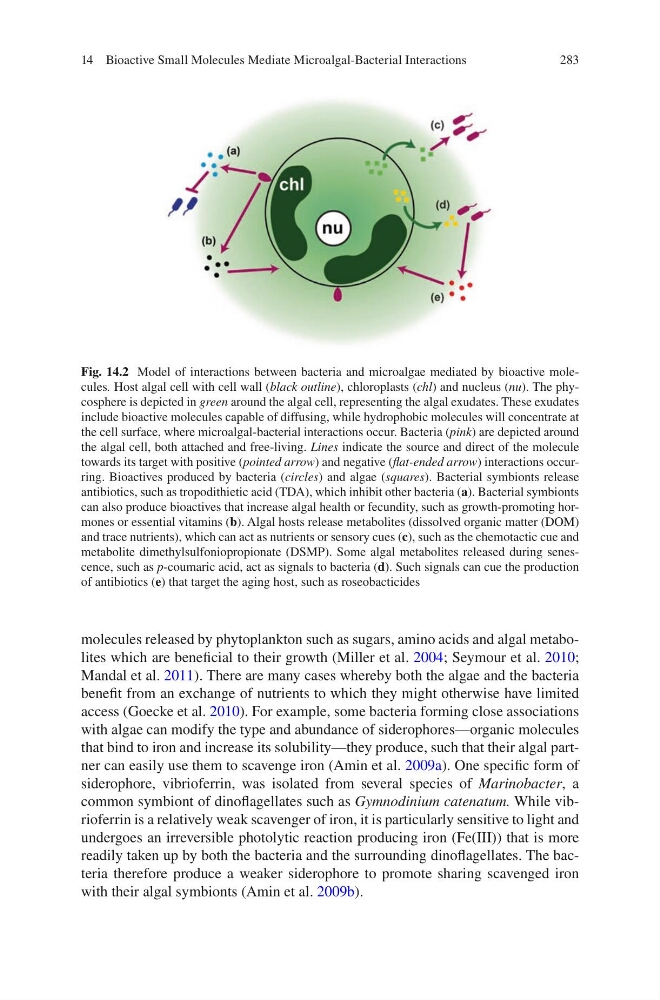
Fig. 14.2 Model of interactions between bacteria and microalgae mediated by bioactive molecules. Host algal cell with cell wall (black outline), chloroplasts (chl) and nucleus (nu). The phycosphere is depicted in green around the algal cell, representing the algal exudates. These exudates
include bioactive molecules capable of diffusing, while hydrophobic molecules will concentrate at
the cell surface, where microalgal-bacterial interactions occur. Bacteria (pink) are depicted around
the algal cell, both attached and free-living. Lines indicate the source and direct of the molecule
towards its target with positive (pointed arrow) and negative (flat-ended arrow) interactions occurring. Bioactives produced by bacteria (circles) and algae (squares). Bacterial symbionts release
antibiotics, such as tropodithietic acid (TDA), which inhibit other bacteria (a). Bacterial symbionts
can also produce bioactives that increase algal health or fecundity, such as growth-promoting hormones or essential vitamins (b). Algal hosts release metabolites (dissolved organic matter (DOM)
and trace nutrients), which can act as nutrients or sensory cues (c), such as the chemotactic cue and
metabolite dimethylsulfoniopropionate (DSMP). Some algal metabolites released during senescence, such as p-coumaric acid, act as signals to bacteria (d). Such signals can cue the production
of antibiotics (e) that target the aging host, such as roseobacticides
14 Bioactive Small Molecules Mediate Microalgal-Bacterial Interactions
molecules released by phytoplankton such as sugars, amino acids and algal metabolites which are beneficial to their growth (Miller et al. 2004; Seymour et al. 2010;
Mandal et al. 2011). There are many cases whereby both the algae and the bacteria
benefit from an exchange of nutrients to which they might otherwise have limited
access (Goecke et al. 2010). For example, some bacteria forming close associations
with algae can modify the type and abundance of siderophores—organic molecules
that bind to iron and increase its solubility—they produce, such that their algal partner can easily use them to scavenge iron (Amin et al. 2009a). One specific form of
siderophore, vibrioferrin, was isolated from several species of Marinobacter, a
common symbiont of dinoflagellates such as Gymnodinium catenatum. While vibrioferrin is a relatively weak scavenger of iron, it is particularly sensitive to light and
undergoes an irreversible photolytic reaction producing iron (Fe(III)) that is more
readily taken up by both the bacteria and the surrounding dinoflagellates. The bacteria therefore produce a weaker siderophore to promote sharing scavenged iron
with their algal symbionts (Amin et al. 2009b).
Fig. 14.2 Model of interactions between bacteria and microalgae mediated by bioactive molecules. Host algal cell with cell wall (black outline), chloroplasts (chl) and nucleus (nu). The phycosphere is depicted in green around the algal cell, representing the algal exudates. These exudates
include bioactive molecules capable of diffusing, while hydrophobic molecules will concentrate at
the cell surface, where microalgal-bacterial interactions occur. Bacteria (pink) are depicted around
the algal cell, both attached and free-living. Lines indicate the source and direct of the molecule
towards its target with positive (pointed arrow) and negative (flat-ended arrow) interactions occurring. Bioactives produced by bacteria (circles) and algae (squares). Bacterial symbionts release
antibiotics, such as tropodithietic acid (TDA), which inhibit other bacteria (a). Bacterial symbionts
can also produce bioactives that increase algal health or fecundity, such as growth-promoting hormones or essential vitamins (b). Algal hosts release metabolites (dissolved organic matter (DOM)
and trace nutrients), which can act as nutrients or sensory cues (c), such as the chemotactic cue and
metabolite dimethylsulfoniopropionate (DSMP). Some algal metabolites released during senescence, such as p-coumaric acid, act as signals to bacteria (d). Such signals can cue the production
of antibiotics (e) that target the aging host, such as roseobacticides
14 Bioactive Small Molecules Mediate Microalgal-Bacterial Interactions