

238
consequently a decreased saturation of CaCO 3 . Since the Industrial Revolution, the
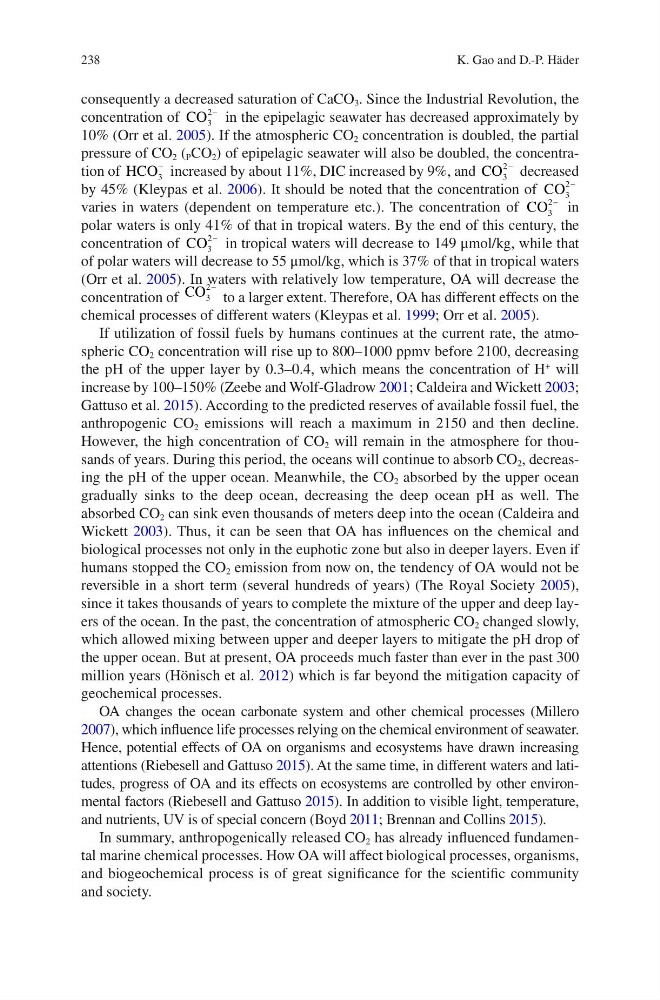
concentration of CO 3
2− in the epipelagic seawater has decreased approximately by
10% (Orr et al. 2005). If the atmospheric CO 2 concentration is doubled, the partial
pressure of CO 2 ( P CO 2 ) of epipelagic seawater will also be doubled, the concentration of HCO 3
− increased by about 11%, DIC increased by 9%, and CO 3
2− decreased
by 45% (Kleypas et al. 2006). It should be noted that the concentration of CO 3
2−
varies in waters (dependent on temperature etc.). The concentration of CO 3
2− in
polar waters is only 41% of that in tropical waters. By the end of this century, the
concentration of CO 3
2− in tropical waters will decrease to 149 μmol/kg, while that
of polar waters will decrease to 55 μmol/kg, which is 37% of that in tropical waters
(Orr et al. 2005). In waters with relatively low temperature, OA will decrease the
concentration of CO 3
2− to a larger extent. Therefore, OA has different effects on the
chemical processes of different waters (Kleypas et al. 1999; Orr et al. 2005).
If utilization of fossil fuels by humans continues at the current rate, the atmospheric CO 2 concentration will rise up to 800–1000 ppmv before 2100, decreasing
the pH of the upper layer by 0.3–0.4, which means the concentration of H
+
will
increase by 100–150% (Zeebe and Wolf-Gladrow 2001; Caldeira and Wickett 2003;
Gattuso et al. 2015). According to the predicted reserves of available fossil fuel, the
anthropogenic CO 2 emissions will reach a maximum in 2150 and then decline.
However, the high concentration of CO 2 will remain in the atmosphere for thousands of years. During this period, the oceans will continue to absorb CO 2 , decreasing the pH of the upper ocean. Meanwhile, the CO 2 absorbed by the upper ocean
gradually sinks to the deep ocean, decreasing the deep ocean pH as well. The
absorbed CO 2 can sink even thousands of meters deep into the ocean (Caldeira and
Wickett 2003). Thus, it can be seen that OA has influences on the chemical and
biological processes not only in the euphotic zone but also in deeper layers. Even if
humans stopped the CO 2 emission from now on, the tendency of OA would not be
reversible in a short term (several hundreds of years) (The Royal Society 2005),
since it takes thousands of years to complete the mixture of the upper and deep layers of the ocean. In the past, the concentration of atmospheric CO 2 changed slowly,
which allowed mixing between upper and deeper layers to mitigate the pH drop of
the upper ocean. But at present, OA proceeds much faster than ever in the past 300
million years (Hönisch et al. 2012) which is far beyond the mitigation capacity of
geochemical processes.
OA changes the ocean carbonate system and other chemical processes (Millero
2007), which influence life processes relying on the chemical environment of seawater.
Hence, potential effects of OA on organisms and ecosystems have drawn increasing
attentions (Riebesell and Gattuso 2015). At the same time, in different waters and latitudes, progress of OA and its effects on ecosystems are controlled by other environmental factors (Riebesell and Gattuso 2015). In addition to visible light, temperature,
and nutrients, UV is of special concern (Boyd 2011; Brennan and Collins 2015).
In summary, anthropogenically released CO 2 has already influenced fundamental marine chemical processes. How OA will affect biological processes, organisms,
and biogeochemical process is of great significance for the scientific community
and society.
K. Gao and D.-P. Häder
consequently a decreased saturation of CaCO 3 . Since the Industrial Revolution, the
concentration of CO 3
2− in the epipelagic seawater has decreased approximately by
10% (Orr et al. 2005). If the atmospheric CO 2 concentration is doubled, the partial
pressure of CO 2 ( P CO 2 ) of epipelagic seawater will also be doubled, the concentration of HCO 3
− increased by about 11%, DIC increased by 9%, and CO 3
2− decreased
by 45% (Kleypas et al. 2006). It should be noted that the concentration of CO 3
2−
varies in waters (dependent on temperature etc.). The concentration of CO 3
2− in
polar waters is only 41% of that in tropical waters. By the end of this century, the
concentration of CO 3
2− in tropical waters will decrease to 149 μmol/kg, while that
of polar waters will decrease to 55 μmol/kg, which is 37% of that in tropical waters
(Orr et al. 2005). In waters with relatively low temperature, OA will decrease the
concentration of CO 3
2− to a larger extent. Therefore, OA has different effects on the
chemical processes of different waters (Kleypas et al. 1999; Orr et al. 2005).
If utilization of fossil fuels by humans continues at the current rate, the atmospheric CO 2 concentration will rise up to 800–1000 ppmv before 2100, decreasing
the pH of the upper layer by 0.3–0.4, which means the concentration of H
+
will
increase by 100–150% (Zeebe and Wolf-Gladrow 2001; Caldeira and Wickett 2003;
Gattuso et al. 2015). According to the predicted reserves of available fossil fuel, the
anthropogenic CO 2 emissions will reach a maximum in 2150 and then decline.
However, the high concentration of CO 2 will remain in the atmosphere for thousands of years. During this period, the oceans will continue to absorb CO 2 , decreasing the pH of the upper ocean. Meanwhile, the CO 2 absorbed by the upper ocean
gradually sinks to the deep ocean, decreasing the deep ocean pH as well. The
absorbed CO 2 can sink even thousands of meters deep into the ocean (Caldeira and
Wickett 2003). Thus, it can be seen that OA has influences on the chemical and
biological processes not only in the euphotic zone but also in deeper layers. Even if
humans stopped the CO 2 emission from now on, the tendency of OA would not be
reversible in a short term (several hundreds of years) (The Royal Society 2005),
since it takes thousands of years to complete the mixture of the upper and deep layers of the ocean. In the past, the concentration of atmospheric CO 2 changed slowly,
which allowed mixing between upper and deeper layers to mitigate the pH drop of
the upper ocean. But at present, OA proceeds much faster than ever in the past 300
million years (Hönisch et al. 2012) which is far beyond the mitigation capacity of
geochemical processes.
OA changes the ocean carbonate system and other chemical processes (Millero
2007), which influence life processes relying on the chemical environment of seawater.
Hence, potential effects of OA on organisms and ecosystems have drawn increasing
attentions (Riebesell and Gattuso 2015). At the same time, in different waters and latitudes, progress of OA and its effects on ecosystems are controlled by other environmental factors (Riebesell and Gattuso 2015). In addition to visible light, temperature,
and nutrients, UV is of special concern (Boyd 2011; Brennan and Collins 2015).
In summary, anthropogenically released CO 2 has already influenced fundamental marine chemical processes. How OA will affect biological processes, organisms,
and biogeochemical process is of great significance for the scientific community
and society.
K. Gao and D.-P. Häder