

225
specific marker gene which was cloned into vectors, followed by sequencing
(Dorigo et al. 2005). The construction of clone libraries is time-consuming, and
identification was therefore restricted to 100 clones or less in most instances.
However, with the advent of next-generation sequencing, it became possible to
retrieve thousands of sequences from a single sample, significantly expanding our
view of microbial diversity in the environment.
Over the last 30 years, multiple sequencing approaches have been used to undertake genomic studies of marine microbes, but the development of next-generation
sequencing has led to increasing application of metabarcoding and metagenomics
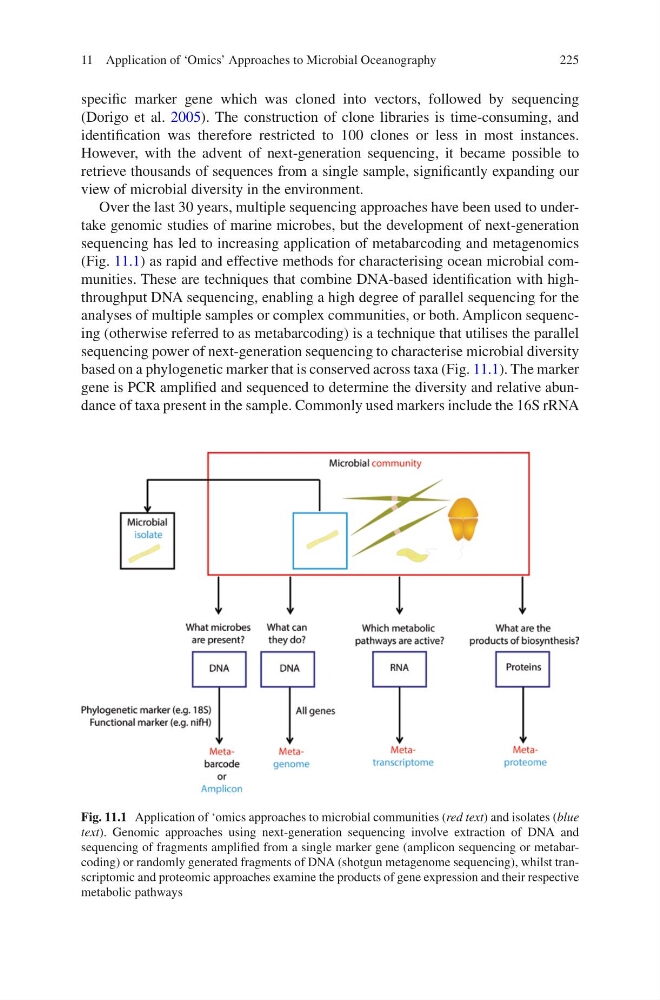
(Fig. 11.1) as rapid and effective methods for characterising ocean microbial communities. These are techniques that combine DNA-based identification with highthroughput DNA sequencing, enabling a high degree of parallel sequencing for the
analyses of multiple samples or complex communities, or both. Amplicon sequencing (otherwise referred to as metabarcoding) is a technique that utilises the parallel
sequencing power of next-generation sequencing to characterise microbial diversity
based on a phylogenetic marker that is conserved across taxa (Fig. 11.1). The marker
gene is PCR amplified and sequenced to determine the diversity and relative abundance of taxa present in the sample. Commonly used markers include the 16S rRNA
Fig. 11.1 Application of ‘omics approaches to microbial communities (red text) and isolates (blue
text). Genomic approaches using next-generation sequencing involve extraction of DNA and
sequencing of fragments amplified from a single marker gene (amplicon sequencing or metabarcoding) or randomly generated fragments of DNA (shotgun metagenome sequencing), whilst transcriptomic and proteomic approaches examine the products of gene expression and their respective
metabolic pathways
11 Application of ‘Omics’ Approaches to Microbial Oceanography
specific marker gene which was cloned into vectors, followed by sequencing
(Dorigo et al. 2005). The construction of clone libraries is time-consuming, and
identification was therefore restricted to 100 clones or less in most instances.
However, with the advent of next-generation sequencing, it became possible to
retrieve thousands of sequences from a single sample, significantly expanding our
view of microbial diversity in the environment.
Over the last 30 years, multiple sequencing approaches have been used to undertake genomic studies of marine microbes, but the development of next-generation
sequencing has led to increasing application of metabarcoding and metagenomics
(Fig. 11.1) as rapid and effective methods for characterising ocean microbial communities. These are techniques that combine DNA-based identification with highthroughput DNA sequencing, enabling a high degree of parallel sequencing for the
analyses of multiple samples or complex communities, or both. Amplicon sequencing (otherwise referred to as metabarcoding) is a technique that utilises the parallel
sequencing power of next-generation sequencing to characterise microbial diversity
based on a phylogenetic marker that is conserved across taxa (Fig. 11.1). The marker
gene is PCR amplified and sequenced to determine the diversity and relative abundance of taxa present in the sample. Commonly used markers include the 16S rRNA
Fig. 11.1 Application of ‘omics approaches to microbial communities (red text) and isolates (blue
text). Genomic approaches using next-generation sequencing involve extraction of DNA and
sequencing of fragments amplified from a single marker gene (amplicon sequencing or metabarcoding) or randomly generated fragments of DNA (shotgun metagenome sequencing), whilst transcriptomic and proteomic approaches examine the products of gene expression and their respective
metabolic pathways
11 Application of ‘Omics’ Approaches to Microbial Oceanography