

173
environmental forcing (e.g., light, temperature, flow, DIC, epiphytes, etc.) on
photosynthesis, metabolic carbon balance, shoot density, and depth distribution
(Zimmerman 2003; Zimmerman et al. 2015). The model predicted that doubling the
atmospheric CO 2 concentration would yield a 35% increase in the density and spatial distribution of eelgrass in Elkhorn Slough, California, USA, a turbid estuary
where eelgrass distributions are currently restricted to very shallow (<2 m) depths
(Zimmerman et al. 1994; Zimmerman and Caffrey 2002; Zimmerman 2006).
A high-CO 2 world may also reduce seagrass vulnerability to summertime thermal stress, a situation that has increasingly limited the survival of eelgrass near the
southern limit of their distribution along the east coast of North America (Moore
and Jarvis 2008; Moore et al. 2012). However, prolonged experimental stimulation
of eelgrass photosynthesis via CO 2 can enhance the summertime survival, growth,
and proliferation of perennial eelgrass from the Chesapeake region that is regularly
O 2
O 2
Leaf
Biomass
Root &
Rhizome
Biomass
Temp
CO 2
Light
Light
Suspended
ParƟcles
Phyto
plankton
CO 2
Sucrose
Sucrose
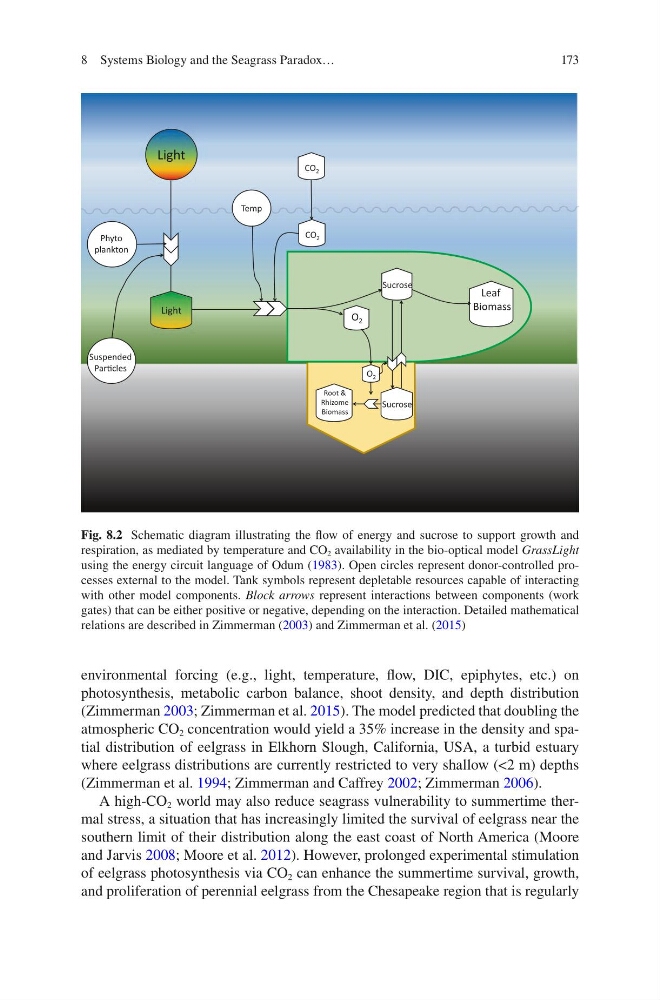
Fig. 8.2 Schematic diagram illustrating the flow of energy and sucrose to support growth and
respiration, as mediated by temperature and CO 2 availability in the bio-optical model GrassLight
using the energy circuit language of Odum (1983). Open circles represent donor-controlled processes external to the model. Tank symbols represent depletable resources capable of interacting
with other model components. Block arrows represent interactions between components (work
gates) that can be either positive or negative, depending on the interaction. Detailed mathematical
relations are described in Zimmerman (2003) and Zimmerman et al. (2015)
8 Systems Biology and the Seagrass Paradox…
environmental forcing (e.g., light, temperature, flow, DIC, epiphytes, etc.) on
photosynthesis, metabolic carbon balance, shoot density, and depth distribution
(Zimmerman 2003; Zimmerman et al. 2015). The model predicted that doubling the
atmospheric CO 2 concentration would yield a 35% increase in the density and spatial distribution of eelgrass in Elkhorn Slough, California, USA, a turbid estuary
where eelgrass distributions are currently restricted to very shallow (<2 m) depths
(Zimmerman et al. 1994; Zimmerman and Caffrey 2002; Zimmerman 2006).
A high-CO 2 world may also reduce seagrass vulnerability to summertime thermal stress, a situation that has increasingly limited the survival of eelgrass near the
southern limit of their distribution along the east coast of North America (Moore
and Jarvis 2008; Moore et al. 2012). However, prolonged experimental stimulation
of eelgrass photosynthesis via CO 2 can enhance the summertime survival, growth,
and proliferation of perennial eelgrass from the Chesapeake region that is regularly
O 2
O 2
Leaf
Biomass
Root &
Rhizome
Biomass
Temp
CO 2
Light
Light
Suspended
ParƟcles
Phyto
plankton
CO 2
Sucrose
Sucrose
Fig. 8.2 Schematic diagram illustrating the flow of energy and sucrose to support growth and
respiration, as mediated by temperature and CO 2 availability in the bio-optical model GrassLight
using the energy circuit language of Odum (1983). Open circles represent donor-controlled processes external to the model. Tank symbols represent depletable resources capable of interacting
with other model components. Block arrows represent interactions between components (work
gates) that can be either positive or negative, depending on the interaction. Detailed mathematical
relations are described in Zimmerman (2003) and Zimmerman et al. (2015)
8 Systems Biology and the Seagrass Paradox…