

5. Adaptive Radiation
79
tains of eastern Q'ahu, while C. superba is now limited to the Wai'anae Mountains
of western Q'ahu. C. superba formerly occurred in the Ko'olau range as well, but at
a lower elevation [530 m (Rock 1919)] than that cited for the Wai'anae populations
[595 m (Lammers 1990)], spacing it nearly 80 m below the mean elevation (608 m)
of C. humboldtiana. C. copelandii is a vine-like species (unique in the genus),
while C. mceldowneyi is erect and self-supporting. The close ecological similarity
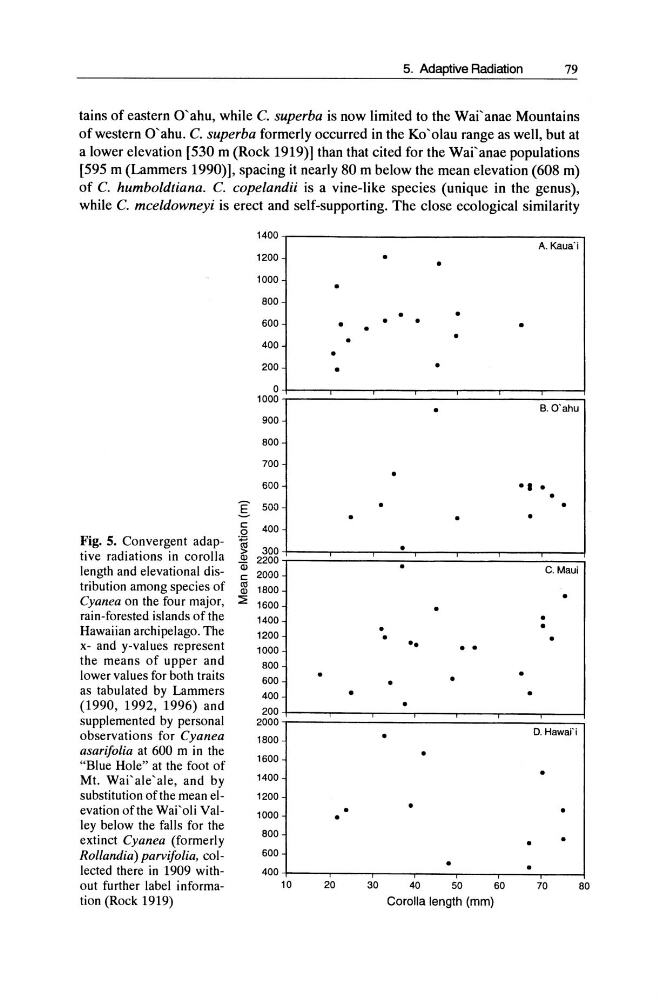
Fig. 5. Convergent adaptive radiations in corolla
length and elevational distribution among species of
Cyanea on the four major,
rain-forested islands of the
Hawaiian archipelago. The
x- and y-values represent
the means of upper and
lower values for both traits
as tabulated by Lammers
(1990, 1992, 1996) and
supplemented by personal
observations for Cyanea
asarifolia at 600 m in the
"Blue Hole" at the foot of
Mt. Wai'ale'ale, and by
substitution of the mean elevation of the Wai'oli Valley below the falls for the
extinct Cyanea (formerly
Rollandia) parvifolia, collected there in 1909 without further label information (Rock 1919)
1400
1200
1000
800
600
400
200
o
1000
900
800
700
600
E 500
§ 400
l Qi
300
2200
c 2000
Sl 1800
::2: 1600
1400
1200
1000
800
600
400
200
2000
1800
1600
1400
1200
1000
800
600
400
10
•
•
•
•
•
.
•
•
•
•
20
A. Kaua'j
•
•
•
•
•
•
•
.
•
•
•
B. O'ahu
•
•• • .
•
•
•
•
•
.
C.Maui
•
·
·
.
•
·
•
••
• .
.
•
•
•
•
•
D. Hawai'i
•
·
•
•
•
•
•
•
30
40
50
60
70
Corolla length (mm)
80
79
tains of eastern Q'ahu, while C. superba is now limited to the Wai'anae Mountains
of western Q'ahu. C. superba formerly occurred in the Ko'olau range as well, but at
a lower elevation [530 m (Rock 1919)] than that cited for the Wai'anae populations
[595 m (Lammers 1990)], spacing it nearly 80 m below the mean elevation (608 m)
of C. humboldtiana. C. copelandii is a vine-like species (unique in the genus),
while C. mceldowneyi is erect and self-supporting. The close ecological similarity
Fig. 5. Convergent adaptive radiations in corolla
length and elevational distribution among species of
Cyanea on the four major,
rain-forested islands of the
Hawaiian archipelago. The
x- and y-values represent
the means of upper and
lower values for both traits
as tabulated by Lammers
(1990, 1992, 1996) and
supplemented by personal
observations for Cyanea
asarifolia at 600 m in the
"Blue Hole" at the foot of
Mt. Wai'ale'ale, and by
substitution of the mean elevation of the Wai'oli Valley below the falls for the
extinct Cyanea (formerly
Rollandia) parvifolia, collected there in 1909 without further label information (Rock 1919)
1400
1200
1000
800
600
400
200
o
1000
900
800
700
600
E 500
§ 400
l Qi
300
2200
c 2000
Sl 1800
::2: 1600
1400
1200
1000
800
600
400
200
2000
1800
1600
1400
1200
1000
800
600
400
10
•
•
•
•
•
.
•
•
•
•
20
A. Kaua'j
•
•
•
•
•
•
•
.
•
•
•
B. O'ahu
•
•• • .
•
•
•
•
•
.
C.Maui
•
·
·
.
•
·
•
••
• .
.
•
•
•
•
•
D. Hawai'i
•
·
•
•
•
•
•
•
30
40
50
60
70
Corolla length (mm)
80