

14. Developmental Mechanisms for Chordate Evolution
215
~raebyury
[100
Chick brachyury (T) (Ch-T)
MouseT
L-_ _ _ _ Chick Ch-TbxT
Amphioxus Am(Bb)Bra1
Amphioxus Am(Bb)Bra2
Frog Xbra
' - - - - Zebraflsh No tall
L-_ _ _ _ Acorn-worm PfBra
, - - - - - - - - - AscIdlan CIBra
L-_ _ _ _ _ 'Sea urchin SpTa
L-_ _ _ _ _ _ Drosophila Trg
L . . - - - - - - - - - - - - - - - - - - Mouse T-Braln-1 (Tbr-1)
f - - - - - - - - - - - - - Mouse Tbx2
, - - - - - - - - - - - - - - - Mouse Tbx6
L . . - - - - - - - - - - - - - - - - FrogVegT
0 .1
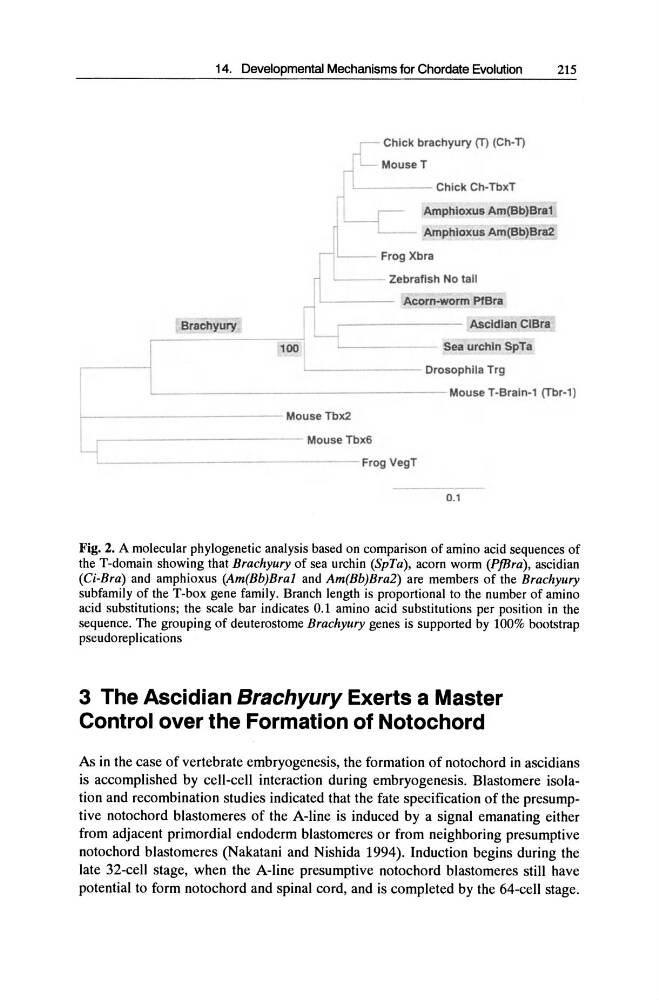
Fig. 2. A molecular phylogenetic analysis based on comparison of amino acid sequences of
the T-domain showing that Brachyury of sea urchin (SpTa), acorn worm (PfBra), ascidian
(Ci-Bra) and amphioxus (Am(Bb)Bral and Am(Bb)Bra2) are members of the Brachyury
subfamily of the T-box gene family. Branch length is proportional to the number of amino
acid substitutions; the scale bar indicates 0.1 amino acid substitutions per position in the
sequence. The grouping of deuterostome Brachyury genes is supported by 100% bootstrap
pseudo replications
3 The Ascidian Brachyury Exerts a Master
Control over the Formation of Notochord
As in the case of vertebrate embryogenesis, the formation of notochord in ascidians
is accomplished by cell-cell interaction during embryogenesis. Blastomere isolation and recombination studies indicated that the fate specification of the presumptive notochord blastomeres of the A-line is induced by a signal emanating either
from adjacent primordial endoderm blastomeres or from neighboring presumptive
notochord blastomeres (Nakatani and Nishida 1994). Induction begins during the
late 32-cell stage, when the A-line presumptive notochord blastomeres still have
potential to form notochord and spinal cord, and is completed by the 64-cell stage.
215
~raebyury
[100
Chick brachyury (T) (Ch-T)
MouseT
L-_ _ _ _ Chick Ch-TbxT
Amphioxus Am(Bb)Bra1
Amphioxus Am(Bb)Bra2
Frog Xbra
' - - - - Zebraflsh No tall
L-_ _ _ _ Acorn-worm PfBra
, - - - - - - - - - AscIdlan CIBra
L-_ _ _ _ _ 'Sea urchin SpTa
L-_ _ _ _ _ _ Drosophila Trg
L . . - - - - - - - - - - - - - - - - - - Mouse T-Braln-1 (Tbr-1)
f - - - - - - - - - - - - - Mouse Tbx2
, - - - - - - - - - - - - - - - Mouse Tbx6
L . . - - - - - - - - - - - - - - - - FrogVegT
0 .1
Fig. 2. A molecular phylogenetic analysis based on comparison of amino acid sequences of
the T-domain showing that Brachyury of sea urchin (SpTa), acorn worm (PfBra), ascidian
(Ci-Bra) and amphioxus (Am(Bb)Bral and Am(Bb)Bra2) are members of the Brachyury
subfamily of the T-box gene family. Branch length is proportional to the number of amino
acid substitutions; the scale bar indicates 0.1 amino acid substitutions per position in the
sequence. The grouping of deuterostome Brachyury genes is supported by 100% bootstrap
pseudo replications
3 The Ascidian Brachyury Exerts a Master
Control over the Formation of Notochord
As in the case of vertebrate embryogenesis, the formation of notochord in ascidians
is accomplished by cell-cell interaction during embryogenesis. Blastomere isolation and recombination studies indicated that the fate specification of the presumptive notochord blastomeres of the A-line is induced by a signal emanating either
from adjacent primordial endoderm blastomeres or from neighboring presumptive
notochord blastomeres (Nakatani and Nishida 1994). Induction begins during the
late 32-cell stage, when the A-line presumptive notochord blastomeres still have
potential to form notochord and spinal cord, and is completed by the 64-cell stage.