

26. Stoichiometric Analysis of Pelagic Ecosystems: The Biogeochemistry of Planktonic Food Webs
399
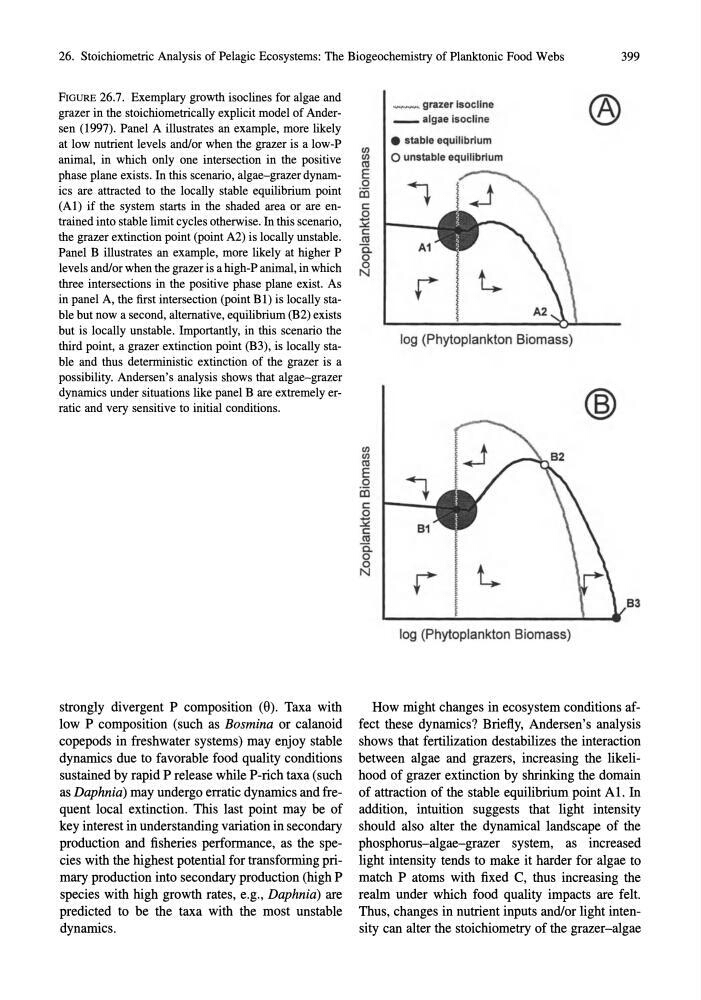
FIGURE 26.7. Exemplary growth isoclines for algae and
grazer in the stoichiometrically explicit model of Andersen (1997). Panel A illustrates an example, more likely
at low nutrient levels and/or when the grazer is a low-P
animal, in which only one intersection in the positive
phase plane exists. In this scenario, algae-grazer dynamics are attracted to the locally stable equilibrium point
(AI) if the system starts in the shaded area or are entrained into stable limit cycles otherwise. In this scenario,
the grazer extinction point (point A2) is locally unstable.
Panel B illustrates an example, more likely at higher P
levels and/or when the grazer is a high-P animal, in which
three intersections in the positive phase plane exist. As
in panel A, the first intersection (point B 1) is locally stable but now a second, alternative, equilibrium (B2) exists
but is locally unstable. Importantly, in this scenario the
third point, a grazer extinction point (B3), is locally stable and thus deterministic extinction of the grazer is a
possibility. Andersen's analysis shows that algae-grazer
dynamics under situations like panel B are extremely erratic and very sensitive to initial conditions.
strongly divergent P composition (9). Taxa with
low P composition (such as Bosmina or calanoid
copepods in freshwater systems) may enjoy stable
dynamics due to favorable food quality conditions
sustained by rapid P release while P-rich taxa (such
as Daphnia) may undergo erratic dynamics and frequent local extinction. This last point may be of
key interest in understanding variation in secondary
production and fisheries performance, as the species with the highest potential for transforming primary production into secondary production (high P
species with high growth rates, e.g., Daphnia) are
predicted to be the taxa with the most unstable
dynamics.
!/J
!/J
ctI
E
o
ili
c
o
~
s:::
ctI
C.
o
o
N
(/)
!/J
ctI
E
o
ili
s:::
o
s: s:::
ctI
C.
o
~
~ grazer isocline
_
algae isocline
• stable equilibrium
o unstable eqUilibrium
A1
r L
log (Phytoplankton Biomass)
r
log (Phytoplankton Biomass)
®
@
How might changes in ecosystem conditions affect these dynamics? Briefly, Andersen's analysis
shows that fertilization destabilizes the interaction
between algae and grazers, increasing the likelihood of grazer extinction by shrinking the domain
of attraction of the stable equilibrium point AI. In
addition, intuition suggests that light intensity
should also alter the dynamical landscape of the
phosphorus-algae-grazer system, as increased
light intensity tends to make it harder for algae to
match P atoms with fixed C, thus increasing the
realm under which food quality impacts are felt.
Thus, changes in nutrient inputs and/or light intensity can alter the stoichiometry of the grazer-algae
399
FIGURE 26.7. Exemplary growth isoclines for algae and
grazer in the stoichiometrically explicit model of Andersen (1997). Panel A illustrates an example, more likely
at low nutrient levels and/or when the grazer is a low-P
animal, in which only one intersection in the positive
phase plane exists. In this scenario, algae-grazer dynamics are attracted to the locally stable equilibrium point
(AI) if the system starts in the shaded area or are entrained into stable limit cycles otherwise. In this scenario,
the grazer extinction point (point A2) is locally unstable.
Panel B illustrates an example, more likely at higher P
levels and/or when the grazer is a high-P animal, in which
three intersections in the positive phase plane exist. As
in panel A, the first intersection (point B 1) is locally stable but now a second, alternative, equilibrium (B2) exists
but is locally unstable. Importantly, in this scenario the
third point, a grazer extinction point (B3), is locally stable and thus deterministic extinction of the grazer is a
possibility. Andersen's analysis shows that algae-grazer
dynamics under situations like panel B are extremely erratic and very sensitive to initial conditions.
strongly divergent P composition (9). Taxa with
low P composition (such as Bosmina or calanoid
copepods in freshwater systems) may enjoy stable
dynamics due to favorable food quality conditions
sustained by rapid P release while P-rich taxa (such
as Daphnia) may undergo erratic dynamics and frequent local extinction. This last point may be of
key interest in understanding variation in secondary
production and fisheries performance, as the species with the highest potential for transforming primary production into secondary production (high P
species with high growth rates, e.g., Daphnia) are
predicted to be the taxa with the most unstable
dynamics.
!/J
!/J
ctI
E
o
ili
c
o
~
s:::
ctI
C.
o
o
N
(/)
!/J
ctI
E
o
ili
s:::
o
s: s:::
ctI
C.
o
~
~ grazer isocline
_
algae isocline
• stable equilibrium
o unstable eqUilibrium
A1
r L
log (Phytoplankton Biomass)
r
log (Phytoplankton Biomass)
®
@
How might changes in ecosystem conditions affect these dynamics? Briefly, Andersen's analysis
shows that fertilization destabilizes the interaction
between algae and grazers, increasing the likelihood of grazer extinction by shrinking the domain
of attraction of the stable equilibrium point AI. In
addition, intuition suggests that light intensity
should also alter the dynamical landscape of the
phosphorus-algae-grazer system, as increased
light intensity tends to make it harder for algae to
match P atoms with fixed C, thus increasing the
realm under which food quality impacts are felt.
Thus, changes in nutrient inputs and/or light intensity can alter the stoichiometry of the grazer-algae