

390
individual components of stoichiometric relationships (e.g., energy, carbon, nitrogen, or phosphorus). Instead, I try to summarize new "methods" of
thinking about ecosystems and thus to motivate future studies to elaborate on these preliminary ideas
and refine the analyses necessary to test them.
Biogeochemical Structure
of Planktonic Food Webs
In pelagic ecosystems, energy and materials move
through the feeding relationships of various sizestructured components of the planktonic food web
that eventually lead to higher predators such as fish
(Fig. 26.1). Much of this processing is mediated by
herbivores, with varying efficiency, but considerable trophic processing also involves the consumption of detrital organic matter from various sources.
The factors that determine the abundance and rates
of production of food web components have fascinated pelagic ecologists since the days of Lindeman (1942) and before. Given the importance of
In every cubic meter of lake or sea water ...
10 4
metazoan
zooplankton
James J. Elser
fisheries resources as a source of food for humans
and of food web structure in affecting water quality,
achieving a more accurate and predictive understanding of pelagic food web dynamics must be one
of the most important priorities of aquatic ecosystem scientists. In this section, I describe in detail
some views of how an understanding of the contrasting nutritional features of major food web components can help us understand the structure and
dynamics of pelagic food webs. Here I emphasize
the algae and their macrozooplankton consumers,
but will give some attention to bacteria and various
protozoans in a later section.
At the base of pelagic food webs are autotrophic
phytoplankton of a bewildering array of sizes,
shapes, and taxonomic affiliations. The basic ecology of this group is well described elsewhere (Reynolds 1984; Harris 1986; Morris 1980). In the context of this chapter, I emphasize the nutritional
flexibility and variability of phytoplankton autotrophs, a situation with strong parallels to the physiological plasticity exhibited by higher plants in terrestrial systems.
10°
planktivorous
fish
10 15
viruses
10 12
bacteria
10 9
~:' f\
~~
. ...
Particle Diameter (IJm)
I
10'
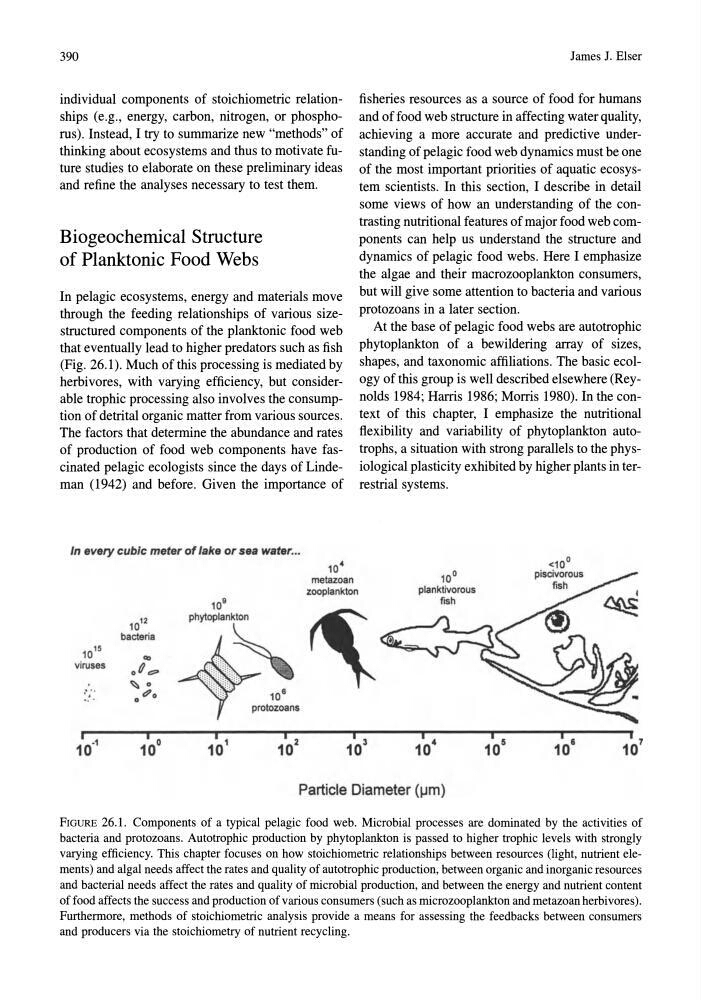
FIGURE 26.1. Components of a typical pelagic food web. Microbial processes are dominated by the activities of
bacteria and protozoans. Autotrophic production by phytoplankton is passed to higher trophic levels with strongly
varying efficiency. This chapter focuses on how stoichiometric relationships between resources (light, nutrient elements) and algal needs affect the rates and quality of autotrophic production, between organic and inorganic resources
and bacterial needs affect the rates and quality of microbial production, and between the energy and nutrient content
of food affects the success and production of various consumers (such as microzooplankton and metazoan herbivores).
Furthermore, methods of stoichiometric analysis provide a means for assessing the feedbacks between consumers
and producers via the stoichiometry of nutrient recycling.
individual components of stoichiometric relationships (e.g., energy, carbon, nitrogen, or phosphorus). Instead, I try to summarize new "methods" of
thinking about ecosystems and thus to motivate future studies to elaborate on these preliminary ideas
and refine the analyses necessary to test them.
Biogeochemical Structure
of Planktonic Food Webs
In pelagic ecosystems, energy and materials move
through the feeding relationships of various sizestructured components of the planktonic food web
that eventually lead to higher predators such as fish
(Fig. 26.1). Much of this processing is mediated by
herbivores, with varying efficiency, but considerable trophic processing also involves the consumption of detrital organic matter from various sources.
The factors that determine the abundance and rates
of production of food web components have fascinated pelagic ecologists since the days of Lindeman (1942) and before. Given the importance of
In every cubic meter of lake or sea water ...
10 4
metazoan
zooplankton
James J. Elser
fisheries resources as a source of food for humans
and of food web structure in affecting water quality,
achieving a more accurate and predictive understanding of pelagic food web dynamics must be one
of the most important priorities of aquatic ecosystem scientists. In this section, I describe in detail
some views of how an understanding of the contrasting nutritional features of major food web components can help us understand the structure and
dynamics of pelagic food webs. Here I emphasize
the algae and their macrozooplankton consumers,
but will give some attention to bacteria and various
protozoans in a later section.
At the base of pelagic food webs are autotrophic
phytoplankton of a bewildering array of sizes,
shapes, and taxonomic affiliations. The basic ecology of this group is well described elsewhere (Reynolds 1984; Harris 1986; Morris 1980). In the context of this chapter, I emphasize the nutritional
flexibility and variability of phytoplankton autotrophs, a situation with strong parallels to the physiological plasticity exhibited by higher plants in terrestrial systems.
10°
planktivorous
fish
10 15
viruses
10 12
bacteria
10 9
~:' f\
~~
. ...
Particle Diameter (IJm)
I
10'
FIGURE 26.1. Components of a typical pelagic food web. Microbial processes are dominated by the activities of
bacteria and protozoans. Autotrophic production by phytoplankton is passed to higher trophic levels with strongly
varying efficiency. This chapter focuses on how stoichiometric relationships between resources (light, nutrient elements) and algal needs affect the rates and quality of autotrophic production, between organic and inorganic resources
and bacterial needs affect the rates and quality of microbial production, and between the energy and nutrient content
of food affects the success and production of various consumers (such as microzooplankton and metazoan herbivores).
Furthermore, methods of stoichiometric analysis provide a means for assessing the feedbacks between consumers
and producers via the stoichiometry of nutrient recycling.