

15. Biogenic Trace Gas Exchanges
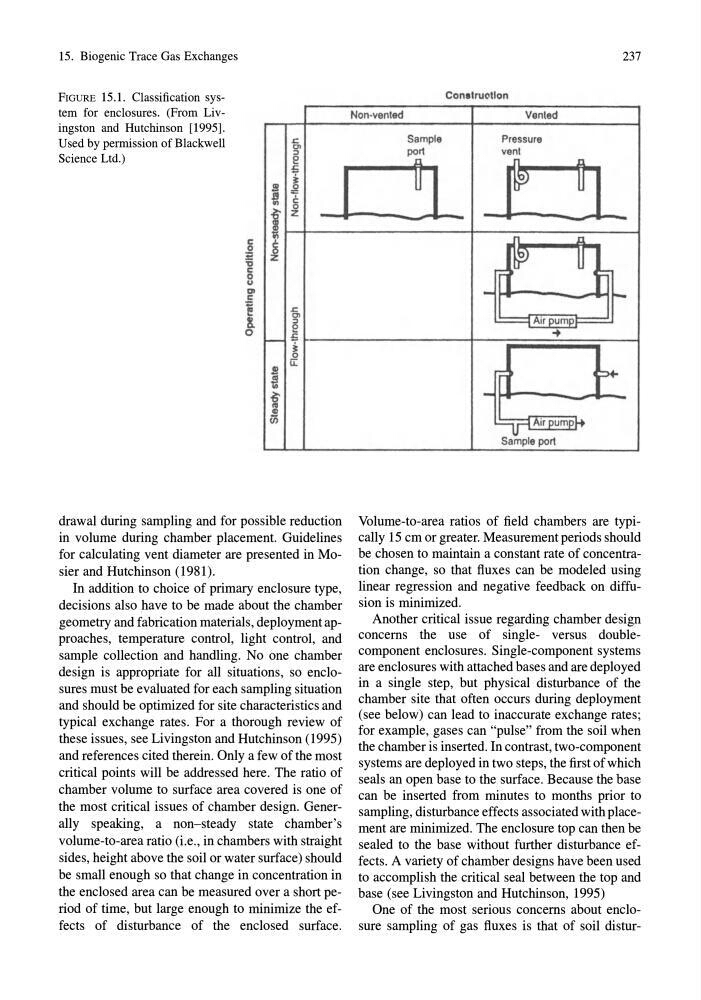
FIGURE 15.1. Classification system for enclosures. (From Livingston and Hutchinson [1995].
Used by permission of Blackwell
Science Ltd.)
c
o
€ c
o
u
IJ>
.5
i!
8.
o
l!!
~
t ii
~
r-~
U
~
.c
C>
:I
e
.c
i
g
c 0
z
.c
C>
:I
0
£;
;t
0
Ii:
drawal during sampling and for possible reduction
in volume during chamber placement. Guidelines
for calculating vent diameter are presented in Mosier and Hutchinson (1981).
In addition to choice of primary enclosure type,
decisions also have to be made about the chamber
geometry and fabrication materials, deployment approaches, temperature control, light control, and
sample collection and handling. No one chamber
design is appropriate for all situations, so enclosures must be evaluated for each sampling situation
and should be optimized for site characteristics and
typical exchange rates. For a thorough review of
these issues, see Livingston and Hutchinson (1995)
and references cited therein. Only a few of the most
critical points will be addressed here. The ratio of
chamber volume to surface area covered is one of
the most critical issues of chamber design. Generally speaking, a non-steady state chamber's
volume-to-area ratio (i.e., in chambers with straight
sides, height above the soil or water surface) should
be small enough so that change in concentration in
the enclosed area can be measured over a short period of time, but large enough to minimize the effects of disturbance of the enclosed surface.
I
237
Construotlon
Non-vented
Vented
Sample
Pressure
pon
venl
~ ... ~ ~ -
~~
n.
1f
I
F
-
- ~
I.==l Air pum
~
~
~
-
~ Air pum:£}-+
Sample pon
Volume-to-area ratios of field chambers are typically 15 cm or greater. Measurement periods should
be chosen to maintain a constant rate of concentration change, so that fluxes can be modeled using
linear regression and negative feedback on diffusion is minimized.
Another critical issue regarding chamber design
concerns the use of single- versus doublecomponent enclosures. Single-component systems
are enclosures with attached bases and are deployed
in a single step, but physical disturbance of the
chamber site that often occurs during deployment
(see below) can lead to inaccurate exchange rates;
for example, gases can "pulse" from the soil when
the chamber is inserted. In contrast, two-component
systems are deployed in two steps, the first of which
seals an open base to the surface. Because the base
can be inserted from minutes to months prior to
sampling, disturbance effects associated with placement are minimized. The enclosure top can then be
sealed to the base without further disturbance effects. A variety of chamber designs have been used
to accomplish the critical seal between the top and
base (see Livingston and Hutchinson, 1995)
One of the most serious concerns about enclosure sampling of gas fluxes is that of soil distur-
FIGURE 15.1. Classification system for enclosures. (From Livingston and Hutchinson [1995].
Used by permission of Blackwell
Science Ltd.)
c
o
€ c
o
u
IJ>
.5
i!
8.
o
l!!
~
t ii
~
r-~
U
~
.c
C>
:I
e
.c
i
g
c 0
z
.c
C>
:I
0
£;
;t
0
Ii:
drawal during sampling and for possible reduction
in volume during chamber placement. Guidelines
for calculating vent diameter are presented in Mosier and Hutchinson (1981).
In addition to choice of primary enclosure type,
decisions also have to be made about the chamber
geometry and fabrication materials, deployment approaches, temperature control, light control, and
sample collection and handling. No one chamber
design is appropriate for all situations, so enclosures must be evaluated for each sampling situation
and should be optimized for site characteristics and
typical exchange rates. For a thorough review of
these issues, see Livingston and Hutchinson (1995)
and references cited therein. Only a few of the most
critical points will be addressed here. The ratio of
chamber volume to surface area covered is one of
the most critical issues of chamber design. Generally speaking, a non-steady state chamber's
volume-to-area ratio (i.e., in chambers with straight
sides, height above the soil or water surface) should
be small enough so that change in concentration in
the enclosed area can be measured over a short period of time, but large enough to minimize the effects of disturbance of the enclosed surface.
I
237
Construotlon
Non-vented
Vented
Sample
Pressure
pon
venl
~ ... ~ ~ -
~~
n.
1f
I
F
-
- ~
I.==l Air pum
~
~
~
-
~ Air pum:£}-+
Sample pon
Volume-to-area ratios of field chambers are typically 15 cm or greater. Measurement periods should
be chosen to maintain a constant rate of concentration change, so that fluxes can be modeled using
linear regression and negative feedback on diffusion is minimized.
Another critical issue regarding chamber design
concerns the use of single- versus doublecomponent enclosures. Single-component systems
are enclosures with attached bases and are deployed
in a single step, but physical disturbance of the
chamber site that often occurs during deployment
(see below) can lead to inaccurate exchange rates;
for example, gases can "pulse" from the soil when
the chamber is inserted. In contrast, two-component
systems are deployed in two steps, the first of which
seals an open base to the surface. Because the base
can be inserted from minutes to months prior to
sampling, disturbance effects associated with placement are minimized. The enclosure top can then be
sealed to the base without further disturbance effects. A variety of chamber designs have been used
to accomplish the critical seal between the top and
base (see Livingston and Hutchinson, 1995)
One of the most serious concerns about enclosure sampling of gas fluxes is that of soil distur-