

420
F. Alvisi et al.
18 -r--------------~ 160
17
140
16
120
15
100
14
80
13
60
234Th
12
40
11
20
10
0
025
0 .75
1.25
1 75
225
15~~-----------~ 180
14
234Th
160
140
13
120
12
100
11
80
10
60
40
9
W
8+----;---+----;----L-.-----4-0
025
075
1.25
1.75
2.25
15 ,.-- - - - - - -- - - - - - - r 80
234Th
14
70
13
60
12
50
40
11
30
10
20
9
10
8 +----+---+---t----1.~-___J.+ 0
0.25
0 .75
1 .25
1.75
225
15~------------, 140
14
13
12
11
10
9
120
100
80
60
40
20
8 + - - - + - -+---+---L-.-----4-0
025
0.75
1.25
175
2 .25
5 .,.--------------~ 100
4
3
2
90
80
70
60
50
40
30
20
10
+---;---r--+--~--J+O
0 .25
075
1 25
1.75
225
sediment depth (em )
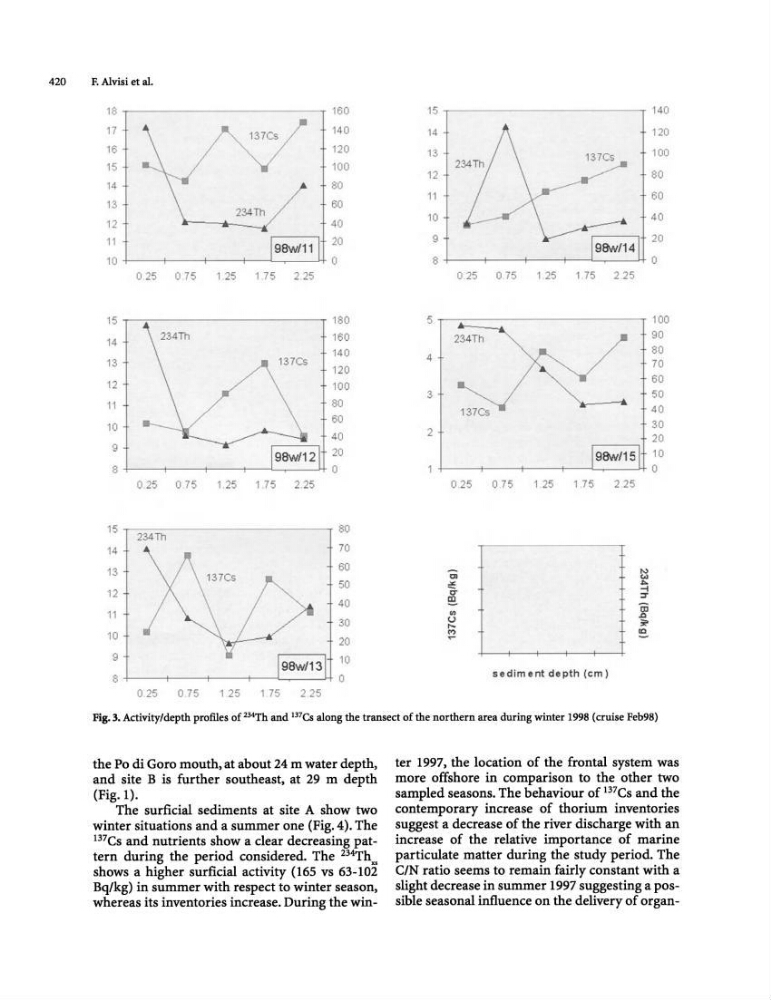
Fig. 3. Activity/depth profiles 0[23% and l31es along the transect of the northern area during winter 1998 (cruise Feb98)
the Po di Goro mouth, at about 24 m water depth,
and site B is further southeast, at 29 m depth
(Fig. 1).
The surficial sediments at site A show two
winter situations and a summer one (Fig. 4). The
137CS and nutrients show a dear decreasing pattern during the period considered. The 234Th ..
shows a higher surficial activity (165 vs 63-102
Bq/kg) in summer with respect to winter season,
whereas its inventories increase. During the winter 1997, the location of the frontal system was
more offshore in comparison to the other two
sampled seasons. The behaviour of 137 Cs and the
contemporary increase of thorium inventories
suggest a decrease of the river discharge with an
increase of the relative importance of marine
particulate matter during the study period. The
C/N ratio seems to remain fairly constant with a
slight decrease in summer 1997 suggesting a possible seasonal influence on the delivery of organ-
F. Alvisi et al.
18 -r--------------~ 160
17
140
16
120
15
100
14
80
13
60
234Th
12
40
11
20
10
0
025
0 .75
1.25
1 75
225
15~~-----------~ 180
14
234Th
160
140
13
120
12
100
11
80
10
60
40
9
W
8+----;---+----;----L-.-----4-0
025
075
1.25
1.75
2.25
15 ,.-- - - - - - -- - - - - - - r 80
234Th
14
70
13
60
12
50
40
11
30
10
20
9
10
8 +----+---+---t----1.~-___J.+ 0
0.25
0 .75
1 .25
1.75
225
15~------------, 140
14
13
12
11
10
9
120
100
80
60
40
20
8 + - - - + - -+---+---L-.-----4-0
025
0.75
1.25
175
2 .25
5 .,.--------------~ 100
4
3
2
90
80
70
60
50
40
30
20
10
+---;---r--+--~--J+O
0 .25
075
1 25
1.75
225
sediment depth (em )
Fig. 3. Activity/depth profiles 0[23% and l31es along the transect of the northern area during winter 1998 (cruise Feb98)
the Po di Goro mouth, at about 24 m water depth,
and site B is further southeast, at 29 m depth
(Fig. 1).
The surficial sediments at site A show two
winter situations and a summer one (Fig. 4). The
137CS and nutrients show a dear decreasing pattern during the period considered. The 234Th ..
shows a higher surficial activity (165 vs 63-102
Bq/kg) in summer with respect to winter season,
whereas its inventories increase. During the winter 1997, the location of the frontal system was
more offshore in comparison to the other two
sampled seasons. The behaviour of 137 Cs and the
contemporary increase of thorium inventories
suggest a decrease of the river discharge with an
increase of the relative importance of marine
particulate matter during the study period. The
C/N ratio seems to remain fairly constant with a
slight decrease in summer 1997 suggesting a possible seasonal influence on the delivery of organ-