

MesozoopIankton in a Mediterranean Coastal Sound (Stagnone di Marsala, Western Sicily)
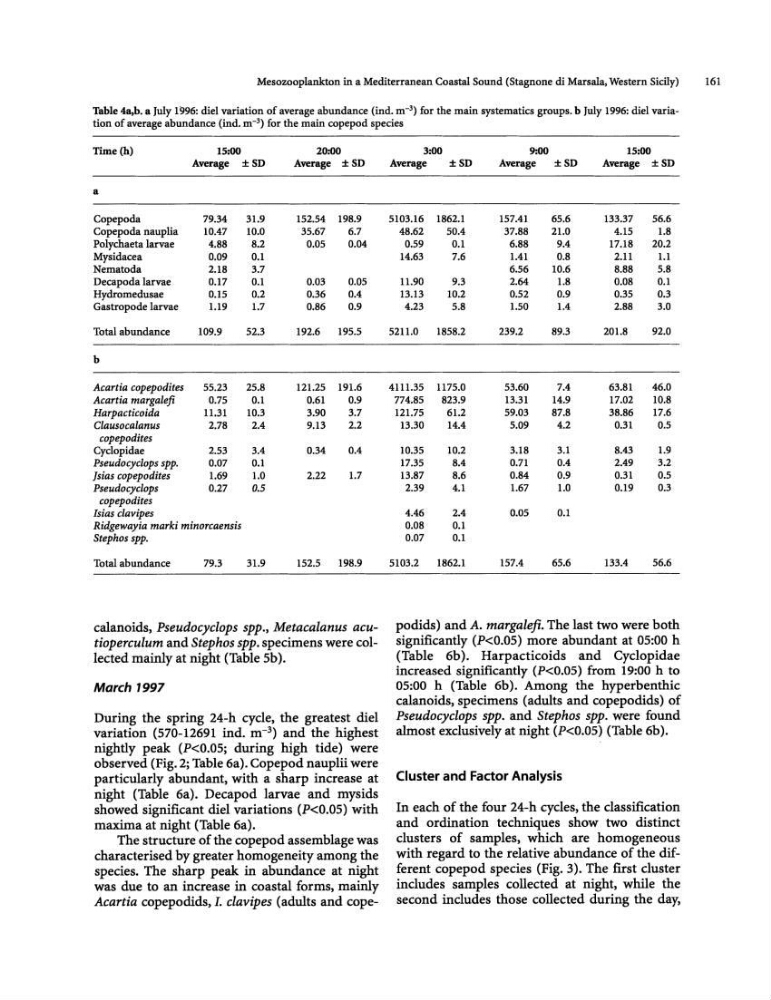
Table 4a.b. a July 1996: diel variation of average abundance (ind. m- 3 ) for the main systematics groups. b July 1996: diel variation of average abundance (ind. m- 3 ) for the main copepod species
Time (h)
15.-00
20:00
Average ±SD
Average ±SD
a
Copepoda
79.34
31.9
152.54 198.9
Copepoda nauplia
10.47
10.0
35.67
6.7
Polychaeta larvae
4.88
8.2
0.05
0.04
Mysidacea
0.09
0.1
Nematoda
2.18
3.7
Decapoda larvae
0.17
0.1
0.Q3
0.05
Hydromedusae
0.15
0.2
0.36
0.4
Gastropode larvae
1.19
1.7
0.86
0.9
Total abundance
109.9
52.3
192.6
195.5
b
Acartia copepodites
55.23
25.8
121.25 191.6
Acartia margalefi
0.75
0.1
0.61
0.9
Harpacticoida
11.31
10.3
3.90
3.7
Clausocalanus
2.78
2.4
9.13
2.2
copepodites
Cyclopidae
2.53
3.4
0.34
0.4
Pseudocyclops spp.
0.07
0.1
/sias copepodites
1.69
1,0
2.22
1.7
Pseudo cyclops
0.27
0.5
copepodites
[sins davipes
Ridgewayia marki minorcaensis
Stephos spp.
Total abundance
79.3
31.9
152.5
198.9
calanoids, Pseudocyclops spp., Metacalanus acutioperculum and Stephos spp. specimens were collected mainly at night (Table Sb).
March 7997
During the spring 24-h cycle, the greatest diel
variation (570-12691 indo m- 3 ) and the highest
nightly peak (P<0.05; during high tide) were
observed (Fig. 2; Table 6a). Copepod nauplii were
particularly abundant, with a sharp increase at
night (Table 6a). Decapod larvae and mysids
showed significant die! variations (P<0.05) with
maxima at night (Table 6a).
The structure of the copepod assemblage was
characterised by greater homogeneity among the
species. The sharp peak. in abundance at night
was due to an increase in coastal forms, mainly
Acartia copepodids, 1. clavipes (adults and cope3:00
9:00
15:00
Average
±SD
Average
±SD
Average ±SD
5103.16 1862.1
157.41
65.6
133.37
56.6
48.62
50.4
37.88
21.0
4.15
1.8
0.59
0.1
6.88
9.4
17.18
20.2
14.63
7.6
1.41
0.8
2.11
1.1
6.56
10.6
8.88
5.8
11.90
9.3
2.64
1.8
0.08
0.1
13.13
10.2
0.52
0.9
0.35
0.3
4.23
5.8
L50
1.4
2.88
3.0
5211.0
1858.2
239.2
89.3
201.8
92.0
4111.35 1175.0
53.60
7.4
63.81
46.0
774.85
823.9
13.31
14.9
17.02
10.8
121.75
61.2
59.03
87.8
38.86
17.6
13.30
14.4
5.09
4.2
0.31
0.5
10.35
10.2
3.18
3.1
8.43
1.9
17.35
8.4
0.71
0.4
2.49
3.2
13.87
8.6
0.84
0.9
0.31
0.5
2.39
4.1
1.67
1.0
0.19
0.3
4.46
2.4
0.05
0.1
0.08
0.1
0.07
0.1
5103.2
1862.1
157.4
65.6
133.4
56.6
podids) and A. margalefi. The last two were both
significantly (P
increased significantly (P
calanoids, specimens (adults and copepodids) of
Pseudocyclops spp. and Stephos spp. were found
almost exclusively at night (P<0.05) (Table 6b).
Cluster and Factor Analysis
In each of the four 24-h cycles, the classification
and ordination techniques show two distinct
clusters of samples, which are homogeneous
with regard to the relative abundance of the different copepod species (Fig. 3). The first duster
includes samples collected at night, while the
second includes those collected during the day,
161
Table 4a.b. a July 1996: diel variation of average abundance (ind. m- 3 ) for the main systematics groups. b July 1996: diel variation of average abundance (ind. m- 3 ) for the main copepod species
Time (h)
15.-00
20:00
Average ±SD
Average ±SD
a
Copepoda
79.34
31.9
152.54 198.9
Copepoda nauplia
10.47
10.0
35.67
6.7
Polychaeta larvae
4.88
8.2
0.05
0.04
Mysidacea
0.09
0.1
Nematoda
2.18
3.7
Decapoda larvae
0.17
0.1
0.Q3
0.05
Hydromedusae
0.15
0.2
0.36
0.4
Gastropode larvae
1.19
1.7
0.86
0.9
Total abundance
109.9
52.3
192.6
195.5
b
Acartia copepodites
55.23
25.8
121.25 191.6
Acartia margalefi
0.75
0.1
0.61
0.9
Harpacticoida
11.31
10.3
3.90
3.7
Clausocalanus
2.78
2.4
9.13
2.2
copepodites
Cyclopidae
2.53
3.4
0.34
0.4
Pseudocyclops spp.
0.07
0.1
/sias copepodites
1.69
1,0
2.22
1.7
Pseudo cyclops
0.27
0.5
copepodites
[sins davipes
Ridgewayia marki minorcaensis
Stephos spp.
Total abundance
79.3
31.9
152.5
198.9
calanoids, Pseudocyclops spp., Metacalanus acutioperculum and Stephos spp. specimens were collected mainly at night (Table Sb).
March 7997
During the spring 24-h cycle, the greatest diel
variation (570-12691 indo m- 3 ) and the highest
nightly peak (P<0.05; during high tide) were
observed (Fig. 2; Table 6a). Copepod nauplii were
particularly abundant, with a sharp increase at
night (Table 6a). Decapod larvae and mysids
showed significant die! variations (P<0.05) with
maxima at night (Table 6a).
The structure of the copepod assemblage was
characterised by greater homogeneity among the
species. The sharp peak. in abundance at night
was due to an increase in coastal forms, mainly
Acartia copepodids, 1. clavipes (adults and cope3:00
9:00
15:00
Average
±SD
Average
±SD
Average ±SD
5103.16 1862.1
157.41
65.6
133.37
56.6
48.62
50.4
37.88
21.0
4.15
1.8
0.59
0.1
6.88
9.4
17.18
20.2
14.63
7.6
1.41
0.8
2.11
1.1
6.56
10.6
8.88
5.8
11.90
9.3
2.64
1.8
0.08
0.1
13.13
10.2
0.52
0.9
0.35
0.3
4.23
5.8
L50
1.4
2.88
3.0
5211.0
1858.2
239.2
89.3
201.8
92.0
4111.35 1175.0
53.60
7.4
63.81
46.0
774.85
823.9
13.31
14.9
17.02
10.8
121.75
61.2
59.03
87.8
38.86
17.6
13.30
14.4
5.09
4.2
0.31
0.5
10.35
10.2
3.18
3.1
8.43
1.9
17.35
8.4
0.71
0.4
2.49
3.2
13.87
8.6
0.84
0.9
0.31
0.5
2.39
4.1
1.67
1.0
0.19
0.3
4.46
2.4
0.05
0.1
0.08
0.1
0.07
0.1
5103.2
1862.1
157.4
65.6
133.4
56.6
podids) and A. margalefi. The last two were both
significantly (P
increased significantly (P
calanoids, specimens (adults and copepodids) of
Pseudocyclops spp. and Stephos spp. were found
almost exclusively at night (P<0.05) (Table 6b).
Cluster and Factor Analysis
In each of the four 24-h cycles, the classification
and ordination techniques show two distinct
clusters of samples, which are homogeneous
with regard to the relative abundance of the different copepod species (Fig. 3). The first duster
includes samples collected at night, while the
second includes those collected during the day,
161