

146
R. Bruno et al.
50
7
6
'7
40
E
~
5
0
30
E
..01 4
01
~
E 20
3
~
0
2
10
0
0
Salps
_
Fish larva biomas
Primary production
Months
Zooplankton biomass
Microzooplankton abundance
250
200
150
100
50
3
Ie:
n
3
C:.
6
5
-4 5"
?3 ....
0
;..,
""
2
.:..
.
...
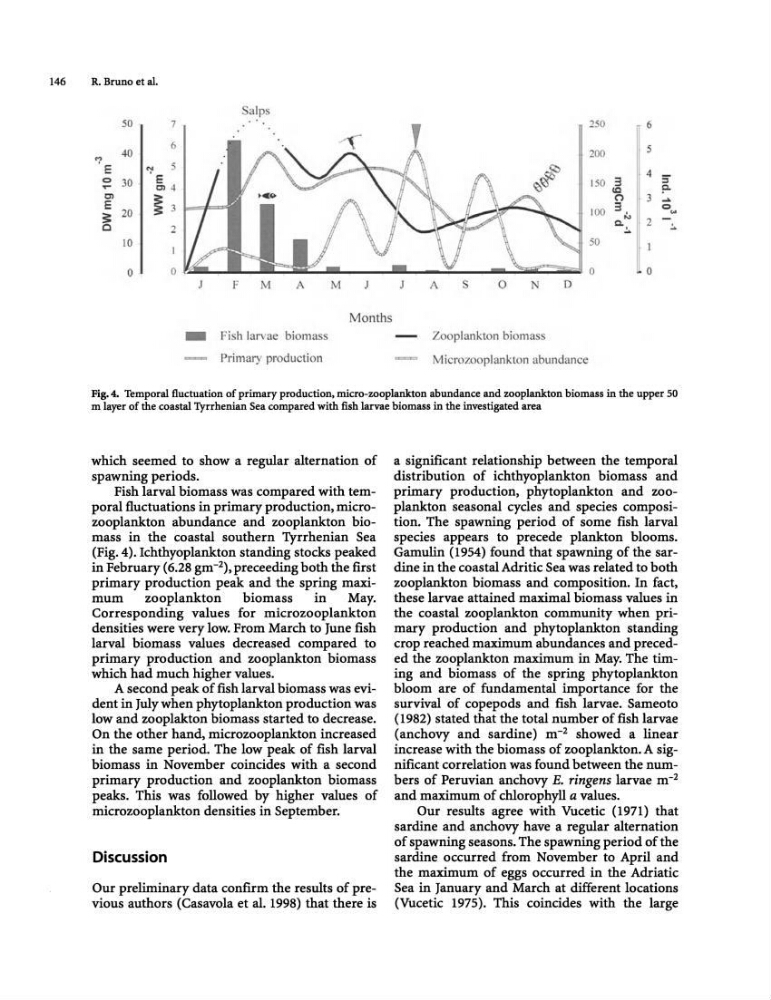
Fig. 4. Temporal fluctuation of primary production, micro-zooplankton abundance and zooplankton biomass in the upper 50
m layer of the coastal Tyrrhenian Sea compared with fish larvae biomass in the investigated area
which seemed to show a regular alternation of
spawning periods.
Fish larval biomass was compared with temporal fluctuations in primary production, microzooplankton abundance and zooplankton biomass in the coastal southern Tyrrhenian Sea
(Fig. 4). Ichthyoplankton standing stocks peaked
in February (6.28 gm- 2 ), preceeding both the ftrst
primary production peak and the spring maximum
zooplankton
biomass
in
May.
Corresponding values for microzooplankton
densities were very low. From March to June ftsh
larval biomass values decreased compared to
primary production and zooplankton biomass
which had much higher values.
A second peak of ftsh larval biomass was evident in July when phytoplankton production was
low and zooplakton biomass started to decrease.
On the other hand, microzooplankton increased
in the same period. The low peak of ftsh larval
biomass in November coincides with a second
primary production and zooplankton biomass
peaks. This was followed by higher values of
microzooplankton densities in September.
Discussion
Our preliminary data confIrm the results of previous authors (Casavola et al. 1998) that there is
a signifIcant relationship between the temporal
distribution of ichthyoplankton biomass and
primary production, phytoplankton and zooplankton seasonal cycles and species composition. The spawning period of some ftsh larval
species appears to precede plankton blooms.
Gamulin (1954) found that spawning of the sardine in the coastal Adritic Sea was related to both
zooplankton biomass and composition. In fact,
these larvae attained maximal biomass values in
the coastal zooplankton community when primary production and phytoplankton standing
crop reached maximum abundances and preceded the zooplankton maximum in May. The timing and biomass of the spring phytoplankton
bloom are of fundamental importance for the
survival of copepods and ftsh larvae. Sameoto
(1982) stated that the total number of fish larvae
(anchovy and sardine) m- 2 showed a linear
increase with the biomass of zooplankton. A significant correlation was found between the numbers of Peruvian anchovy E. ringens larvae m- 2
and maximum of chlorophyll a values.
Our results agree with Vucetic (1971) that
sardine and anchovy have a regular alternation
of spawning seasons. The spawning period of the
sardine occurred from November to April and
the maximum of eggs occurred in the Adriatic
Sea in January and March at different locations
(Vucetic 1975). This coincides with the large
R. Bruno et al.
50
7
6
'7
40
E
~
5
0
30
E
..01 4
01
~
E 20
3
~
0
2
10
0
0
Salps
_
Fish larva biomas
Primary production
Months
Zooplankton biomass
Microzooplankton abundance
250
200
150
100
50
3
Ie:
n
3
C:.
6
5
-4 5"
?3 ....
0
;..,
""
2
.:..
.
...
Fig. 4. Temporal fluctuation of primary production, micro-zooplankton abundance and zooplankton biomass in the upper 50
m layer of the coastal Tyrrhenian Sea compared with fish larvae biomass in the investigated area
which seemed to show a regular alternation of
spawning periods.
Fish larval biomass was compared with temporal fluctuations in primary production, microzooplankton abundance and zooplankton biomass in the coastal southern Tyrrhenian Sea
(Fig. 4). Ichthyoplankton standing stocks peaked
in February (6.28 gm- 2 ), preceeding both the ftrst
primary production peak and the spring maximum
zooplankton
biomass
in
May.
Corresponding values for microzooplankton
densities were very low. From March to June ftsh
larval biomass values decreased compared to
primary production and zooplankton biomass
which had much higher values.
A second peak of ftsh larval biomass was evident in July when phytoplankton production was
low and zooplakton biomass started to decrease.
On the other hand, microzooplankton increased
in the same period. The low peak of ftsh larval
biomass in November coincides with a second
primary production and zooplankton biomass
peaks. This was followed by higher values of
microzooplankton densities in September.
Discussion
Our preliminary data confIrm the results of previous authors (Casavola et al. 1998) that there is
a signifIcant relationship between the temporal
distribution of ichthyoplankton biomass and
primary production, phytoplankton and zooplankton seasonal cycles and species composition. The spawning period of some ftsh larval
species appears to precede plankton blooms.
Gamulin (1954) found that spawning of the sardine in the coastal Adritic Sea was related to both
zooplankton biomass and composition. In fact,
these larvae attained maximal biomass values in
the coastal zooplankton community when primary production and phytoplankton standing
crop reached maximum abundances and preceded the zooplankton maximum in May. The timing and biomass of the spring phytoplankton
bloom are of fundamental importance for the
survival of copepods and ftsh larvae. Sameoto
(1982) stated that the total number of fish larvae
(anchovy and sardine) m- 2 showed a linear
increase with the biomass of zooplankton. A significant correlation was found between the numbers of Peruvian anchovy E. ringens larvae m- 2
and maximum of chlorophyll a values.
Our results agree with Vucetic (1971) that
sardine and anchovy have a regular alternation
of spawning seasons. The spawning period of the
sardine occurred from November to April and
the maximum of eggs occurred in the Adriatic
Sea in January and March at different locations
(Vucetic 1975). This coincides with the large