

80
16
12
::::J
~
2: 8
III
ro 0
'iii 4
0
5 Spatial and Temporal DlstrihutlOn Patterns
low tide
•••• silicate
.. .
:
......
-
phosphate
low tide
-4
::::J
~
2:
III
2 ro
.c:
0m
0
.c:
00
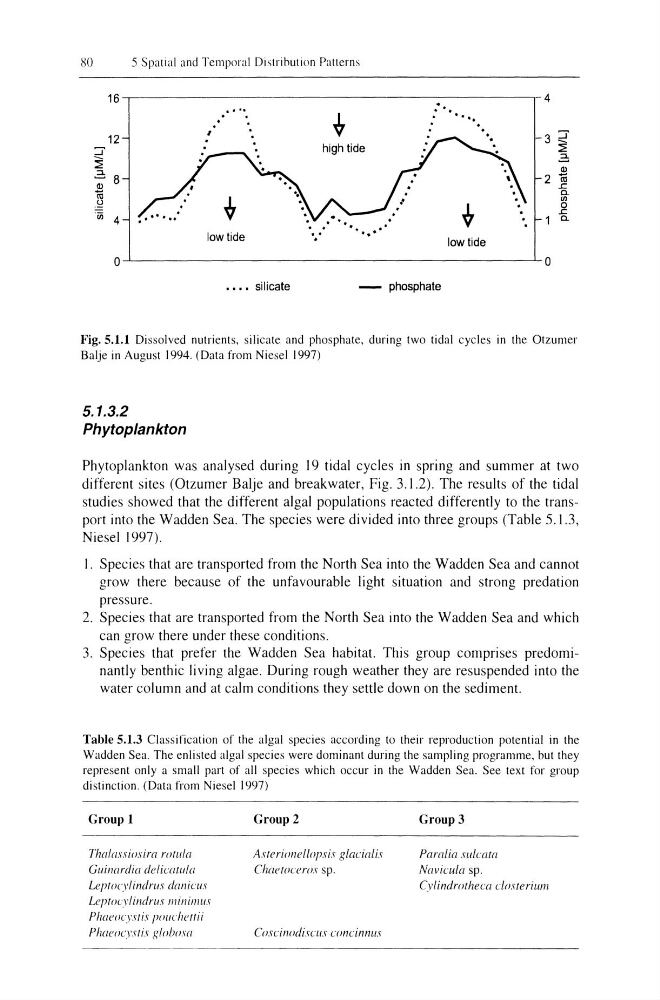
Fig. 5.1.1 Dissolved nutrients, silicate and phosphate, during two tidal cycles in the Otzumer
8alje in August 1994. (Data from Niesel 1997)
5.1.3.2
Phytoplankton
Phytoplankton was analysed during 19 tidal cycles in spring and summer at two
different sites (Otzumer Balje and breakwater, Fig. 3.1.2). The results of the tidal
studies showed that the different algal populations reacted differently to the transport into the Wadden Sea. The species were divided into three groups (Table 5.1.3,
Niesel 1997).
I. Species that are transported from the North Sea into the Wadden Sea and cannot
grow there because of the unfavourable light situation and strong predation
pressure.
2. Species that are transported from the North Sea into the Wadden Sea and which
can grow there under these conditions.
3. Species that prefer the Wadden Sea habitat. This group comprises predominantly benthic living algae. During rough weather they are resuspended into the
water column and at calm conditions they settle down on the sediment.
Table 5.1.3 Classification of the algal species according to their reproduction potential in the
Wadden Sea. The enlisted algal species were dominant during the sampling programme, hut they
represent only a small part of all species which occur in the Wadden Sea. See text for group
distinction. (Data from Niesel 1997)
Group 1
Tha/as.I'io.lim rolu/a
Guillardia deliCtllu/a
Lcplocylinriru.l' danicus
Leproc.I'/indrus minimus
Phaeocyslis poucliellii
Phacoc.I'slis g/o/msa
Group 2
Asterione/lopsis g/acia/is
C/zal'lOceros sp.
C(I.I'cinlJ(iiscus concinnus
Group 3
Paralia .I'ulC{/fa
Navicula sp.
Cylindrotlzeca c/o.l'terium
16
12
::::J
~
2: 8
III
ro 0
'iii 4
0
5 Spatial and Temporal DlstrihutlOn Patterns
low tide
•••• silicate
.. .
:
......
-
phosphate
low tide
-4
::::J
~
2:
III
2 ro
.c:
0m
0
.c:
00
Fig. 5.1.1 Dissolved nutrients, silicate and phosphate, during two tidal cycles in the Otzumer
8alje in August 1994. (Data from Niesel 1997)
5.1.3.2
Phytoplankton
Phytoplankton was analysed during 19 tidal cycles in spring and summer at two
different sites (Otzumer Balje and breakwater, Fig. 3.1.2). The results of the tidal
studies showed that the different algal populations reacted differently to the transport into the Wadden Sea. The species were divided into three groups (Table 5.1.3,
Niesel 1997).
I. Species that are transported from the North Sea into the Wadden Sea and cannot
grow there because of the unfavourable light situation and strong predation
pressure.
2. Species that are transported from the North Sea into the Wadden Sea and which
can grow there under these conditions.
3. Species that prefer the Wadden Sea habitat. This group comprises predominantly benthic living algae. During rough weather they are resuspended into the
water column and at calm conditions they settle down on the sediment.
Table 5.1.3 Classification of the algal species according to their reproduction potential in the
Wadden Sea. The enlisted algal species were dominant during the sampling programme, hut they
represent only a small part of all species which occur in the Wadden Sea. See text for group
distinction. (Data from Niesel 1997)
Group 1
Tha/as.I'io.lim rolu/a
Guillardia deliCtllu/a
Lcplocylinriru.l' danicus
Leproc.I'/indrus minimus
Phaeocyslis poucliellii
Phacoc.I'slis g/o/msa
Group 2
Asterione/lopsis g/acia/is
C/zal'lOceros sp.
C(I.I'cinlJ(iiscus concinnus
Group 3
Paralia .I'ulC{/fa
Navicula sp.
Cylindrotlzeca c/o.l'terium