

40
-' Study Area
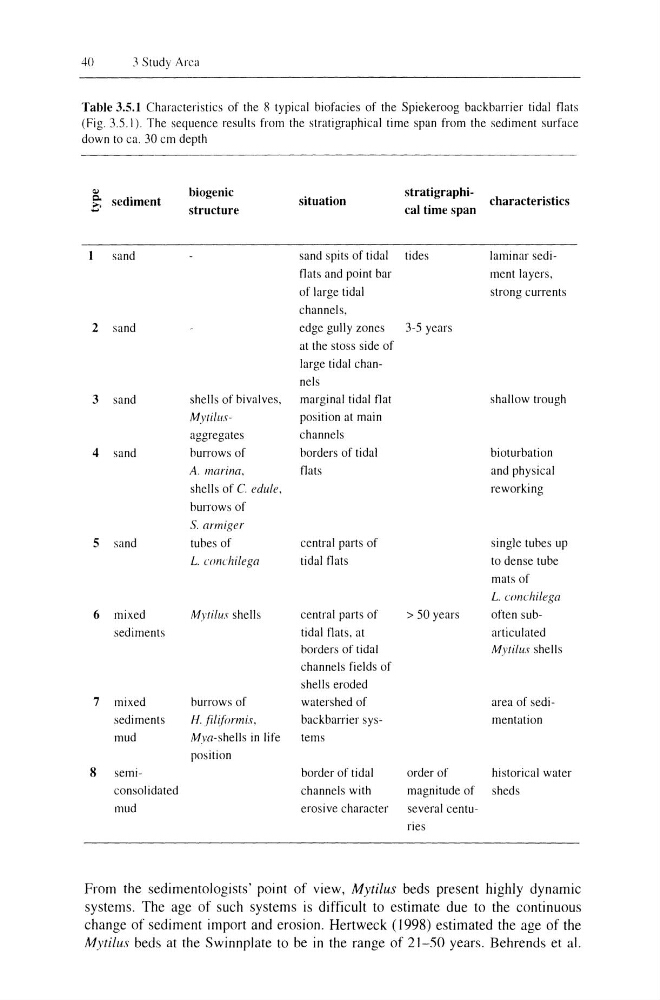
Table 3.5.1 Characteristics of the 8 typical biofacies of the Spiekeroog backbarrier tidal flats
(Fig. 3.5.1). The sequence results from the stratigraphical time span from the sediment surface
down to ca. 30 cm depth
Q.)
biogenic
stratigraphiDo sediment
situation
characteristics
~
structure
cal time span
sand
sand spits of tidal
tides
laminar sediflats and point bar
ment layers,
of large tidal
strong currents
channels,
2 sand
edge gully zones
3-5 years
at the stoss side of
large tidal channels
3 sand
shells of bivalves,
marginal tidal flat
sballow trougb
Mytilusposition at main
aggregates
channels
4 sand
burrows of
borders of tidal
bioturbation
A. marina,
flats
and physical
shells of C. edule,
reworking
burrows of
S. armiger
5 sand
tubes of
central parts of
single tubes up
L. conchilega
tidal flats
to dense tube
mats of
L. conchilega
6 mixed
Mytilus shells
central parts of
> 50 years
often subsediments
tidal tlats, at
articulated
borders of tidal
My/ilus shells
channels fields of
shells eroded
7 mixed
burrows of
watershed of
area of sedisediments
H. filiformis,
backbarrier sysmentation
mud
Mya-shells in life
tems
position
8 semiborder of tidal
order of
historical water
consolidated
channels with
magnitude of sheds
mud
erosive character
several centuries
From the sedimentologists' point of view, Mytilus beds present highly dynamic
systems. The age of such systems is difficult to estimate due to the continuous
change of sediment import and erosion. Hertweck (1998) estimated the age of the
Mytilus beds at the Swinnplate to be in the range of 21-50 years. Behrends et al.
-' Study Area
Table 3.5.1 Characteristics of the 8 typical biofacies of the Spiekeroog backbarrier tidal flats
(Fig. 3.5.1). The sequence results from the stratigraphical time span from the sediment surface
down to ca. 30 cm depth
Q.)
biogenic
stratigraphiDo sediment
situation
characteristics
~
structure
cal time span
sand
sand spits of tidal
tides
laminar sediflats and point bar
ment layers,
of large tidal
strong currents
channels,
2 sand
edge gully zones
3-5 years
at the stoss side of
large tidal channels
3 sand
shells of bivalves,
marginal tidal flat
sballow trougb
Mytilusposition at main
aggregates
channels
4 sand
burrows of
borders of tidal
bioturbation
A. marina,
flats
and physical
shells of C. edule,
reworking
burrows of
S. armiger
5 sand
tubes of
central parts of
single tubes up
L. conchilega
tidal flats
to dense tube
mats of
L. conchilega
6 mixed
Mytilus shells
central parts of
> 50 years
often subsediments
tidal tlats, at
articulated
borders of tidal
My/ilus shells
channels fields of
shells eroded
7 mixed
burrows of
watershed of
area of sedisediments
H. filiformis,
backbarrier sysmentation
mud
Mya-shells in life
tems
position
8 semiborder of tidal
order of
historical water
consolidated
channels with
magnitude of sheds
mud
erosive character
several centuries
From the sedimentologists' point of view, Mytilus beds present highly dynamic
systems. The age of such systems is difficult to estimate due to the continuous
change of sediment import and erosion. Hertweck (1998) estimated the age of the
Mytilus beds at the Swinnplate to be in the range of 21-50 years. Behrends et al.