

302
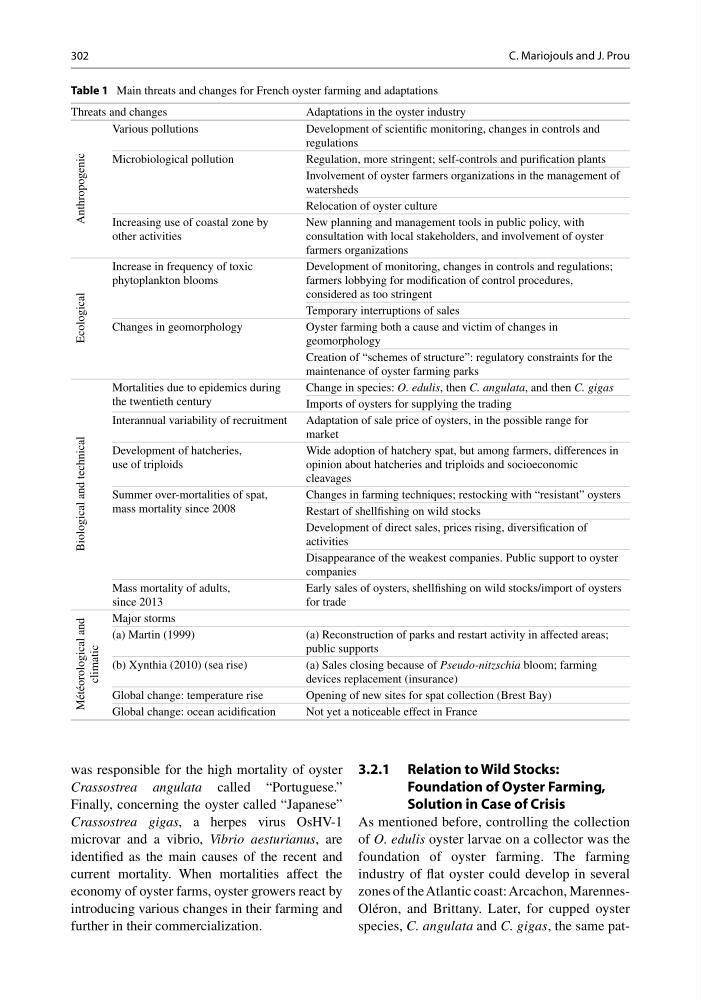
Table 1 Main threats and changes for French oyster farming and adaptations
Threats and changes
Adaptations in the oyster industry
Anthropogenic
Various pollutions
Development of scientifi c monitoring, changes in controls and
regulations
Microbiological pollution
Regulation, more stringent; self- controls and purifi cation plants
Involvement of oyster farmers organizations in the management of
watersheds
Relocation of oyster culture
Increasing use of coastal zone by
other activities
New planning and management tools in public policy, with
consultation with local stakeholders, and involvement of oyster
farmers organizations
Ecological
Increase in frequency of toxic
phytoplankton blooms
Development of monitoring, changes in controls and regulations;
farmers lobbying for modifi cation of control procedures,
considered as too stringent
Temporary interruptions of sales
Changes in geomorphology
Oyster farming both a cause and victim of changes in
geomorphology
Creation of “schemes of structure”: regulatory constraints for the
maintenance of oyster farming parks
Biological and technical
Mortalities due to epidemics during
the twentieth century
Change in species: O. edulis , then C. angulata , and then C. gigas
Imports of oysters for supplying the trading
Interannual variability of recruitment
Adaptation of sale price of oysters, in the possible range for
market
Development of hatcheries,
use of triploids
Wide adoption of hatchery spat, but among farmers, differences in
opinion about hatcheries and triploids and socioeconomic
cleavages
Summer over-mortalities of spat,
mass mortality since 2008
Changes in farming techniques; restocking with “resistant” oysters
Restart of shellfi shing on wild stocks
Development of direct sales, prices rising, diversifi cation of
activities
Disappearance of the weakest companies. Public support to oyster
companies
Mass mortality of adults,
since 2013
Early sales of oysters, shellfi shing on wild stocks/import of oysters
for trade
Météorological and
climatic
Major storms
(a) Martin (1999)
(a) Reconstruction of parks and restart activity in affected areas;
public supports
(b) Xynthia (2010) (sea rise)
(a) Sales closing because of Pseudo-nitzschia bloom; farming
devices replacement (insurance)
Global change: temperature rise
Opening of new sites for spat collection (Brest Bay)
Global change: ocean acidifi cation
Not yet a noticeable effect in France
was responsible for the high mortality of oyster
Crassostrea angulata called “Portuguese.”
Finally, concerning the oyster called “Japanese”
Crassostrea gigas , a herpes virus OsHV-1
microvar and a vibrio, Vibrio aesturianus , are
identifi ed as the main causes of the recent and
current mortality. When mortalities affect the
economy of oyster farms, oyster growers react by
introducing various changes in their farming and
further in their commercialization.
3.2.1 Relation to Wild Stocks:
Foundation of Oyster Farming,
Solution in Case of Crisis
As mentioned before, controlling the collection
of O. edulis oyster larvae on a collector was the
foundation of oyster farming. The farming
industry of fl at oyster could develop in several
zones of the Atlantic coast: Arcachon, MarennesOléron, and Brittany. Later, for cupped oyster
species, C. angulata and C. gigas , the same patC. Mariojouls and J. Prou
Table 1 Main threats and changes for French oyster farming and adaptations
Threats and changes
Adaptations in the oyster industry
Anthropogenic
Various pollutions
Development of scientifi c monitoring, changes in controls and
regulations
Microbiological pollution
Regulation, more stringent; self- controls and purifi cation plants
Involvement of oyster farmers organizations in the management of
watersheds
Relocation of oyster culture
Increasing use of coastal zone by
other activities
New planning and management tools in public policy, with
consultation with local stakeholders, and involvement of oyster
farmers organizations
Ecological
Increase in frequency of toxic
phytoplankton blooms
Development of monitoring, changes in controls and regulations;
farmers lobbying for modifi cation of control procedures,
considered as too stringent
Temporary interruptions of sales
Changes in geomorphology
Oyster farming both a cause and victim of changes in
geomorphology
Creation of “schemes of structure”: regulatory constraints for the
maintenance of oyster farming parks
Biological and technical
Mortalities due to epidemics during
the twentieth century
Change in species: O. edulis , then C. angulata , and then C. gigas
Imports of oysters for supplying the trading
Interannual variability of recruitment
Adaptation of sale price of oysters, in the possible range for
market
Development of hatcheries,
use of triploids
Wide adoption of hatchery spat, but among farmers, differences in
opinion about hatcheries and triploids and socioeconomic
cleavages
Summer over-mortalities of spat,
mass mortality since 2008
Changes in farming techniques; restocking with “resistant” oysters
Restart of shellfi shing on wild stocks
Development of direct sales, prices rising, diversifi cation of
activities
Disappearance of the weakest companies. Public support to oyster
companies
Mass mortality of adults,
since 2013
Early sales of oysters, shellfi shing on wild stocks/import of oysters
for trade
Météorological and
climatic
Major storms
(a) Martin (1999)
(a) Reconstruction of parks and restart activity in affected areas;
public supports
(b) Xynthia (2010) (sea rise)
(a) Sales closing because of Pseudo-nitzschia bloom; farming
devices replacement (insurance)
Global change: temperature rise
Opening of new sites for spat collection (Brest Bay)
Global change: ocean acidifi cation
Not yet a noticeable effect in France
was responsible for the high mortality of oyster
Crassostrea angulata called “Portuguese.”
Finally, concerning the oyster called “Japanese”
Crassostrea gigas , a herpes virus OsHV-1
microvar and a vibrio, Vibrio aesturianus , are
identifi ed as the main causes of the recent and
current mortality. When mortalities affect the
economy of oyster farms, oyster growers react by
introducing various changes in their farming and
further in their commercialization.
3.2.1 Relation to Wild Stocks:
Foundation of Oyster Farming,
Solution in Case of Crisis
As mentioned before, controlling the collection
of O. edulis oyster larvae on a collector was the
foundation of oyster farming. The farming
industry of fl at oyster could develop in several
zones of the Atlantic coast: Arcachon, MarennesOléron, and Brittany. Later, for cupped oyster
species, C. angulata and C. gigas , the same patC. Mariojouls and J. Prou