

294
Berque and Matsuda ( 2013 ) argues that the
hands-on approaches of coastal communities are
the key to conserve or restore their marine environment, but technological support and scientifi c
knowledge are necessary for the local-scale
innovation. The implementation of marine
ranching in Okayama remains to be a challenge
for both its cost- effi ciency and fi sheries governance because the cost can only be recovered by
the increase of fi sheries production of the
enhanced marine ecosystem. Marine geoengineering can undermine the idea of conserving biodiversity and sustainable use of coastal
and marine resources to the work of production
sectors, mainly fi shers communities, if the social
capital of those fi shing communities in Okayama
is not considered. Thus, the benefi ts of the
Satoumi approach in comparison to other contemporary coastal management schemes rest on
its appeal to the fi shers themselves.
Technically, marine ranching is set to recreate
a hydrological cycle that mirrors natural nutrient
fl ow by connecting these networks to local freshwater systems. Simultaneously, the modifi cations
to the coastal ecosystem based on the Japanese
concept of Satoumi coastal, community-based
resource management provide both scientifi c
knowledge and a traditional understanding of the
local environment, juxtaposed with technical
understanding of the marine ecosystem is vital
for both implementation and governance.
References
Berque J, Matsuda O (2013) Coastal biodiversity management in Japanese satoumi. Mar Policy 39:191–200
Yanagi T (2008) Sato-Umi – a new concept for sustainable fi sheries. In Tsukamoto T et al (eds) Fisheries for
global welfare and environment. TerraPub, Tokyo,
pp 351–358
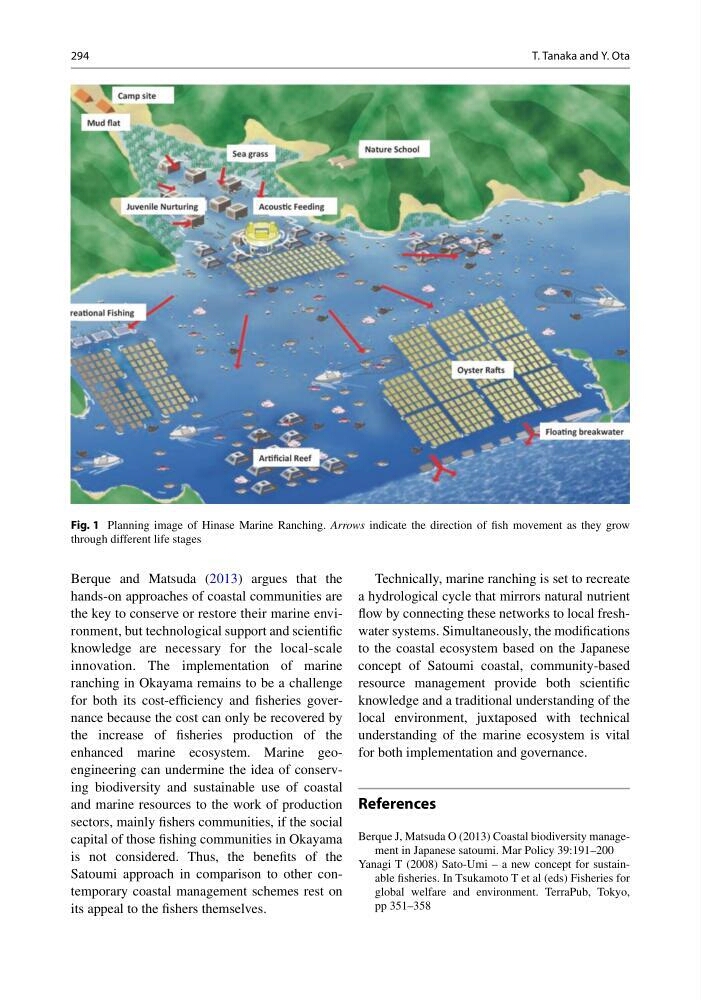
Fig. 1 Planning image of Hinase Marine Ranching. Arrows indicate the direction of fi sh movement as they grow
through different life stages
T. Tanaka and Y. Ota
Berque and Matsuda ( 2013 ) argues that the
hands-on approaches of coastal communities are
the key to conserve or restore their marine environment, but technological support and scientifi c
knowledge are necessary for the local-scale
innovation. The implementation of marine
ranching in Okayama remains to be a challenge
for both its cost- effi ciency and fi sheries governance because the cost can only be recovered by
the increase of fi sheries production of the
enhanced marine ecosystem. Marine geoengineering can undermine the idea of conserving biodiversity and sustainable use of coastal
and marine resources to the work of production
sectors, mainly fi shers communities, if the social
capital of those fi shing communities in Okayama
is not considered. Thus, the benefi ts of the
Satoumi approach in comparison to other contemporary coastal management schemes rest on
its appeal to the fi shers themselves.
Technically, marine ranching is set to recreate
a hydrological cycle that mirrors natural nutrient
fl ow by connecting these networks to local freshwater systems. Simultaneously, the modifi cations
to the coastal ecosystem based on the Japanese
concept of Satoumi coastal, community-based
resource management provide both scientifi c
knowledge and a traditional understanding of the
local environment, juxtaposed with technical
understanding of the marine ecosystem is vital
for both implementation and governance.
References
Berque J, Matsuda O (2013) Coastal biodiversity management in Japanese satoumi. Mar Policy 39:191–200
Yanagi T (2008) Sato-Umi – a new concept for sustainable fi sheries. In Tsukamoto T et al (eds) Fisheries for
global welfare and environment. TerraPub, Tokyo,
pp 351–358
Fig. 1 Planning image of Hinase Marine Ranching. Arrows indicate the direction of fi sh movement as they grow
through different life stages
T. Tanaka and Y. Ota