

89
0
10
20
30
40
50
60
70
80
90
100
Hospital (N=49)
Retirement
home (N=48)
Influent WWTP
(N=49)
Treated effluent
WWTP (N=49)
Risle (N=45)
% Erythromycin- resistant enterococci
0
10
20
30
40
50
60
70
80
90
100
% isolates harboring the corresponding gene
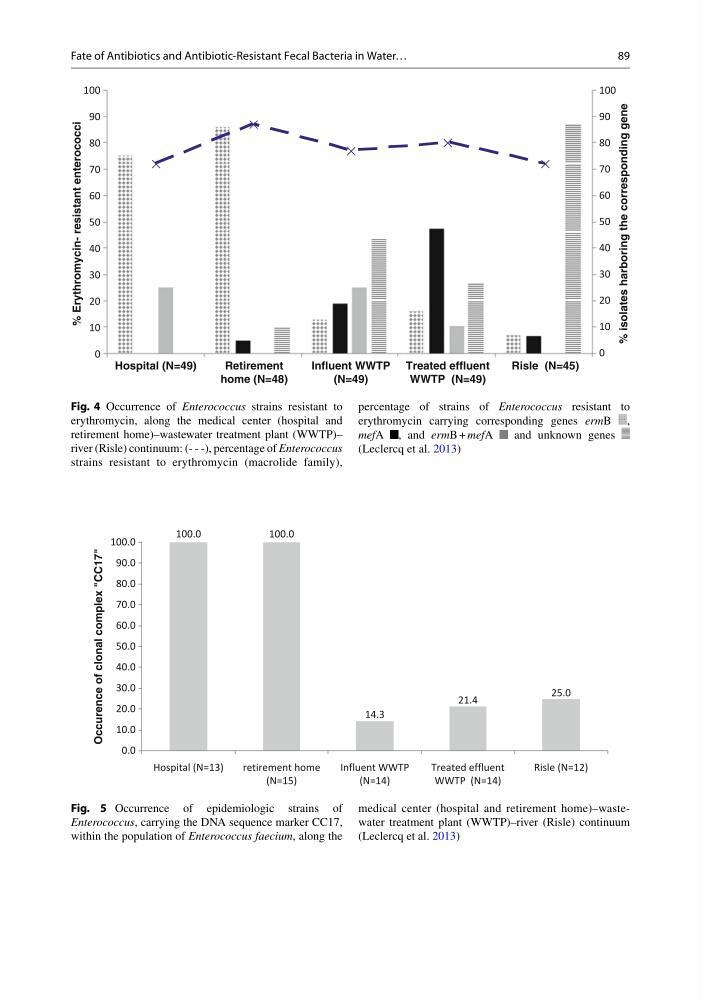
Fig. 4 Occurrence of Enterococcus strains resistant to
erythromycin, along the medical center (hospital and
retirement home)–wastewater treatment plant (WWTP)–
river (Risle) continuum: (- - -), percentage of Enterococcus
strains resistant to erythromycin (macrolide family),
percentage of strains of Enterococcus resistant to
erythromycin carrying corresponding genes erm B ,
mef A , and erm B + mef A
and unknown genes
(Leclercq et al. 2013 )
25.0
21.4
14.3
100.0
100.0
0.0
Occurence of clonal complex "CC17"
10.0
20.0
30.0
40.0
50.0
60.0
70.0
80.0
90.0
100.0
Hospital (N=13)
retirement home
(N=15)
Influent WWTP
(N=14)
Treated effluent
WWTP (N=14)
Risle (N=12)
Fig. 5 Occurrence of epidemiologic strains of
Enterococcus , carrying the DNA sequence marker CC17,
within the population of Enterococcus faecium , along the
medical center (hospital and retirement home)–wastewater treatment plant (WWTP)–river (Risle) continuum
(Leclercq et al. 2013 )
Fate of Antibiotics and Antibiotic-Resistant Fecal Bacteria in Water…
0
10
20
30
40
50
60
70
80
90
100
Hospital (N=49)
Retirement
home (N=48)
Influent WWTP
(N=49)
Treated effluent
WWTP (N=49)
Risle (N=45)
% Erythromycin- resistant enterococci
0
10
20
30
40
50
60
70
80
90
100
% isolates harboring the corresponding gene
Fig. 4 Occurrence of Enterococcus strains resistant to
erythromycin, along the medical center (hospital and
retirement home)–wastewater treatment plant (WWTP)–
river (Risle) continuum: (- - -), percentage of Enterococcus
strains resistant to erythromycin (macrolide family),
percentage of strains of Enterococcus resistant to
erythromycin carrying corresponding genes erm B ,
mef A , and erm B + mef A
and unknown genes
(Leclercq et al. 2013 )
25.0
21.4
14.3
100.0
100.0
0.0
Occurence of clonal complex "CC17"
10.0
20.0
30.0
40.0
50.0
60.0
70.0
80.0
90.0
100.0
Hospital (N=13)
retirement home
(N=15)
Influent WWTP
(N=14)
Treated effluent
WWTP (N=14)
Risle (N=12)
Fig. 5 Occurrence of epidemiologic strains of
Enterococcus , carrying the DNA sequence marker CC17,
within the population of Enterococcus faecium , along the
medical center (hospital and retirement home)–wastewater treatment plant (WWTP)–river (Risle) continuum
(Leclercq et al. 2013 )
Fate of Antibiotics and Antibiotic-Resistant Fecal Bacteria in Water…