

2.3 Similarities and Differences Between Biodiversity and Agroblodiverslty
31
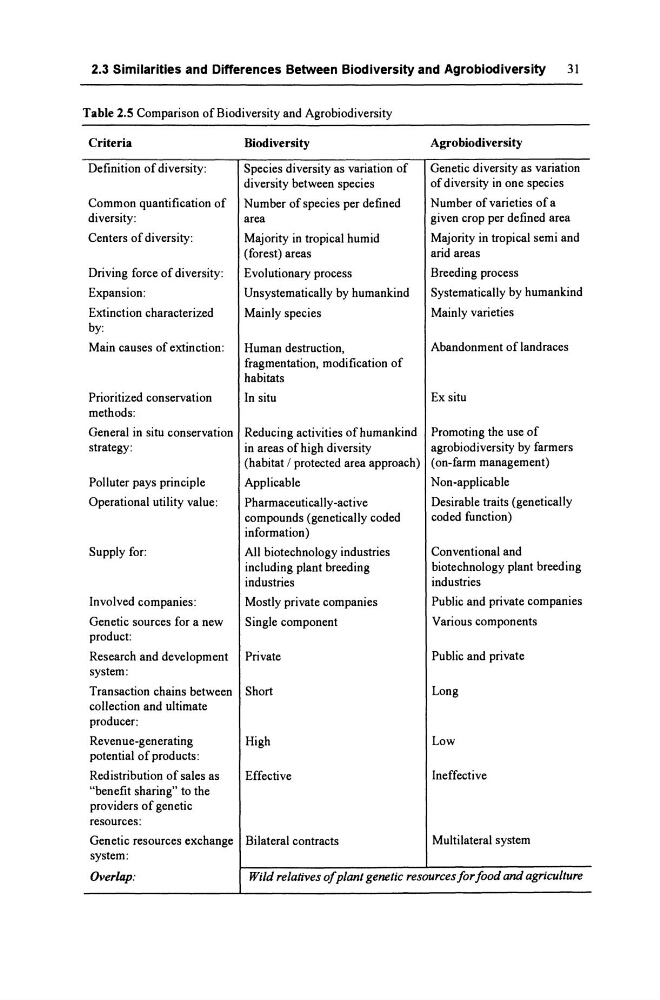
Table 2.5 Comparison of Biodiversity and Agrobiodiversity
Criteria
Definition of diversity:
Common quantification of
diversity:
Centers of diversity:
Driving force of diversity:
Expansion:
Extinction characterized
by:
Main causes of extinction:
Prioritized conservation
methods:
General in situ conservation
strategy:
Polluter pays principle
Operational utility value:
Supply for:
Involved companies:
Genetic sources for a new
product:
Research and development
system:
Biodiversity
Species diversity as variation of
diversity between species
Number of species per defined
area
Majority in tropical humid
(forest) areas
Evolutionary process
Unsystematically by humankind
Mainly species
Human destruction,
fragmentation, modification of
habitats
In situ
Reducing activities of humankind
in areas of high diversity
(habitat I protected area approach)
Applicable
Pharmaceutically-active
compounds (genetically coded
information)
All biotechnology industries
including plant breeding
industries
Mostly private companies
Single component
Private
Transaction chains between Short
collection and ultimate
producer:
Revenue-generating
potential of products:
Redistribution of sales as
"benefit sharing" to the
providers of genetic
resources:
High
Effective
Genetic resources exchange Bilateral contracts
system:
Agrobiodiversity
Genetic diversity as variation
of diversity in one species
Number of varieties of a
given crop per defined area
Majority in tropical semi and
arid areas
Breeding process
Systematically by humankind
Mainly varieties
Abandonment of landraces
Ex situ
Promoting the use of
agrobiodiversity by farmers
(on-farm management)
Non-applicable
Desirable traits (genetically
coded function)
Conventional and
biotechnology plant breeding
industries
Public and private companies
Various components
Public and private
Long
Low
Ineffective
Multilateral system
Overlap:
Wild relatives of plant genetic resources for food and agriculture
31
Table 2.5 Comparison of Biodiversity and Agrobiodiversity
Criteria
Definition of diversity:
Common quantification of
diversity:
Centers of diversity:
Driving force of diversity:
Expansion:
Extinction characterized
by:
Main causes of extinction:
Prioritized conservation
methods:
General in situ conservation
strategy:
Polluter pays principle
Operational utility value:
Supply for:
Involved companies:
Genetic sources for a new
product:
Research and development
system:
Biodiversity
Species diversity as variation of
diversity between species
Number of species per defined
area
Majority in tropical humid
(forest) areas
Evolutionary process
Unsystematically by humankind
Mainly species
Human destruction,
fragmentation, modification of
habitats
In situ
Reducing activities of humankind
in areas of high diversity
(habitat I protected area approach)
Applicable
Pharmaceutically-active
compounds (genetically coded
information)
All biotechnology industries
including plant breeding
industries
Mostly private companies
Single component
Private
Transaction chains between Short
collection and ultimate
producer:
Revenue-generating
potential of products:
Redistribution of sales as
"benefit sharing" to the
providers of genetic
resources:
High
Effective
Genetic resources exchange Bilateral contracts
system:
Agrobiodiversity
Genetic diversity as variation
of diversity in one species
Number of varieties of a
given crop per defined area
Majority in tropical semi and
arid areas
Breeding process
Systematically by humankind
Mainly varieties
Abandonment of landraces
Ex situ
Promoting the use of
agrobiodiversity by farmers
(on-farm management)
Non-applicable
Desirable traits (genetically
coded function)
Conventional and
biotechnology plant breeding
industries
Public and private companies
Various components
Public and private
Long
Low
Ineffective
Multilateral system
Overlap:
Wild relatives of plant genetic resources for food and agriculture