

6.2 German Case Study
161
of nature. Furthennore, the international discussion and development concerning
PGRF A conservation picked up speed, resulting in the establishment of the
Commission on Plant Genetic Resources for Food and Agriculture as well as the
adoption of the International Undertaking on Plant Genetic Resources (both in
1983). In 1990, the concept was presented to BML, but it has been implemented
only partially since then (Bommer, 1995).
The reasons for the incomplete implementation of the concept are the
decreasing availability of funds on federal and state level and the decreasing
importance of the conservation of PGRF A and general conservation issues to the
population. Furthennore, the concept was outlined for West Gennany; through the
Gennan unification, the basis had changed and the sensitivity of structural changes
had partially paralyzed the further implementation.
The establishment of the National Committee for the preparation process, the
preparation and the accomplishment of the International Technical Conference on
Plant Genetic Resources in Leipzig, as well as the continuously active role of the
Information Center of Genetic Resources (IGR) has stimulated the implementation
process again.
In situ conservation, understood as on-farm management, is still in ist infancy
Gennany. This is because few indigenous varieties exist. It is, however, also a
political problem, because under the Plant Variety Protection Act, varieties have
to be taken from the market after their variety protection and registration have
expired. An in situ pilot project is currently being carried out for old varieties of
wheat, rye, and potato, of which the seed and planting stock originates from the
genebank in Gaters1eben (Hammer, 1995).
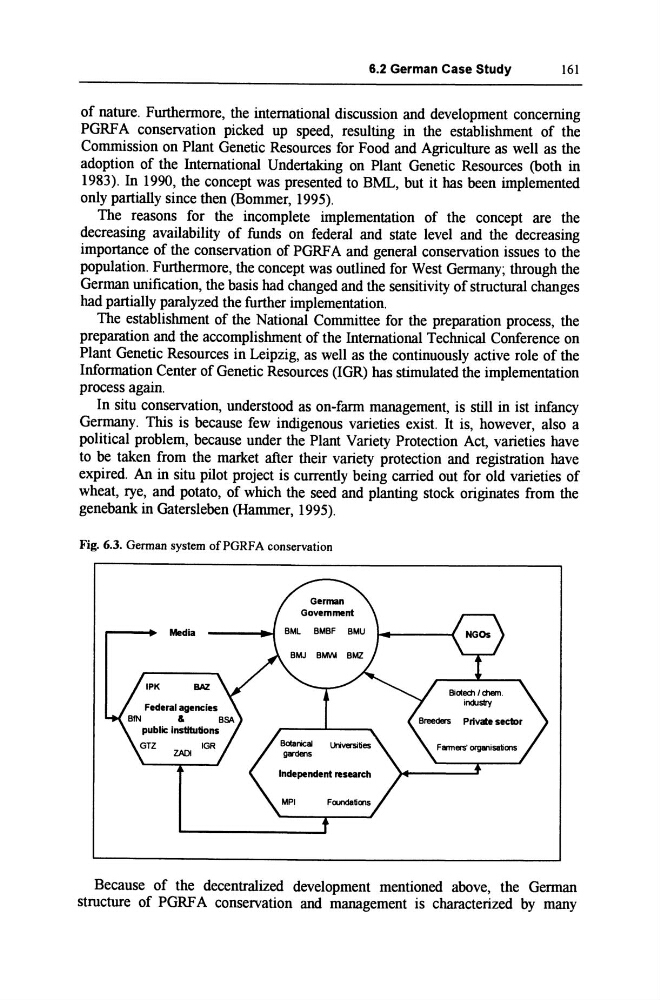
Fig. 6.3. German system ofPGRFA conservation
Because of the decentralized development mentioned above, the Gennan
structure of PGRF A conservation and management is characterized by many
161
of nature. Furthennore, the international discussion and development concerning
PGRF A conservation picked up speed, resulting in the establishment of the
Commission on Plant Genetic Resources for Food and Agriculture as well as the
adoption of the International Undertaking on Plant Genetic Resources (both in
1983). In 1990, the concept was presented to BML, but it has been implemented
only partially since then (Bommer, 1995).
The reasons for the incomplete implementation of the concept are the
decreasing availability of funds on federal and state level and the decreasing
importance of the conservation of PGRF A and general conservation issues to the
population. Furthennore, the concept was outlined for West Gennany; through the
Gennan unification, the basis had changed and the sensitivity of structural changes
had partially paralyzed the further implementation.
The establishment of the National Committee for the preparation process, the
preparation and the accomplishment of the International Technical Conference on
Plant Genetic Resources in Leipzig, as well as the continuously active role of the
Information Center of Genetic Resources (IGR) has stimulated the implementation
process again.
In situ conservation, understood as on-farm management, is still in ist infancy
Gennany. This is because few indigenous varieties exist. It is, however, also a
political problem, because under the Plant Variety Protection Act, varieties have
to be taken from the market after their variety protection and registration have
expired. An in situ pilot project is currently being carried out for old varieties of
wheat, rye, and potato, of which the seed and planting stock originates from the
genebank in Gaters1eben (Hammer, 1995).
Fig. 6.3. German system ofPGRFA conservation
Because of the decentralized development mentioned above, the Gennan
structure of PGRF A conservation and management is characterized by many