

88
4 Institutional Frameworks for the Exchange and Utilization of PGRFA
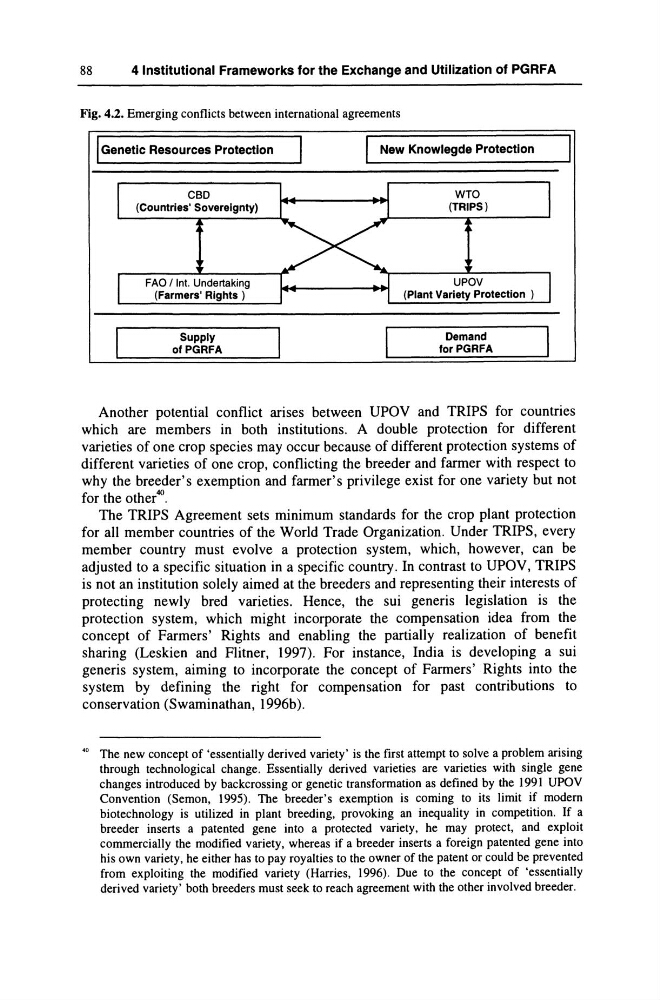
Fig. 4.2. Emerging conflicts between international agreements
I Genetic Resources Protection
New Knowlegde Protection
CBD
(Countries' Sovereignty)
FAO I int. Undertaking
(Farmers' Rights )
Supply
of PGRFA
WTO
(TRIPS)
UPOV
(Plant Variety Protection )
Demand
forPGRFA
Another potential conflict arises between UPOV and TRIPS for countries
which are members in both institutions. A double protection for different
varieties of one crop species may occur because of different protection systems of
different varieties of one crop, conflicting the breeder and farmer with respect to
why the breeder's exemption and farmer's privilege exist for one variety but not
for the other 40 •
The TRIPS Agreement sets minimum standards for the crop plant protection
for all member countries of the World Trade Organization. Under TRIPS, every
member country must evolve a protection system, which, however, can be
adjusted to a specific situation in a specific country. In contrast to UPOV, TRIPS
is not an institution solely aimed at the breeders and representing their interests of
protecting newly bred varieties. Hence, the sui generis legislation is the
protection system, which might incorporate the compensation idea from the
concept of Farmers' Rights and enabling the partially realization of benefit
sharing (Leskien and Fiitner, 1997). For instance, India is developing a sui
generis system, aiming to incorporate the concept of Farmers' Rights into the
system by defining the right for compensation for past contributions to
conservation (Swaminathan, 1996b).
40
The new concept of 'essentially derived variety' is the first attempt to solve a problem arising
through technological change. Essentially derived varieties are varieties with single gene
changes introduced by backcrossing or genetic transformation as defined by the 1991 UPOV
Convention (Semon, 1995). The breeder's exemption is coming to its limit if modern
biotechnology is utilized in plant breeding, provoking an inequality in competition. If a
breeder inserts a patented gene into a protected variety, he may protect, and exploit
commercially the modified variety, whereas if a breeder inserts a foreign patented gene into
his own variety, he either has to pay royalties to the owner of the patent or could be prevented
from exploiting the modified variety (Harries, 1996). Due to the concept of 'essentially
derived variety' both breeders must seek to reach agreement with the other involved breeder.
4 Institutional Frameworks for the Exchange and Utilization of PGRFA
Fig. 4.2. Emerging conflicts between international agreements
I Genetic Resources Protection
New Knowlegde Protection
CBD
(Countries' Sovereignty)
FAO I int. Undertaking
(Farmers' Rights )
Supply
of PGRFA
WTO
(TRIPS)
UPOV
(Plant Variety Protection )
Demand
forPGRFA
Another potential conflict arises between UPOV and TRIPS for countries
which are members in both institutions. A double protection for different
varieties of one crop species may occur because of different protection systems of
different varieties of one crop, conflicting the breeder and farmer with respect to
why the breeder's exemption and farmer's privilege exist for one variety but not
for the other 40 •
The TRIPS Agreement sets minimum standards for the crop plant protection
for all member countries of the World Trade Organization. Under TRIPS, every
member country must evolve a protection system, which, however, can be
adjusted to a specific situation in a specific country. In contrast to UPOV, TRIPS
is not an institution solely aimed at the breeders and representing their interests of
protecting newly bred varieties. Hence, the sui generis legislation is the
protection system, which might incorporate the compensation idea from the
concept of Farmers' Rights and enabling the partially realization of benefit
sharing (Leskien and Fiitner, 1997). For instance, India is developing a sui
generis system, aiming to incorporate the concept of Farmers' Rights into the
system by defining the right for compensation for past contributions to
conservation (Swaminathan, 1996b).
40
The new concept of 'essentially derived variety' is the first attempt to solve a problem arising
through technological change. Essentially derived varieties are varieties with single gene
changes introduced by backcrossing or genetic transformation as defined by the 1991 UPOV
Convention (Semon, 1995). The breeder's exemption is coming to its limit if modern
biotechnology is utilized in plant breeding, provoking an inequality in competition. If a
breeder inserts a patented gene into a protected variety, he may protect, and exploit
commercially the modified variety, whereas if a breeder inserts a foreign patented gene into
his own variety, he either has to pay royalties to the owner of the patent or could be prevented
from exploiting the modified variety (Harries, 1996). Due to the concept of 'essentially
derived variety' both breeders must seek to reach agreement with the other involved breeder.