

220
E. C. Bailey et al.
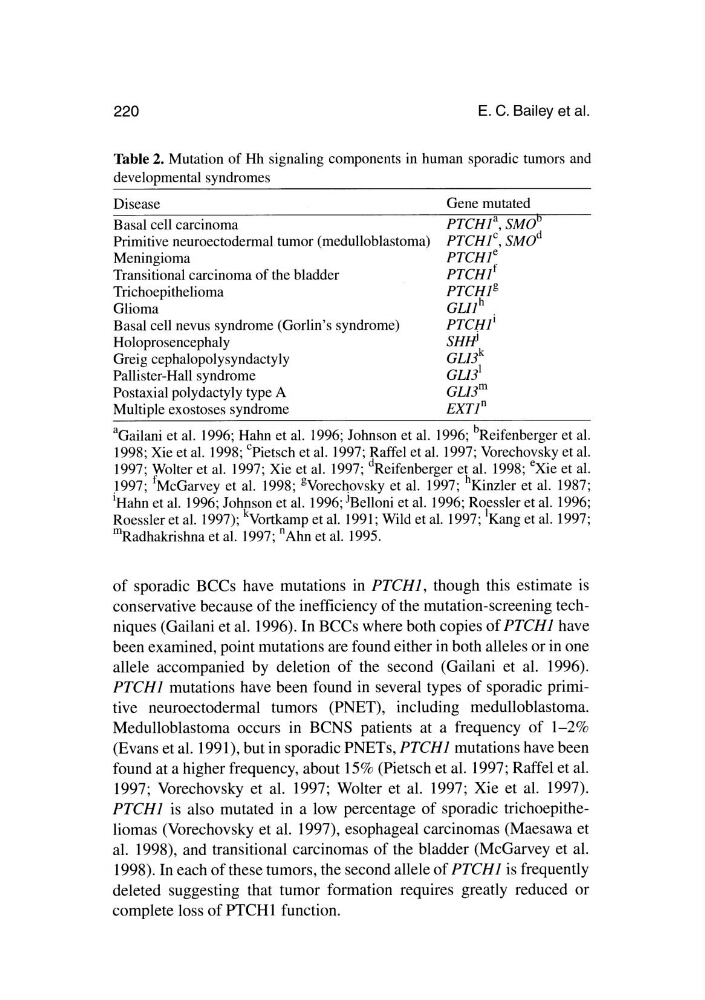
Table 2. Mutation of Hh signaling components in human sporadic tumors and
developmental syndromes
Disease
Gene mutated
Basal cell carcinoma
PTCHI a , SMO D
Primitive neuroectodermal tumor (medulloblastoma) PTCHl c , SMO d
Meningioma
PTCH Ie
Transitional carcinoma of the bladder
PTCH l
Trichoepithelioma
PTCHlg
Glioma
GUI h
Basal cell nevus syndrome (Gorlin's syndrome)
PTCHl i
Holoprosencephaly
SHHi
Greig cephalopolysyndactyly
GU3 k
Pallister-Hall syndrome
GLd
Postaxial polydactyly type A
GU3 li
Multiple exostoses syndrome
EXTl n
aGailani et al. 1996; Hahn et al. 1996; Johnson et al. 1996; bReifenberger et al.
1998; Xie et al. 1998; CPietsch et al. 1997; Raffel et al. 1997; Yorechovsky et al.
1997; Wolter et al. 1997; Xie et al. 1997; dReifenberger et al. 1998; eXie et al.
1997; [McGarvey et aI. 1998; gYorech,ovsky et al. 1997; hKinzler et al. 1987;
IHahn et al. 1996; Johnson et al. 1996; lBelloni et al. 1996; Roessler et al. 1996;
Roessler et al. 1997); kYortkamp et al. 1991; Wild et al. 1997; lKang et al. 1997;
liRadhakrishna et a1. 1997; n Ahn et al. 1995.
of sporadic BCCs have mutations in PTCH 1, though this estimate is
conservative because of the inefficiency of the mutation-screening techniques (Gailani et a1. 1996). In BCCs where both copies of PTCH 1 have
been examined, point mutations are found either in both alleles or in one
allele accompanied by deletion of the second (Gailani et a1. 1996).
PTCHI mutations have been found in several types of sporadic primitive neuroectodermal tumors (PNET), including medulloblastoma.
Medulloblastoma occurs in BCNS patients at a frequency of 1-2%
(Evans et a1. 1991), but in sporadic PNETs, PTCH 1 mutations have been
found at a higher frequency, about 15% (Pietsch et a1. 1997; Raffel et al.
1997; Vorechovsky et a1. 1997; Wolter et a1. 1997; Xie et a1. 1997).
PTCHI is also mutated in a low percentage of sporadic trichoepitheliomas (Vorechovsky et al. 1997), esophageal carcinomas (Maesawa et
a1. 1998), and transitional carcinomas of the bladder (McGarvey et al.
1998). In each of these tumors, the second allele of PTCHl is frequently
deleted suggesting that tumor formation requires greatly reduced or
complete loss of PTCHI function.
E. C. Bailey et al.
Table 2. Mutation of Hh signaling components in human sporadic tumors and
developmental syndromes
Disease
Gene mutated
Basal cell carcinoma
PTCHI a , SMO D
Primitive neuroectodermal tumor (medulloblastoma) PTCHl c , SMO d
Meningioma
PTCH Ie
Transitional carcinoma of the bladder
PTCH l
Trichoepithelioma
PTCHlg
Glioma
GUI h
Basal cell nevus syndrome (Gorlin's syndrome)
PTCHl i
Holoprosencephaly
SHHi
Greig cephalopolysyndactyly
GU3 k
Pallister-Hall syndrome
GLd
Postaxial polydactyly type A
GU3 li
Multiple exostoses syndrome
EXTl n
aGailani et al. 1996; Hahn et al. 1996; Johnson et al. 1996; bReifenberger et al.
1998; Xie et al. 1998; CPietsch et al. 1997; Raffel et al. 1997; Yorechovsky et al.
1997; Wolter et al. 1997; Xie et al. 1997; dReifenberger et al. 1998; eXie et al.
1997; [McGarvey et aI. 1998; gYorech,ovsky et al. 1997; hKinzler et al. 1987;
IHahn et al. 1996; Johnson et al. 1996; lBelloni et al. 1996; Roessler et al. 1996;
Roessler et al. 1997); kYortkamp et al. 1991; Wild et al. 1997; lKang et al. 1997;
liRadhakrishna et a1. 1997; n Ahn et al. 1995.
of sporadic BCCs have mutations in PTCH 1, though this estimate is
conservative because of the inefficiency of the mutation-screening techniques (Gailani et a1. 1996). In BCCs where both copies of PTCH 1 have
been examined, point mutations are found either in both alleles or in one
allele accompanied by deletion of the second (Gailani et a1. 1996).
PTCHI mutations have been found in several types of sporadic primitive neuroectodermal tumors (PNET), including medulloblastoma.
Medulloblastoma occurs in BCNS patients at a frequency of 1-2%
(Evans et a1. 1991), but in sporadic PNETs, PTCH 1 mutations have been
found at a higher frequency, about 15% (Pietsch et a1. 1997; Raffel et al.
1997; Vorechovsky et a1. 1997; Wolter et a1. 1997; Xie et a1. 1997).
PTCHI is also mutated in a low percentage of sporadic trichoepitheliomas (Vorechovsky et al. 1997), esophageal carcinomas (Maesawa et
a1. 1998), and transitional carcinomas of the bladder (McGarvey et al.
1998). In each of these tumors, the second allele of PTCHl is frequently
deleted suggesting that tumor formation requires greatly reduced or
complete loss of PTCHI function.