

202
... -PTHrP
t
J
HYPERTROPHY
Ihh
A. Vortkamp
I
I
I ?
I
I
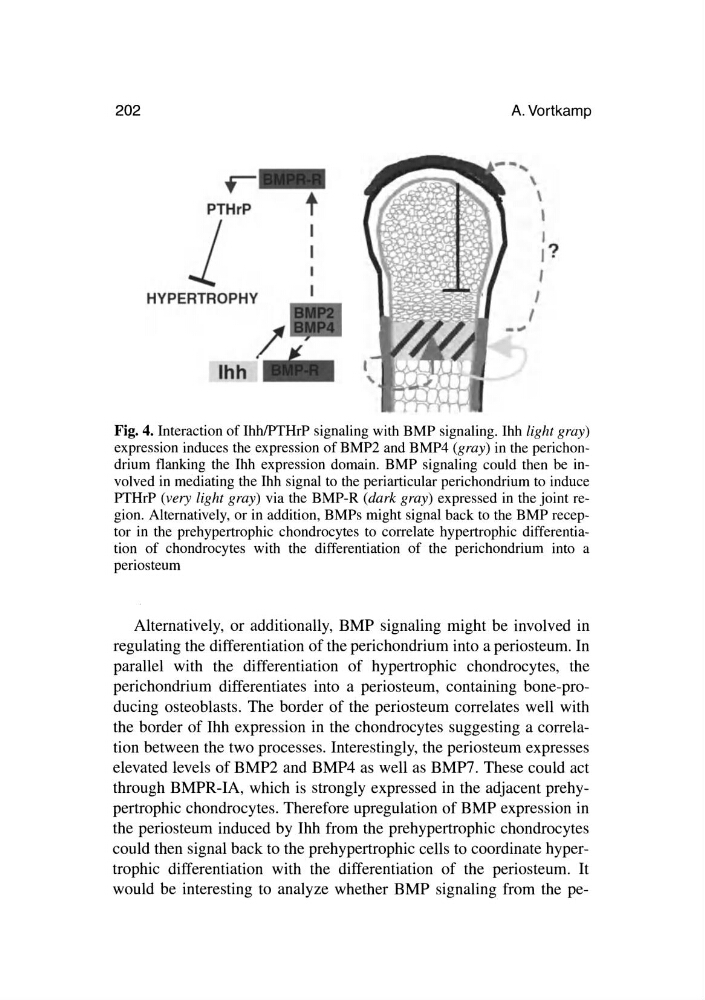
Fig. 4. Interaction of IhhIPTHrP signaling with BMP signaling. Ihh light gray)
expression induces the expression of BMP2 and BMP4 (gray) in the perichondrium flanking the Ihh expression domain. BMP signaling could then be involved in mediating the Ihh signal to the periarticular perichondrium to induce
PTHrP (very light gray) via the BMP-R (dark gray) expressed in the joint region. Alternatively, or in addition, BMPs might signal back to the BMP receptor in the prehypertrophic chondrocytes to correlate hypertrophic differentiation of chondrocytes with the differentiation of the perichondrium into a
periosteum
Alternatively, or additionally, BMP signaling might be involved in
regulating the differentiation of the perichondrium into a periosteum. In
parallel with the differentiation of hypertrophic chondrocytes, the
perichondrium differentiates into a periosteum, containing bone-producing osteoblasts. The border of the periosteum correlates well with
the border of Ihh expression in the chondrocytes suggesting a correlation between the two processes. Interestingly, the periosteum expresses
elevated levels of BMP2 and BMP4 as well as BMP7. These could act
through BMPR-IA, which is strongly expressed in the adjacent prehypertrophic chondrocytes. Therefore upregulation of BMP expression in
the periosteum induced by Ihh from the prehypertrophic chondrocytes
could then signal back to the prehypertrophic cells to coordinate hypertrophic differentiation with the differentiation of the periosteum. It
would be interesting to analyze whether BMP signaling from the pe-
... -PTHrP
t
J
HYPERTROPHY
Ihh
A. Vortkamp
I
I
I ?
I
I
Fig. 4. Interaction of IhhIPTHrP signaling with BMP signaling. Ihh light gray)
expression induces the expression of BMP2 and BMP4 (gray) in the perichondrium flanking the Ihh expression domain. BMP signaling could then be involved in mediating the Ihh signal to the periarticular perichondrium to induce
PTHrP (very light gray) via the BMP-R (dark gray) expressed in the joint region. Alternatively, or in addition, BMPs might signal back to the BMP receptor in the prehypertrophic chondrocytes to correlate hypertrophic differentiation of chondrocytes with the differentiation of the perichondrium into a
periosteum
Alternatively, or additionally, BMP signaling might be involved in
regulating the differentiation of the perichondrium into a periosteum. In
parallel with the differentiation of hypertrophic chondrocytes, the
perichondrium differentiates into a periosteum, containing bone-producing osteoblasts. The border of the periosteum correlates well with
the border of Ihh expression in the chondrocytes suggesting a correlation between the two processes. Interestingly, the periosteum expresses
elevated levels of BMP2 and BMP4 as well as BMP7. These could act
through BMPR-IA, which is strongly expressed in the adjacent prehypertrophic chondrocytes. Therefore upregulation of BMP expression in
the periosteum induced by Ihh from the prehypertrophic chondrocytes
could then signal back to the prehypertrophic cells to coordinate hypertrophic differentiation with the differentiation of the periosteum. It
would be interesting to analyze whether BMP signaling from the pe-